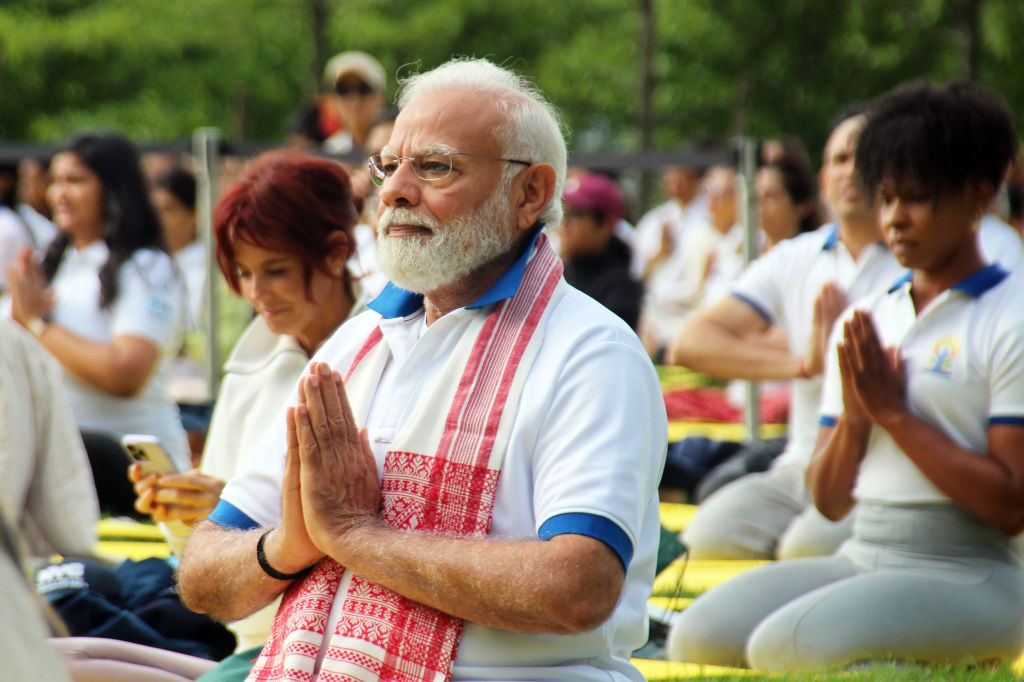
Prime Minister Narendra Modi on Thursday shared an article by Union Minister of State (MoS) for AYUSH Prataprao Jadhav highlighting how yoga has evolved over the past decade from a traditional wellness practice into an evidence-based approach to health and well-being.
In a post on X, the Prime Minister said, “Union MoS Shri Prataprao Jadhav elaborates how, over the past decade, Yoga has evolved from a traditional wellness practice to an evidence-based approach to health and well-being. Scientific research, digital innovation and global collaboration are helping the world better understand its benefits.”
In his article, Jadhav highlighted how Yoga is leading the way in preventive healthcare.
“Digital innovation and scientific research have given Yoga a new global identity. Yoga is no longer just a tradition but has become the foundation of evidence-based wellness. We are constantly striving to make the masses healthier through the synergy of Yoga and modern technology,” he said in a post on X.
Growing scientific validation
Jadhav noted that institutions in India are increasingly working to scientifically validate yoga and integrate it into modern healthcare systems.
He highlighted that the Morarji Desai National Institute of Yoga (MDNIY) has been designated as a World Health Organization collaborating centre for traditional medicine (Yoga) for the 2025-2029 period. The recognition reinforces India’s leadership in yoga research and its role in promoting evidence-based interventions for non-communicable diseases.
The institute is collaborating with organisations including All India Institute of Medical Sciences, Lady Hardinge Medical College, the Central Council for Research in Unani Medicine and the Institute of Nuclear Medicine and Allied Sciences to develop guidelines and research yoga-based interventions for conditions such as diabetes, obesity and stress-related disorders.
Digital platforms expanding reach
Jadhav also highlighted the role of digital platforms in expanding access to yoga practices worldwide. Initiatives such as the mYoga application and the Y-Break workplace yoga programme are helping deliver structured yoga practices at scale.
Developed in collaboration with the World Health Organization, the mYoga application has recorded more than 1.1 lakh downloads globally. Meanwhile, the Y-Break protocol—a short five to ten minute yoga break during work hours—has benefited over 33 lakh government officials.
Research from these initiatives indicates that regular practice of Y-Break can reduce perceived stress levels by up to 40 per cent within a few weeks while improving mental alertness, emotional resilience and decision-making ability. Studies also show improvements in physiological indicators such as cortisol levels and respiratory efficiency.
Yoga gaining global relevance
He said these developments indicate a significant shift in the global perception of yoga. It is increasingly viewed not just as a personal wellness practice but also as a public health intervention capable of addressing lifestyle-related diseases.
Experts also emphasised the need for rigorous research and interdisciplinary collaboration during the National Conference on Naturopathy 2026, jointly organised by MDNIY and the Central Council for Research in Yoga and Naturopathy.
Jadhav said the integration of traditional knowledge with modern scientific research is helping position yoga as a scalable and cost-effective tool for preventive healthcare.
Countdown to International Day of Yoga
Jadhav also noted that March 13 marks the 100-day countdown to the upcoming International Day of Yoga, which is observed globally on June 21 each year.
He said the milestone offers an opportunity to encourage people to adopt yoga in their daily lives and promote it as a pathway to better health and well-being.
“By combining tradition with science and technology, Yoga is emerging as a driving force behind the Global Yoga Kranti and strengthening India’s leadership in the international wellness sector,” the MoS concluded.