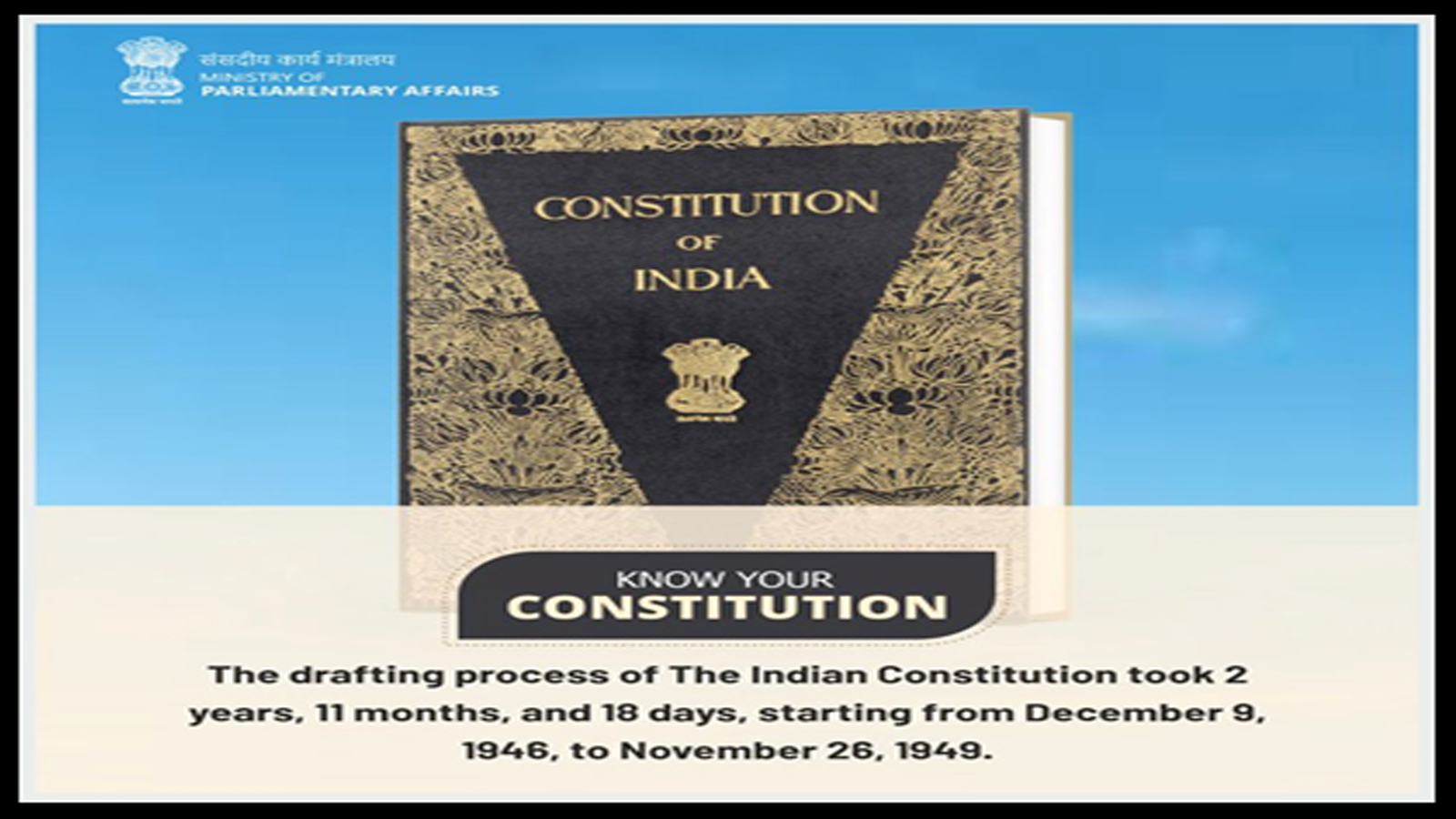
As the nation commemorates the birth anniversary of Dr. Bhimrao Ramji Ambedkar, attention once again turns to his most enduring legacy – the Constitution of India, a document that continues to guide the world’s largest democracy.
Adopted in November 1949 and enforced from January 26, 1950, the Constitution stands as a cornerstone of India’s democratic framework, embodying the principles of justice, liberty, equality and fraternity.
Architect of the Constitution
As Chairman of the Drafting Committee, Ambedkar played a decisive role in shaping the Constitution. His vision was rooted in the belief that political democracy must be accompanied by social and economic democracy.
Having experienced the harsh realities of caste discrimination firsthand, Ambedkar ensured that the Constitution included safeguards for marginalized communities, particularly Scheduled Castes, Scheduled Tribes and other backward classes.
A Response to Historical Inequalities
The Constitution was not merely a legal document but a response to centuries of social injustice. Practices such as untouchability, exclusion from education, and denial of basic rights had long affected large sections of society.
Ambedkar’s earlier struggles, such as the Mahad Satyagraha and temple entry movements, shaped his resolve to institutionalize equality through constitutional provisions. The abolition of untouchability and the introduction of affirmative action policies became key features of the new legal framework.
Democracy Beyond Politics
Ambedkar emphasized that democracy must extend beyond elections and governance. He advocated equality in social, economic and political spheres, warning that freedom without equality could lead to injustice, while equality without freedom could result in authoritarianism.
His ideas also influenced labour rights, land reforms, and gender justice. He strongly supported women’s rights, recognizing that true democracy could not exist without gender equality.
Institutional Foundations
The Constitution laid the groundwork for several key institutions that shape India’s governance and economy. Ambedkar’s economic insights contributed to policy frameworks that influenced bodies like the Reserve Bank of India and the Finance Commission.
It also established a federal structure, an independent judiciary, and a system of checks and balances, ensuring accountability and stability in governance.
Evolution and Relevance
Over the decades, the Constitution has evolved through amendments, judicial interpretations, and policy changes. Yet its core values remain intact.
In 2015, the Government of India designated November 26 as Constitution Day to promote constitutional values among citizens and honour Ambedkar’s contribution.
Enduring Legacy
Ambedkar’s final years reflected his continued quest for equality and dignity. His life and work underscore the moral foundation of the Constitution.
Today, the Indian Constitution remains a living document -dynamic, resilient, and deeply relevant. As India navigates contemporary challenges, its guiding principles continue to offer a framework for justice, inclusion and national unity.