







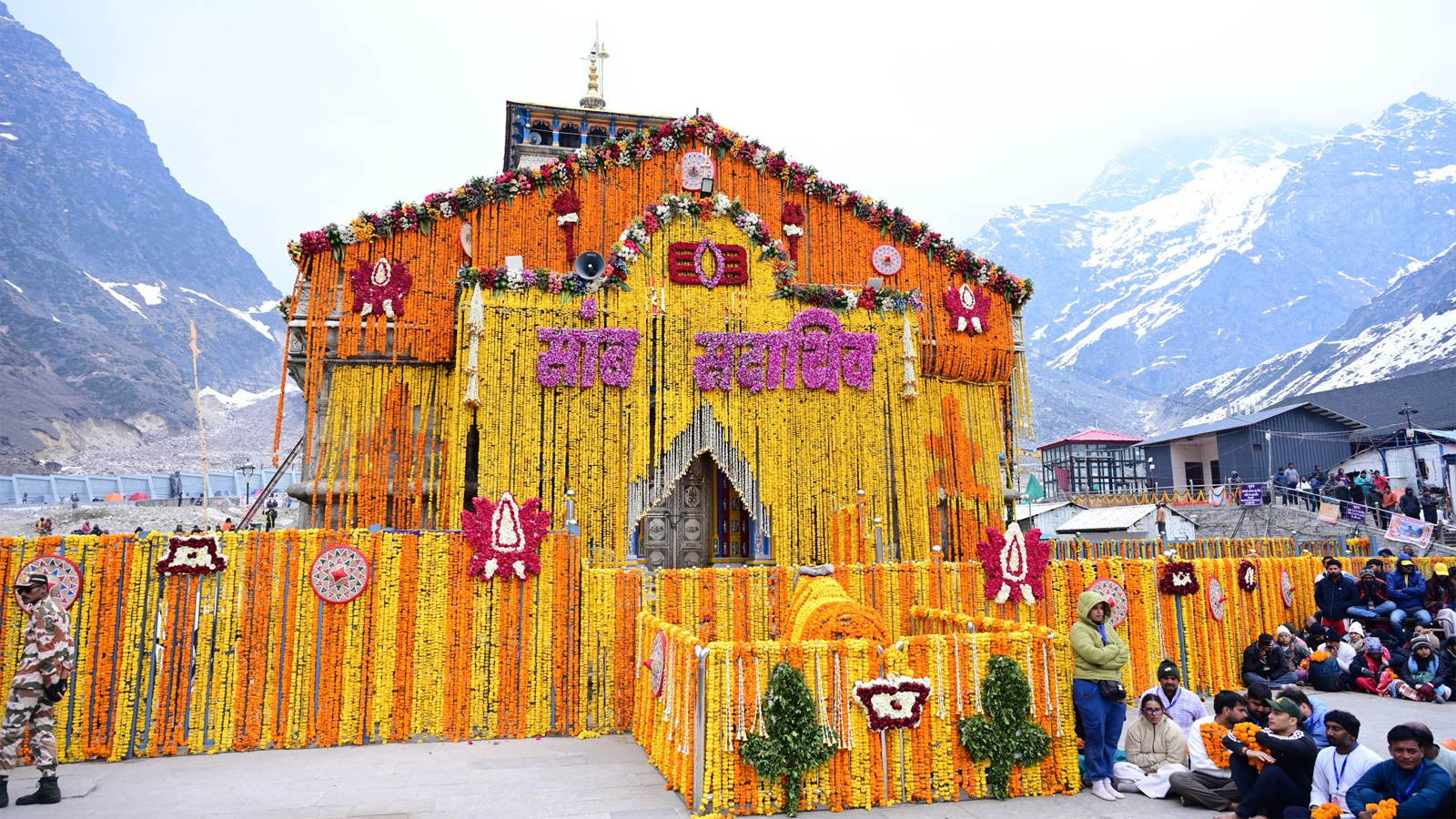
The portals of Kedarnath Temple were opened on Wednesday with traditional Vedic rituals and chants of “Har Har Mahadev,” marking the beginning of the annual pilgrimage season in Uttarakhand. Thousands of devotees from across India and abroad gathered at the high-altitude shrine to witness the ceremony and seek blessings.
The temple, dedicated to Lord Shiva, was decorated with around 51 quintals of flowers, creating a vibrant and spiritually charged atmosphere. Priests performed elaborate rituals, while the Indian Army band played devotional tunes during the aarti, adding to the grandeur of the occasion.
Uttarakhand Chief Minister Pushkar Singh Dhami attended the ceremony along with his wife and offered prayers for the prosperity of the state and its people. Expressing satisfaction over the arrangements, Dhami said that improved facilities have enabled devotees to have darshan more conveniently and in less time. He also urged pilgrims to maintain cleanliness during the yatra.
The reopening follows the ceremonial journey of the idol of Lord Kedarnath from its winter seat at Omkareshwar Temple, where it had been worshipped for six months. The doli (palanquin) travelled through key stops before reaching Kedarnath amid devotional chants and participation from pilgrims.
The opening of Kedarnath marks a key phase of the Char Dham Yatra, which includes Yamunotri Temple, Gangotri Temple, Kedarnath Temple, and Badrinath Temple. The pilgrimage began earlier with the reopening of Gangotri and Yamunotri on the occasion of Akshaya Tritiya, while Badrinath is scheduled to open on April 23, completing the circuit.
Adding to the spiritual experience, fresh snowfall blanketed the Kedarnath region, drawing excitement among devotees. However, authorities have advised pilgrims to remain cautious due to near-freezing temperatures and challenging terrain.
The district administration has put in place extensive arrangements to ensure a smooth and safe pilgrimage. These include enhanced security deployment, traffic management, medical facilities, and improved sanitation and accommodation services. Digital systems such as online registration and token-based darshan have also been introduced to regulate crowd flow.
Officials have enforced strict guidelines within the temple premises to maintain sanctity, including a ban on mobile phones, photography, videography, and unauthorised drone usage. Locker facilities and mobile counters have been set up for devotees’ convenience.
With lakhs of pilgrims expected to visit during the season, authorities said comprehensive planning, including disaster preparedness measures, helplines, and control rooms, has been implemented to ensure a safe and well-organised yatra.
The reopening of Kedarnath after a six-month winter closure once again transforms the Himalayan shrine into a major centre of faith, echoing with devotion as pilgrims embark on one of India’s most significant spiritual journeys.
(With agency inputs)


