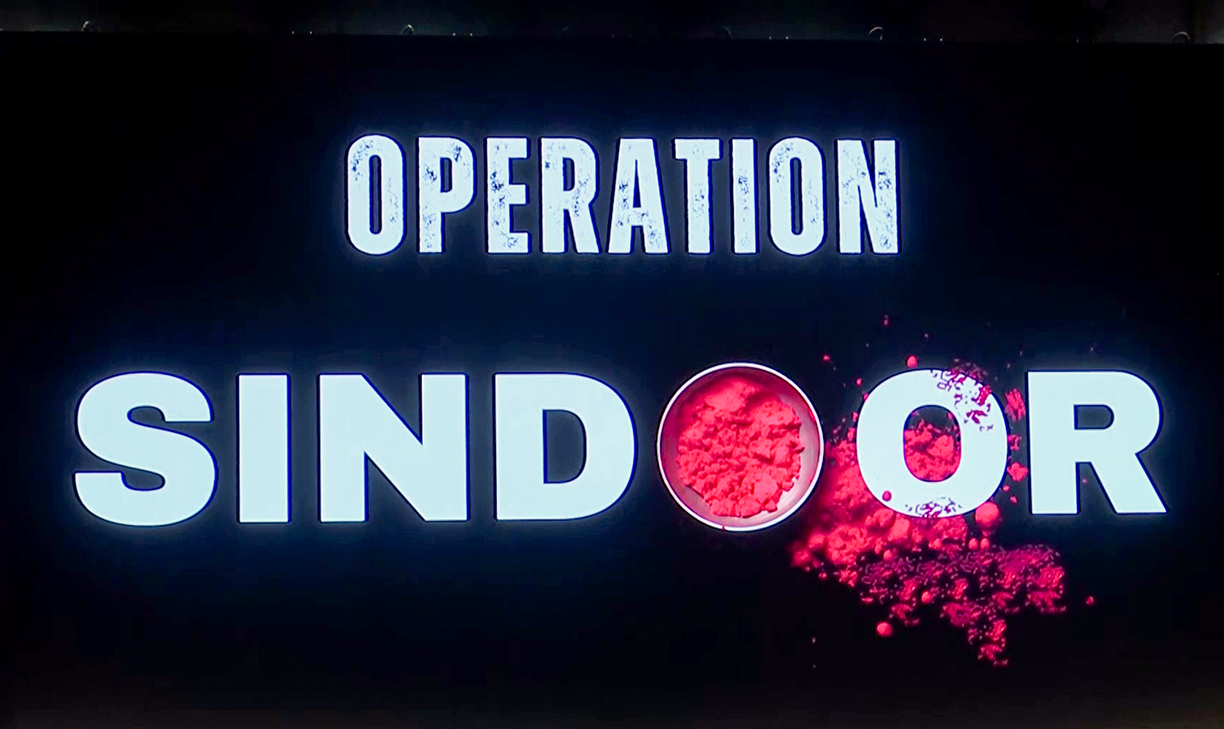
India marks the first anniversary of Operation Sindoor, a landmark tri-service military operation launched in May 2025 in response to the dastardly terror attack in Jammu & Kashmir’s Pahalgam that claimed 26 lives. The operation is widely seen as a turning point in India’s counter-terrorism strategy, combining precision strikes, technological capability, and coordinated action across land, air, and sea.
Operation Sindoor was initiated on the night of May 6-7, 2025, targeting terror infrastructure across Pakistan and Pakistan-occupied Jammu & Kashmir. Acting on intelligence inputs, Indian Armed Forces carried out precision strikes on nine major terrorist camps linked to groups such as Jaish-e-Mohammed, Lashkar-e-Taiba, and Hizbul Mujahideen. Over 100 terrorists, including handlers and trainers, were reported killed.
The government maintained that the operation was a measured act of self-defence, carefully designed to avoid civilian casualties while dismantling terror networks.
Following the strikes, Pakistan launched retaliatory attacks using drones, missiles, and electronic warfare systems targeting Indian military installations. However, India’s multi-layered air defence systems, including indigenous platforms, successfully neutralised those threats, preventing damage to key assets.
India responded with further targeted strikes on Pakistani airbases and military infrastructure, including facilities at Chaklala, Sargodha, and Rahimyar Khan. Within days, Pakistan’s Director General of Military Operations reached out for de-escalation, leading to a ceasefire agreement on May 10, 2025.
Operation Sindoor is regarded as a prime example of jointness among India’s armed forces. The Indian Air Force executed precision airstrikes and maintained air superiority, while the Army ensured strong defensive and offensive positioning along the Line of Control. The Navy simultaneously asserted dominance in the North Arabian Sea, deploying a carrier battle group to deter further escalation.
Security forces, including the Border Security Force (BSF), also played a crucial role in thwarting infiltration attempts along the International Border during heightened tensions.
A defining feature of Operation Sindoor was the extensive use of indigenous defence technologies. Systems such as the Akash surface-to-air missile, integrated air command networks, drones, and electronic warfare platforms demonstrated India’s growing capabilities in modern warfare.
The operation underscored the success of initiatives aimed at defence indigenisation and “Aatmanirbhar Bharat,” with domestically developed systems proving effective against advanced threats, including foreign-origin missiles and UAVs used by adversaries.
Beyond military success, Operation Sindoor had broader strategic implications. India undertook several non-military measures, including suspension of trade ties, diplomatic actions, and placing the Indus Waters Treaty in abeyance, signalling a tougher stance on cross-border terrorism.
The operation also marked a shift in doctrine, with India asserting that future terror attacks would be treated as acts of war, blurring the distinction between terrorist groups and their state sponsors.
Internationally, India received notable support, with its actions largely viewed through the lens of counter-terrorism rather than regional conflict.
Prime Minister Narendra Modi described Operation Sindoor as a reflection of the nation’s resolve to ensure justice and security. The operation established new red lines, emphasising swift, precise, and proportionate responses to terrorism.
Defence Minister Rajnath Singh had earlier said in Parliament that the operation was not expansionist but a necessary step in self-defence, adding that it had been “halted, not ended,” leaving room for future action if required.
One year on, Operation Sindoor is remembered as more than a military campaign – it represents a strategic shift in India’s national security approach. It demonstrated the effectiveness of intelligence-led operations, the importance of technological readiness, and the strength of coordinated military action.