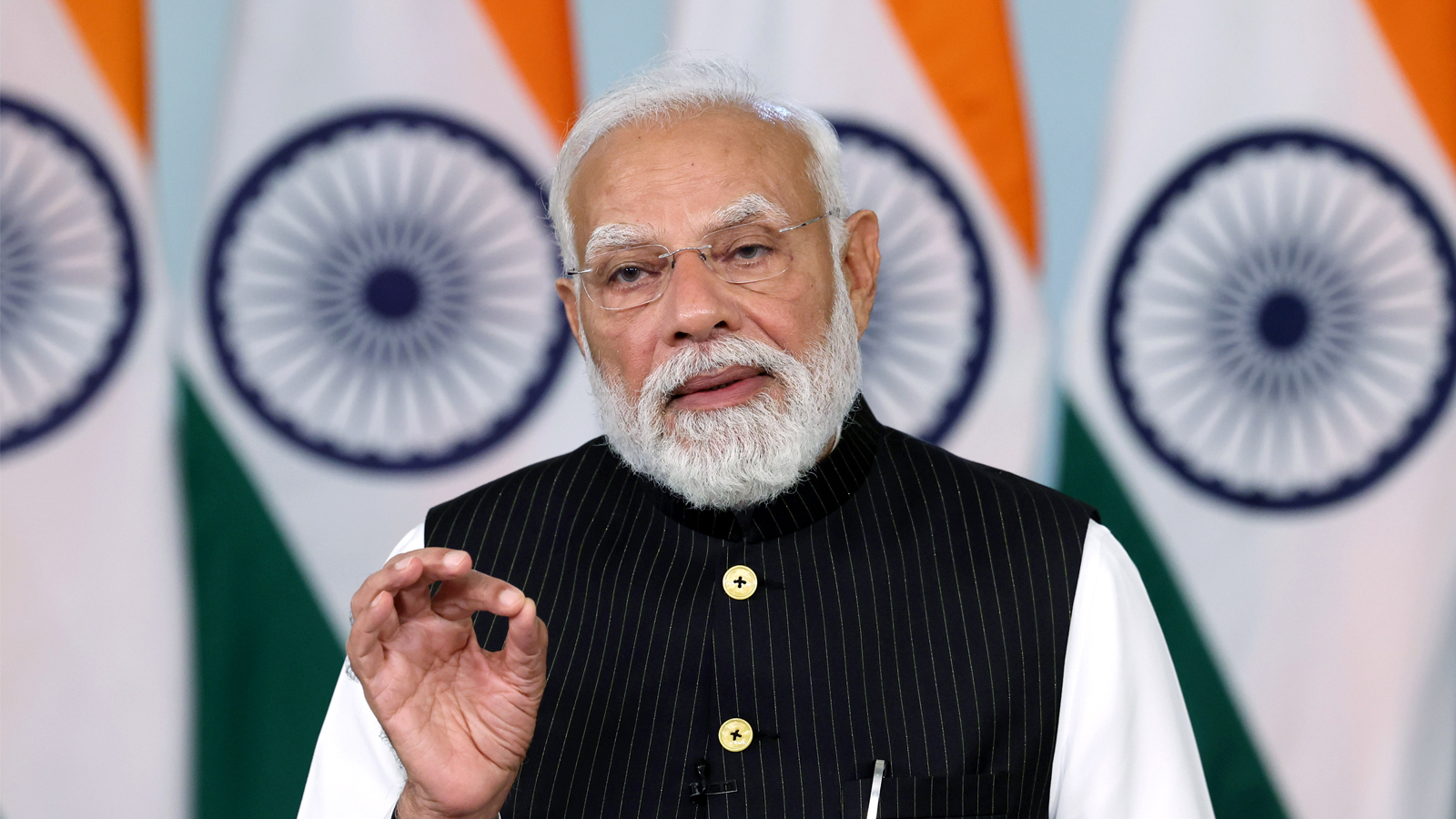
Prime Minister Narendra Modi on Tuesday shared an article by Union Minister for Women and Child Development Annpurna Devi, highlighting a roadmap for strengthening women-led governance in India.
In a post on X, the Prime Minister said, “Representation must translate into real influence. The government has always prioritised Nari Shakti in every form, hence, with the Nari Shakti Vandan Adhiniyam laying the foundation, India is moving towards greater women-led governance. This is also a key pillar of a Viksit Bharat.” He also urged people to read the Minister’s article.
Annpurna Devi’s article outlines the need to enhance women’s legislative leadership and leverage recent reforms to build a more inclusive and representative democracy. Sharing the article, the Minister said that greater participation of women in decision-making is crucial for achieving the vision of a developed India.
She highlighted the significance of the Nari Shakti Vandan Adhiniyam, describing it as one of the most transformative political reforms in recent years. The legislation provides for one-third reservation for women in the Lok Sabha and State Assemblies, marking a major step toward expanding women’s role in governance.
In her article, the Minister stressed that the reform goes beyond symbolic representation and aims to empower women to actively shape policies and governance outcomes. She noted that India is at a critical juncture where increased representation of women can lead to more responsive and inclusive policymaking.
Annpurna Devi also underlined the need for political parties to play a proactive role by promoting women candidates, improving access to campaign financing, and creating enabling pathways for leadership. She emphasised institutional support, including legislative training, policy research, and peer networks, to ensure that women representatives can effectively contribute to decision-making.
Highlighting progress over the past decade, Annpurna Devi pointed to several government initiatives that have strengthened women’s socio-economic position. These include increased financial inclusion through Jan Dhan accounts, higher participation of women in entrepreneurship under Mudra Yojana, and greater ownership of houses under Pradhan Mantri Awas Yojana. She also cited the success of schemes like Ujjwala Yojana in improving household well-being.
The minister noted that women already account for nearly 50 percent of elected representatives in Panchayati Raj Institutions, demonstrating their growing role in grassroots governance. She argued that the next step is to ensure their stronger presence and influence in higher legislative bodies.
Annpurna Devi said enhancing women’s leadership in legislatures is not only a matter of equity but also essential for strengthening governance and achieving the goal of a “Viksit Bharat” by 2047. She concluded that true progress will be reflected when women not only occupy seats in legislatures but also actively shape laws, policies, and national priorities.