







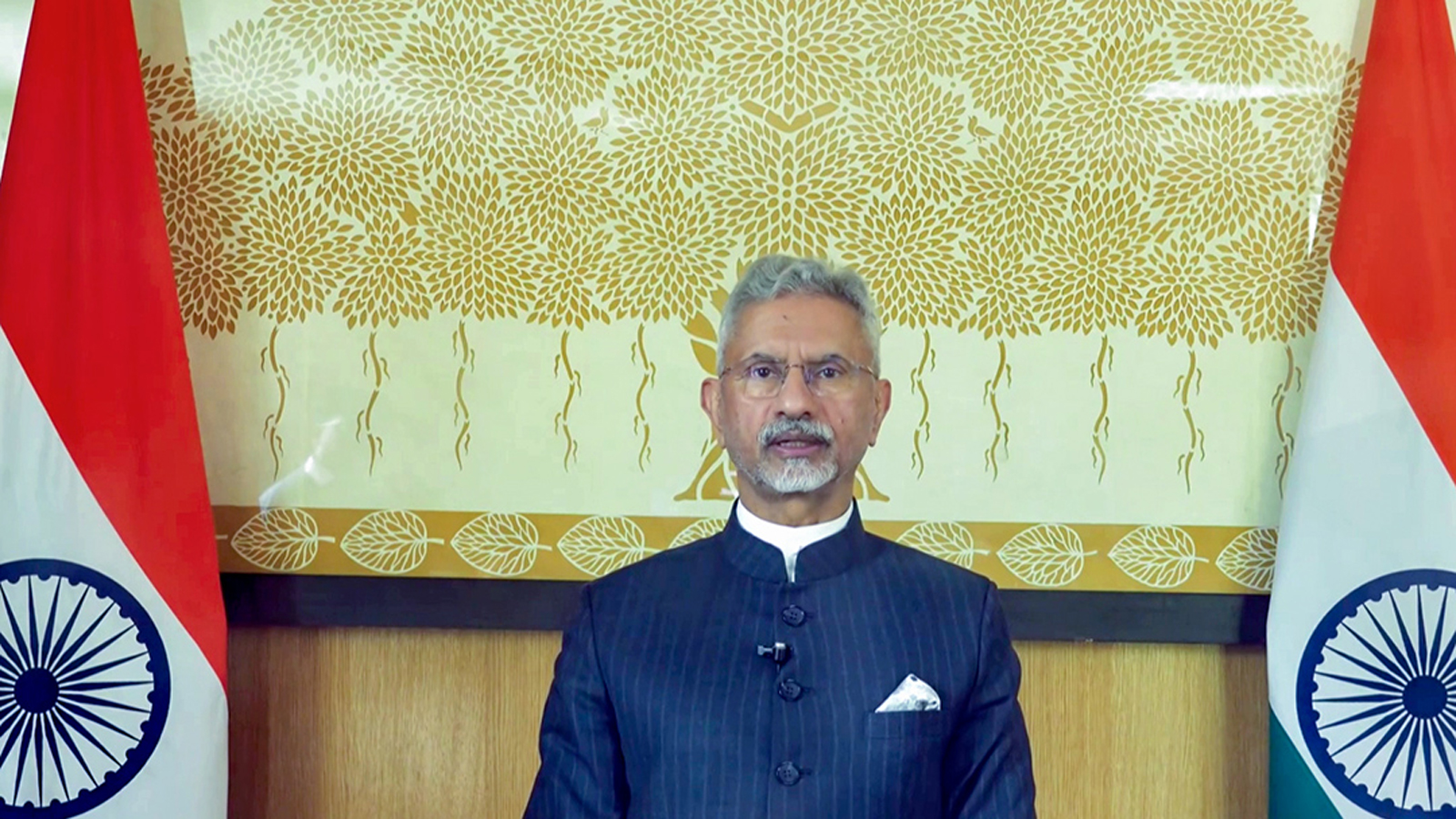
External Affairs Minister S. Jaishankar on Thursday called for stronger cooperation among BRICS nations to address growing geopolitical and economic instability, asserting that the world is witnessing a “convergence of challenges” that is testing the resilience of multilateral systems.
Delivering India’s national statement at the BRICS Foreign Ministers’ Meeting in New Delhi, EAM Jaishankar said conflicts, climate events, economic disruptions and the lingering impact of the COVID-19 pandemic have deepened global vulnerabilities and weakened growth prospects, particularly for emerging economies and developing countries.
“The world is facing unprecedented geopolitical and economic uncertainty,” EAM Jaishankar said, adding that the current situation reflects not isolated crises but interconnected global challenges reshaping the international order.
The EAM noted that pressures on energy, food and fertiliser security, supply chain disruptions, inflation and constraints on economic growth have had a severe impact on developing nations. In this backdrop, he said, BRICS solidarity has become increasingly important.
“Collective action and resolve are essential to promote stability, sustainability and prosperity,” the External Affairs Minister said, urging the grouping to move beyond deliberations and work towards “effective and coordinated responses.”
Reaffirming India’s commitment to the United Nations Charter, EAM Jaishankar stressed that respect for sovereignty and territorial integrity must remain the cornerstone of international relations.
“Dialogue and diplomacy are the only sustainable means of resolving conflicts,” he said.
Concern Over West Asia Conflict
The External Affairs Minister devoted significant attention to the evolving situation in West Asia, warning that continuing tensions in the region pose risks to maritime traffic and global energy infrastructure.
He said safe and uninterrupted maritime flows through key international waterways, including the Strait of Hormuz and the Red Sea, remain crucial for global economic stability.
EAM Jaishankar also expressed concern over the humanitarian crisis in Gaza and reiterated India’s support for a two-state solution to the Palestine issue.
“The conflict in Gaza has grave humanitarian implications. A sustained ceasefire, humanitarian access, and a credible pathway towards a durable and peaceful resolution remain essential,” he said.
The EAM further highlighted ongoing instability in Lebanon, Syria, Sudan, Yemen and Libya, calling for sustained international engagement and coordinated diplomatic efforts to restore peace and stability in the region.
“Stability cannot be selective, and peace cannot be piecemeal,” he remarked, while stressing the importance of protecting civilians, avoiding attacks on public infrastructure and upholding international law.
Criticism of Unilateral Sanctions
EAM Jaishankar also raised concerns over the increasing use of unilateral coercive measures and sanctions, saying such actions are inconsistent with international law and disproportionately affect developing countries.
“These unjustifiable measures cannot substitute dialogue, nor can pressure replace diplomacy,” he said.
Strong Message on Terrorism
Addressing security concerns, the External Affairs Minister said terrorism continues to pose a serious threat to global peace and stability.
“There can be no justification for terrorism in any form. Cross-border terrorism violates the basic principles of international relations,” he said, calling for “zero tolerance” as a universal norm.
Call for Climate Justice and Digital Equity
EAM Jaishankar also underlined the challenges posed by climate change and rapid technological transformation. He said climate action must be accompanied by climate justice, backed by credible commitments, adequate financing and accessible support for developing nations.
On technology, the EAM said advancements offer opportunities but also raise concerns regarding trust, transparency and equitable access. Bridging the digital divide, he added, must remain a global priority.
Push for UN Security Council Reform
Highlighting the weakening state of multilateral institutions, EAM Jaishankar said reform of the United Nations system has become increasingly urgent.
“The case for reformed multilateralism only gets stronger,” he said, specifically calling for reforms in both the permanent and non-permanent categories of the UN Security Council.
“Continued delay comes at a high cost,” he warned.
Concluding his remarks, EAM Jaishankar said the message from current global developments is clear: “cooperation is essential, dialogue is necessary, and reform is overdue.”
“We must work together to shape a more stable, equitable, and inclusive international order,” he said, reaffirming India’s commitment to constructive engagement with global partners through the BRICS framework.


