







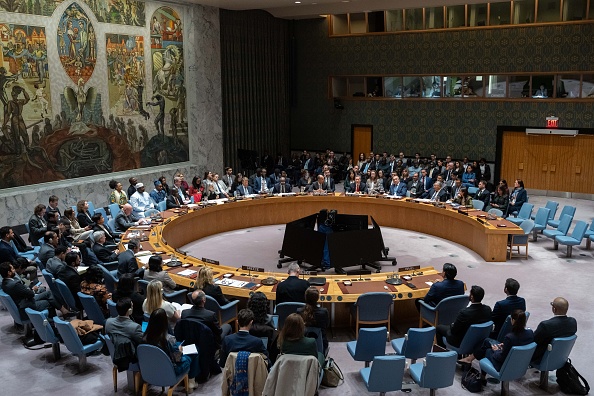
Ambassador Harish Parvathaneni, Permanent Representative of India to the UN, noted that protecting civilians, including during conflict situations, is a central element of the maintenance of international peace and security.
Parvathaneni, while speaking at the Annual UNSC Open Debate on “Protection of civilians in armed conflict”, congratulated China on assuming the UNSC Presidency for this month.
“We congratulate China on assuming the UNSC Presidency for this month and also welcome convening this annual open debate on the Protection of Civilians in Armed Conflict. We thank the Secretary General for his report and the briefers for their insightful remarks this morning,” he said.
Parvathaneni said that 2025 saw a decline of recorded civilian deaths after three years of steady increase.
“India reaffirms its strong commitment to the UN Charter and stresses that protecting civilians at all times, including conflict situations, is a central element of maintenance of international peace and security. In 2025, recorded civilian deaths across twenty armed conflicts was more than 37,000. Although this is the first decline after three years of steady increase, the numbers are still high. Continued civilian casualties, displacement, destruction of critical infrastructure and attacks on hospitals, schools, medical personnel and humanitarian workers remain deeply concerning,” he said.
Parvathaneni said that India calls for zero tolerance to the loss of civilian lives.
“India calls for zero tolerance to the loss of civilian lives. Parties to armed conflict must ensure safe and unhindered humanitarian access while respecting international humanitarian law. Even a decade after the adoption of UNSC Resolution 2286, repeated attacks on civilian facilities and humanitarian workers reflect a serious erosion of respect for international humanitarian law. India reiterates that medical personnel and humanitarian workers must be protected at all times,” he said.
Parvathaneni said that the growing trend of use of drones to deploy explosive weapons in urban areas is especially concerning.
“As highlighted in the UNSG’s report, the use of missiles, bombs and other explosive weapons in cities and populated areas remains a major cause of civilian harm. The growing trend of use of drones to deploy explosive weapons in urban areas is especially concerning. The use of emerging technologies, including artificial intelligence and autonomous systems, by parties to conflict must be in conformity with international law and humanitarian principles.
Safeguards must be in place to prevent misuse and unintended harm to civilians. Protection of civilians cannot be achieved through humanitarian responses alone. The targeted use of violence against civilians to achieve political objectives, including terrorism, must be addressed comprehensively,” he said.
Parvathaneni also condemned cross-border terrorism and highlighted that India has been a victim of such a form of terrorism for decades.
“India remains deeply concerned about the persistent threat posed by cross-border terrorism, which continues to undermine regional peace, stability, and the fundamental principles of international security. India has been a victim of such a form of terrorism for decades. States that sponsor, shelter or support terrorism must be held accountable. India has consistently emphasised that terrorism in all its forms and manifestations remains one of the gravest threats to civilians worldwide. No cause or grievance can justify deliberate attacks against civilians,” he said.
(ANI)


