







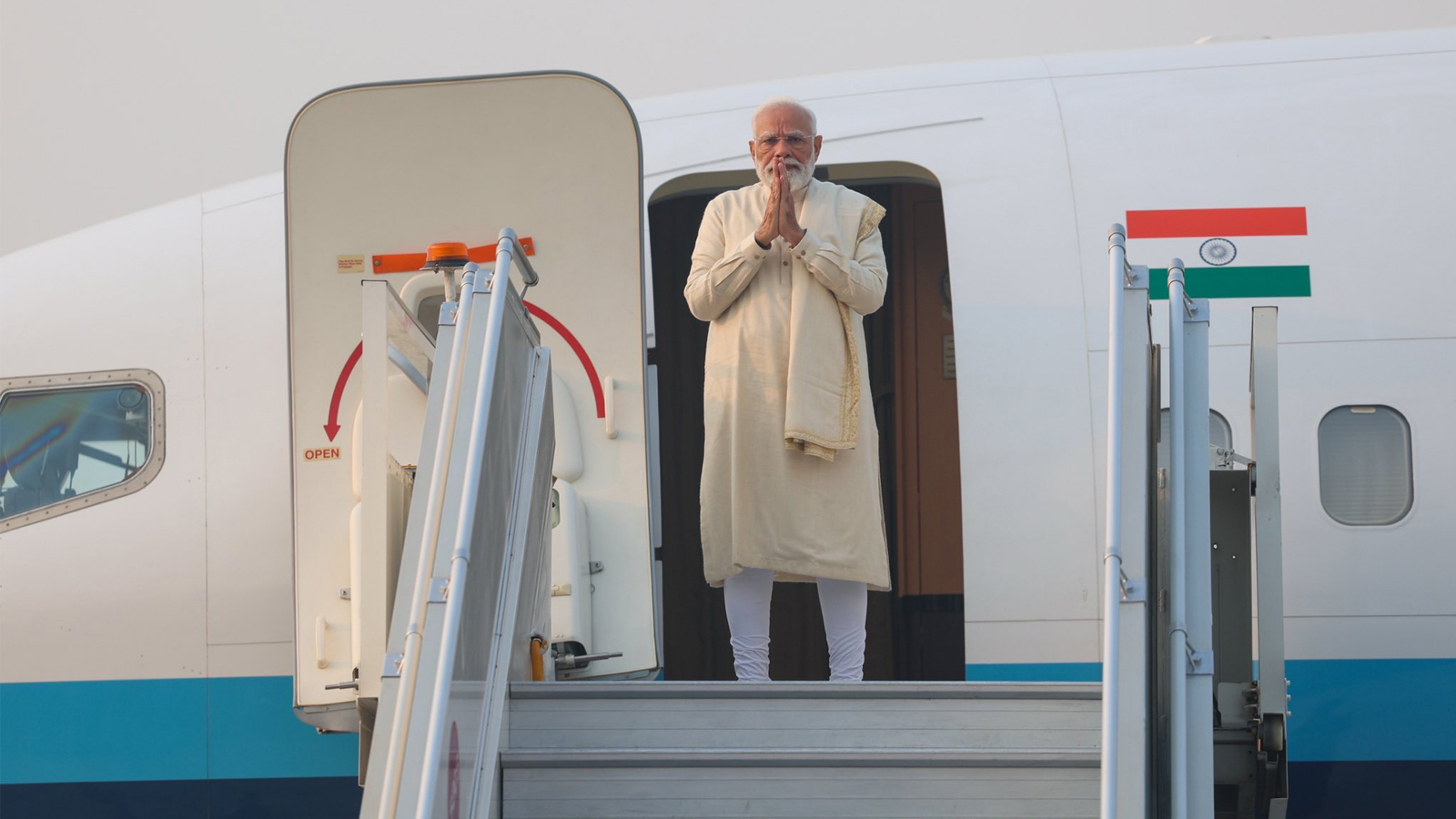
Prime Minister Narendra Modi on Friday described his visit to the United Arab Emirates as “short but highly productive,” saying the outcomes of his talks with UAE President Sheikh Mohamed bin Zayed Al Nahyan would add fresh vigour to the India-UAE Comprehensive Strategic Partnership.
In a series of posts on X after concluding his visit to Abu Dhabi, PM Modi thanked President Sheikh Mohamed bin Zayed for personally receiving him at the airport and said the discussions focused on expanding cooperation in key sectors such as energy, investment, trade, supply chains and advanced technology.
“The friendship between India and UAE is very strong. Our nations will keep working together with the aim of building a better future for our planet,” the Prime Minister said.
During the high-level talks, PM Modi reiterated India’s strong condemnation of the recent attacks on the UAE and expressed solidarity with the Emirati leadership and people. He also reaffirmed India’s support for safe and unimpeded navigation through the Strait of Hormuz, calling it vital for regional stability as well as global energy and food security.
The two leaders reviewed the full spectrum of bilateral relations and welcomed the growing momentum in the Comprehensive Strategic Partnership across sectors including energy, trade, investment, defence, security, fintech, infrastructure, education and people-to-people ties. They also noted the success of the India-UAE Comprehensive Economic Partnership Agreement (CEPA), which has significantly boosted bilateral trade.
A major focus of the visit was energy cooperation. India’s Strategic Petroleum Reserves Limited and Abu Dhabi National Oil Company (ADNOC) signed a strategic collaboration agreement to increase the UAE’s participation in India’s strategic petroleum reserves to 30 million barrels. The two sides also agreed to work together on establishing strategic gas reserves in India.
Additionally, Indian Oil Corporation Limited (IOCL) and ADNOC concluded a long-term LPG supply arrangement aimed at strengthening India’s energy security.
The UAE also announced investments worth USD 5 billion in India. The investments include USD 3 billion by Emirates NBD in RBL Bank, USD 1 billion by the Abu Dhabi Investment Authority (ADIA) with India’s National Infrastructure and Investment Fund (NIIF) for infrastructure projects, and USD 1 billion by International Holding Company in Sammaan Capital.
Defence cooperation also received a major boost with the signing of a Framework for Strategic Defence Partnership. The agreement covers defence industrial collaboration, innovation, advanced technologies, maritime security, cyber defence, secure communications and information exchange.
Several additional agreements were signed during the visit, including an MoU between Cochin Shipyard Limited and Drydocks World Dubai to establish a ship repair cluster at Vadinar under India’s Maritime Development Fund Scheme. Another tripartite agreement involving Cochin Shipyard, Drydocks World Dubai and the Centre of Excellence in Maritime and Shipbuilding (CEMS) aims to strengthen skill development and employment in the maritime sector.
India and the UAE also signed a term sheet for establishing an 8-exaflop supercomputing cluster in partnership between India’s CDAC and UAE-based G-42, a move expected to significantly strengthen India’s artificial intelligence capabilities.
The two leaders further welcomed the operationalisation of the Virtual Trade Corridor under the MAITRI initiative, a digital framework linking customs and port authorities of both countries to facilitate smoother cargo movement, reduce logistics costs and improve trade efficiency.
PM Modi thanked the UAE leadership for the warm hospitality extended during the visit and invited President Sheikh Mohamed bin Zayed Al Nahyan to visit India at an early date.


