







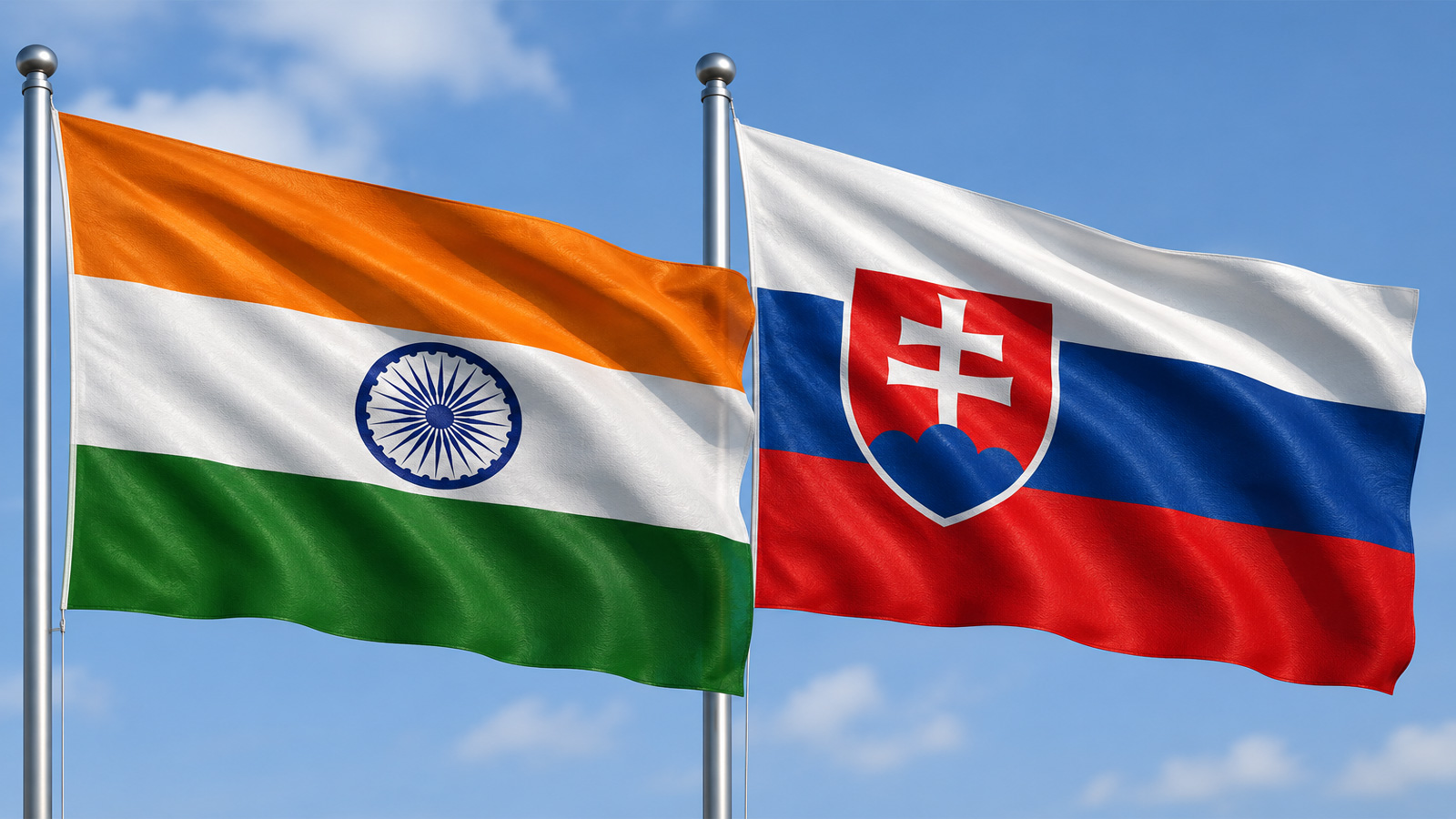
As economic and strategic relations between India and Slovakia continue to deepen, cultural exchanges and growing people-to-people connections are emerging as equally important pillars of the bilateral partnership. From yoga and classical Indian traditions to educational exchanges and a growing Indian diaspora, the relationship is increasingly being shaped by cultural understanding and community engagement.
The cultural relationship between India and Slovakia has witnessed significant growth in recent years, reflecting a shared commitment to strengthening mutual understanding beyond trade and diplomacy. The signing of the Cultural Exchange Programme (2023-2026) on March 4, 2023, marked a fresh chapter in bilateral cultural cooperation, providing a structured framework for expanding exchanges in the fields of arts, literature, education, heritage, and cultural diplomacy.
Over the years, cultural engagement has become one of the most visible dimensions of India-Slovakia relations. Through festivals, exhibitions, academic initiatives, and community outreach, both countries have worked to foster deeper appreciation of each other’s traditions and values.
Indian Culture Finds a Growing Audience in Slovakia
The Ministry of External Affairs (MEA) said that the Embassy of India in Bratislava has played a central role in promoting Indian culture across Slovakia through a wide range of events and public engagements.
Over the past two years, Indian festivals and cultural celebrations have attracted growing participation from Slovak citizens. Major festivals such as Diwali, Holi, Rath Yatra, and Garba have been celebrated in various cities, introducing local audiences to India’s diverse cultural heritage.
The MEA said that the embassy has also collaborated with Slovak educational institutions and cultural organizations to organize painting competitions, science exhibitions, and cultural programmes aimed at fostering awareness about India among young people.
These initiatives have contributed to a broader understanding of Indian traditions and contemporary achievements while creating opportunities for cultural dialogue between the two societies.
Yoga and Ayurveda Strengthen Cultural Connections
Among the most successful aspects of India’s cultural outreach in Slovakia has been the promotion of yoga and traditional wellness practices.
The annual celebration of the International Day of Yoga has become a regular feature of India’s cultural diplomacy in Slovakia. Organized in partnership with local yoga studios and wellness organizations, the event attracts participants from various walks of life and highlights yoga’s universal appeal.
In addition to the annual celebrations, the Embassy of India conducts regular yoga and Ayurveda sessions, helping introduce Slovaks to India’s holistic traditions of physical and mental well-being.
The growing popularity of yoga reflects a wider interest among Slovak citizens in Indian philosophy, spirituality, and wellness practices, creating enduring cultural links between the two countries.
Historic Slovak Translation of the Upanishads
One of the most significant cultural milestones in recent years has been the publication of the first-ever Slovak translation of the Upanishads directly from Sanskrit.
The landmark translation was undertaken by Slovak scholar Robert Gafrik in collaboration with Veda Publications and the Embassy of India. The work introduced one of the foundational texts of Indian philosophy to Slovak readers in their native language, opening new avenues for academic and cultural engagement.
The achievement gained international recognition when it was highlighted by Prime Minister Narendra Modi during the 116th episode of his radio programme, Mann Ki Baat.
The translation is widely viewed as a major contribution to cultural scholarship and a symbol of the deepening intellectual connection between India and Slovakia.
Cultural Exchanges Flourish Through Performing Arts
Performing arts have become another important avenue for strengthening bilateral cultural relations.
The Embassy of India has actively facilitated exchanges involving artists, musicians, dancers, and folk performers from both countries.
In a significant development, two Slovak cultural groups participated in major cultural events in India. The 13-member Ifju Szivek Dance Theatre Group performed at the historic Balijatra Festival in Cuttack, Odisha, showcasing Slovak folk traditions before Indian audiences.
Similarly, the Slovakia Ruthenia Folk Group participated in the 8th India International Folk Festival, contributing to cultural exchanges between artists from different regions of the world.
At the same time, Slovakia has hosted several Indian cultural troupes under programmes supported by the Indian Council for Cultural Relations (ICCR). Over the last two years, six Indian groups – including Bhangra performers, Rajasthani folk artists, and traditional cultural ensembles such as Sur Varsha, Lok Chhanda, Ghumti Gori, Marwar Group of Rajasthan, and the Rajasthani Folk Legacy Society – have performed across Slovakia.
Their performances have introduced Slovak audiences to India’s rich diversity of music, dance, and folk traditions while strengthening cultural awareness and appreciation.
Growing Indian Community Shapes Bilateral Relations
The expanding Indian community in Slovakia has become a vital bridge between the two countries.
Today, the Non-Resident Indian (NRI) and Overseas Citizen of India (OCI) population in Slovakia is estimated at around 11,000 people, representing one of the fastest-growing Indian communities in Central Europe.
The number of Indians residing in Slovakia has increased considerably over the last five years, driven primarily by employment opportunities in the country’s thriving automotive and manufacturing sectors.
Many Indian professionals and workers are employed by major industrial companies, including the Jaguar Land Rover manufacturing facility in Nitra, one of the largest Indian investments in Europe.
Indian workers are also employed by major multinational firms such as Stellantis, Lear Corporation Seating Slovakia, Vertiv Slovakia, and Motherson Automotive Systems.
Their contributions have strengthened Slovakia’s industrial workforce while enhancing economic links between the two nations.
Indian Entrepreneurs Establish Local Presence
Beyond the industrial sector, members of the Indian community have established themselves in various entrepreneurial activities across Slovakia.
The OCI community, numbering around 50 to 60 individuals, is primarily engaged in small and medium-sized businesses. These include grocery stores, textile and garment trading, ethnic handicraft businesses, restaurants, and other retail ventures that bring Indian products and cuisine closer to Slovak consumers.
Indian restaurants and specialty stores have become important cultural touchpoints, introducing Slovak residents to Indian food, traditions, and lifestyle.
These businesses also serve as informal ambassadors of Indian culture, contributing to greater familiarity and appreciation of India among local communities.
Indian Students Expand Educational Links
Education has emerged as another important dimension of India-Slovakia relations.
Approximately 500 Indian students are currently pursuing higher education in Slovakia, spread across universities in Bratislava, Košice, and Nitra.
Most students are enrolled in engineering, technology, and business management programmes, reflecting Slovakia’s strengths in technical education and industrial innovation.
The growing student presence has added a youthful dimension to bilateral ties, fostering academic cooperation and long-term people-to-people connections.
The Embassy of India maintains regular contact with Indian students and actively engages them through national celebrations, cultural events, and community activities. Such interactions help strengthen community bonds while supporting students during their academic journeys abroad.
People-to-People Relations Become a Strategic Asset
Observers note that the India-Slovakia relationship is increasingly moving beyond traditional diplomatic and economic frameworks to embrace a broader partnership rooted in cultural understanding and human connections.
The growing popularity of Indian festivals, yoga, and philosophy in Slovakia, combined with the expanding Indian diaspora and student community, has created a vibrant network of cultural interactions that complement political and economic cooperation.
At the same time, Slovak participation in cultural events in India has helped introduce Slovak traditions and artistic expressions to Indian audiences, making cultural exchange a genuinely two-way process.
Looking Ahead
As India and Slovakia continue to strengthen cooperation across multiple sectors, cultural diplomacy and people-to-people engagement are expected to play an even greater role in shaping the future of the relationship.
The Cultural Exchange Programme for 2023-2026 provides a roadmap for expanding cooperation in education, arts, literature, heritage preservation, and academic exchanges. Combined with a growing diaspora, increasing student mobility, and expanding cultural outreach, these initiatives are laying the foundation for a deeper and more enduring partnership.
From the translation of ancient Indian scriptures into Slovak and the celebration of Indian festivals in Bratislava to the contributions of Indian workers, students, and entrepreneurs across Slovakia, the relationship today reflects a vibrant and evolving connection between two societies separated by geography but increasingly linked through culture, knowledge, and shared aspirations.
As both countries look toward the future, these people-to-people ties are likely to remain one of the strongest and most enduring pillars of India-Slovakia relations.


