







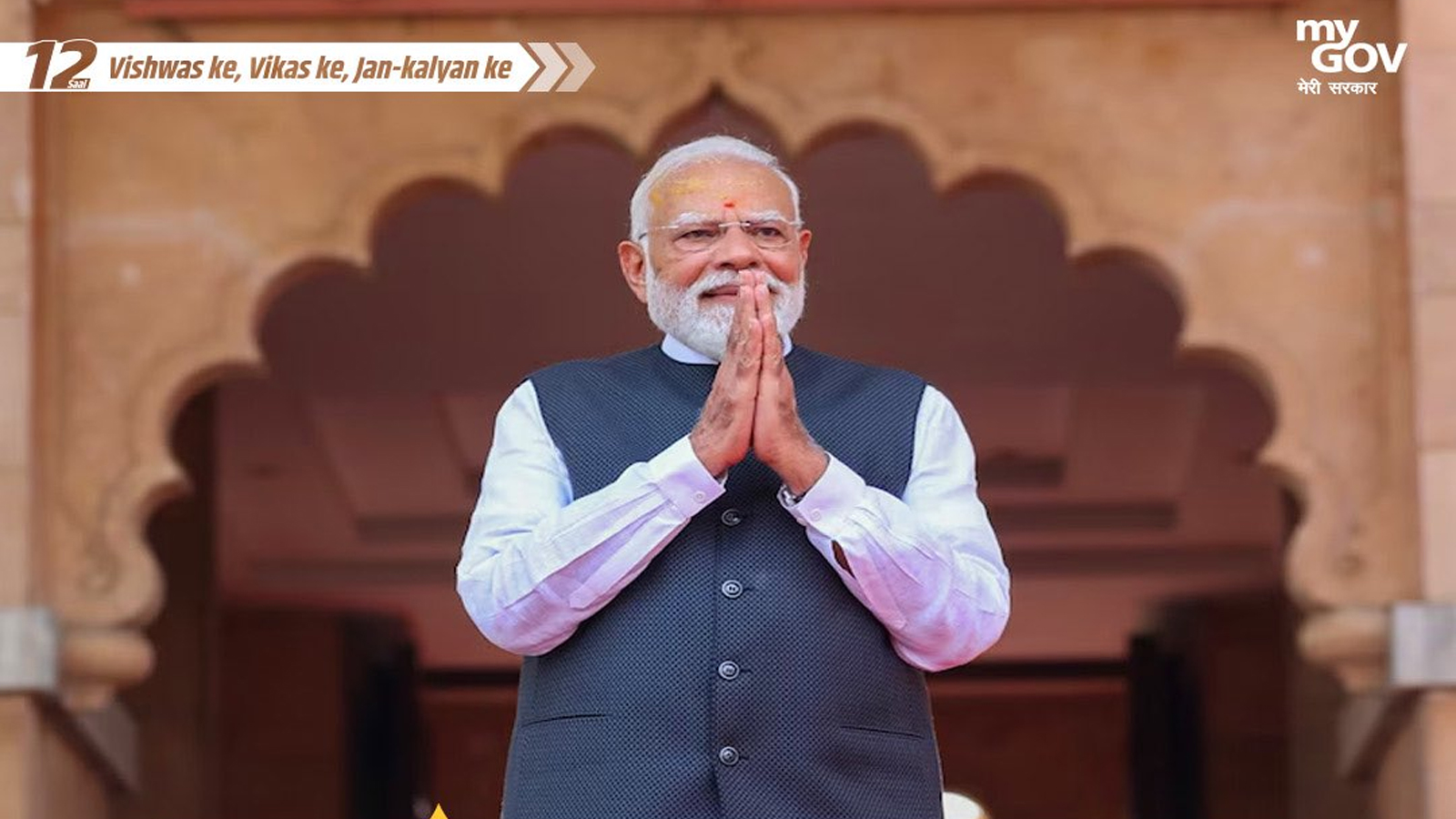
Prime Minister Narendra Modi on Thursday highlighted the government’s efforts to preserve, restore and promote India’s rich cultural heritage.
Sharing a thread by MyGovIndia on X, the Prime Minister said, “India’s cultural heritage is being preserved, celebrated and carried forward with renewed vigour. Guided by the vision of ‘Virasat Bhi, Vikas Bhi’, efforts ranging from the repatriation of antiquities to strengthening spiritual and pilgrimage infrastructure are reconnecting people with India’s timeless traditions.”
MyGovIndia highlighted a series of achievements over the past 12 years, showcasing what it described as a comprehensive effort to revive cultural identity, strengthen spiritual infrastructure, expand tourism and preserve traditional knowledge systems.
Union Home Minister Amit Shah also hailed twelve years of Narendra Modi government.
In a post on X, HM Shah said, “The 12 years of the Modi government have been a golden era of the confluence of development and heritage. In these 12 years, on one hand, the construction of Shri Ram Temple, Kashi Vishwanath Corridor, and Ujjain Mahakal Lok took place, while on the other, schemes like PM Awas, Ayushman Bharat, Ann Bhandar, world-class connectivity, infrastructure, and initiatives like ‘Make in India’ have given unprecedented momentum to the country’s development journey.”
“The digitization of 1 crore records, the return of 668 ancient artifacts, the establishment of 11 tribal freedom struggle museums, and granting classical language status to 11 Indian languages – through these, Modi ji has clearly demonstrated that development and heritage are complementary to each other,” he added.
Revival of Major Pilgrimage Centres
Among the flagship heritage projects cited was the transformation of the Kashi Vishwanath Corridor, which has significantly improved access and facilities for devotees visiting one of Hinduism’s holiest shrines.
According to government figures, annual pilgrim footfall at Kashi Vishwanath has increased from 55 lakh in 2014 to 1.47 crore in 2025, reflecting a sharp rise in faith-based tourism.
MyGovIndia also highlighted the inauguration of the Shri Ram Janmbhoomi Temple in Ayodhya, describing it as a historic milestone achieved after more than five centuries. Ayodhya now attracts approximately 16 crore visitors annually, making it one of the world’s most visited pilgrimage destinations.
Expanding Spiritual Tourism Infrastructure
Significant investments have also been made in improving connectivity to major religious destinations. The government said 616 kilometres of Char Dham all-weather roads have been completed, enhancing accessibility to the Himalayan pilgrimage circuit.
In addition, 54 projects have been undertaken under the PRASHAD (Pilgrimage Rejuvenation and Spiritual Heritage Augmentation Drive) scheme across 28 states and Union Territories.
As a result, annual pilgrim numbers to the Char Dham shrines have reportedly increased from 24 lakh to 54 lakh.
Global Recognition for Indian Traditions
India’s cultural influence has continued to expand globally through the growing recognition of traditional practices and festivals.
MyGovIndia noted that cultural traditions such as Garba, Durga Puja, Kumbh Mela and Diwali have gained international recognition in recent years.
India’s global cultural presence has also been strengthened through the popularity of yoga. According to official figures, more than 26 crore people across 191 countries participated in activities associated with the International Day of Yoga in 2025.
Increase in UNESCO World Heritage Sites
The country’s global heritage profile has expanded significantly, with the number of UNESCO-recognised World Heritage Sites increasing from 32 in 2014 to 44 till date.
MyGovIndia described this growth as evidence of increasing international recognition of India’s historical, cultural and natural heritage.
Repatriation of Stolen Antiquities
One of the major achievements highlighted was the successful return of cultural artefacts and idols that had been smuggled out of the country.
According to government data, India has repatriated more than 668 stolen antiquities and idols during the last 12 years, compared with just 13 antiquities returned between Independence and 2014.
MyGovIndia said the initiative reflects a broader effort to restore and protect India’s cultural legacy.
Preserving Ancient Knowledge Systems
MyGovIndia said the government has also accelerated efforts to digitise archival records and manuscripts to ensure long-term preservation of India’s intellectual heritage.
More than 20 crore pages of archival records have been digitised under the Abhilekh Patal initiative, while over 7.5 lakh manuscripts have been preserved digitally through the Gyan Bharatam Mission.
The initiatives aim to safeguard historical documents and make them accessible to researchers, scholars and future generations.
Tourism Competitiveness Improves
India’s growing focus on heritage conservation and tourism infrastructure has contributed to improvements in international tourism rankings.
MyGovIndia said India’s tourism competitiveness ranking improved from 65th position in 2013 to 39th in 2024, reflecting enhanced infrastructure, connectivity and global interest in the country’s cultural attractions.
Heritage Travel and Rail Connectivity
Efforts have also been made to promote heritage tourism through improved railway connectivity.
MyGovIndia said that Bharat Gaurav trains have enabled more than 1.26 lakh passengers to experience cultural and religious circuits across the country.
Meanwhile, Vande Bharat Express services now connect several major pilgrimage destinations, including Katra, Shirdi and Tirupati, improving travel convenience for devotees.
Honouring National Heroes
MyGovIndia highlighted initiatives aimed at preserving the legacy of India’s armed forces and security personnel.
These include the establishment of the National War Memorial and the National Police Memorial, as well as the naming of 21 islands in the Andaman and Nicobar archipelago after Param Vir Chakra awardees.
MyGovIndia said these efforts seek to strengthen public awareness of the sacrifices made by India’s military and police personnel.
Expansion of Classical Languages
A major linguistic milestone was also highlighted, with the government granting classical language status to five additional languages – Marathi, Pali, Prakrit, Assamese and Bengali.
With these additions, India now officially recognizes 11 Classical Languages, which the government described as the highest number for any country in the world. The move aims to preserve and promote ancient literary traditions and knowledge systems.
Cultural Revival in Jammu and Kashmir
MyGovIndia pointed to significant cultural and developmental initiatives in Jammu and Kashmir as part of a broader effort to revive heritage and tourism in the region.
Key initiatives include hosting the Khelo India Winter Games, organizing G20-related events, facilitating international sporting competitions in Srinagar, and restoring 123 heritage sites, including temples and Sufi shrines.


