







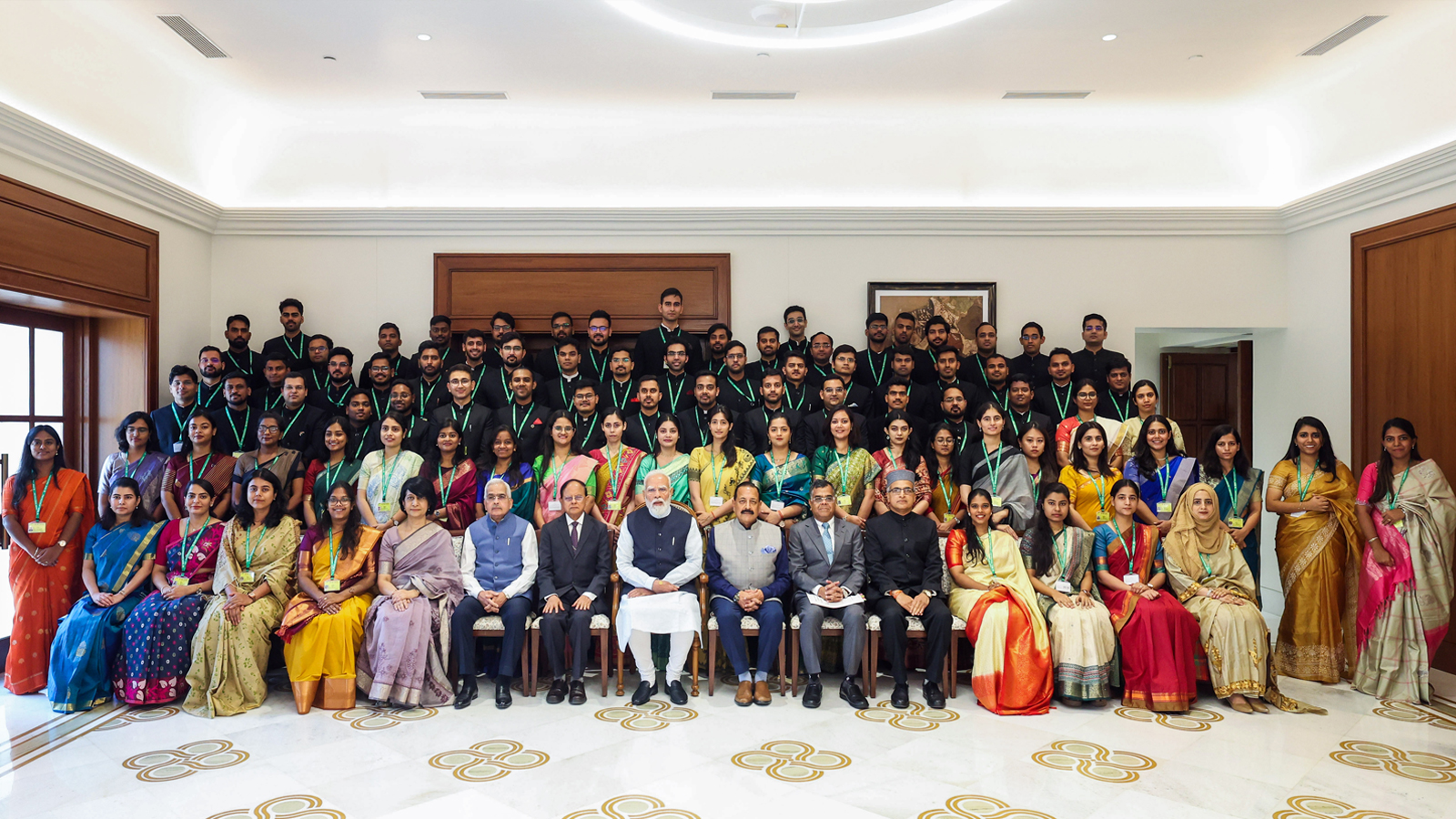
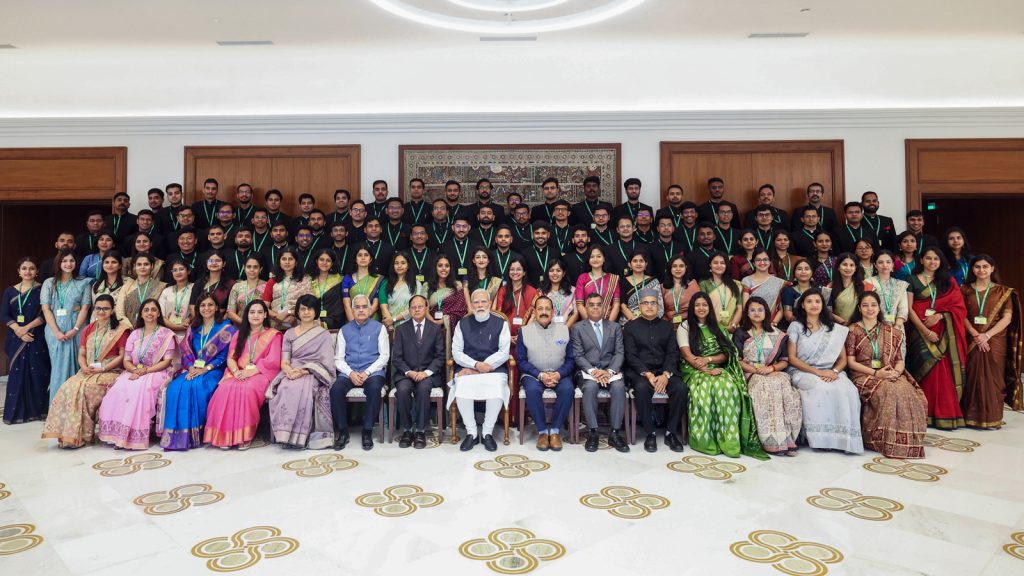
Prime Minister Narendra Modi on Tuesday interacted with 183 IAS officer trainees of the 2024 batch, currently serving as Assistant Secretaries in various ministries and departments, and urged them to place citizens at the heart of governance while embracing innovation, technology, and a collaborative approach to administration.
The interaction took place at Seva Teerth in New Delhi, where the young officers shared insights from their field training and experiences during their attachments with central ministries.
Addressing the trainees, PM Modi said that after two years of field exposure and administrative learning, they had reached a crucial stage in their careers where their decisions would not only shape their professional journeys but also impact the lives of millions of citizens. He emphasized that the true test of public service begins when officers deal with real-life situations with integrity, sensitivity, and commitment.
Calling upon the young civil servants to dedicate themselves to nation-building, the Prime Minister stressed the importance of purpose-driven and citizen-centric governance. He urged them to remember that every administrative file represents the aspirations, concerns, and lives of ordinary people.
Highlighting the mantra of “Nagrik Devo Bhava,” PM Modi said governance should remain empathetic, responsive, and inclusive, with citizens at the center of every decision-making process.
The Prime Minister also advocated a whole-of-government approach to administration, noting that many developmental challenges cannot be addressed in isolation. He said effective coordination among departments is essential to deliver meaningful and lasting outcomes for the country.
Referring to the vision of Viksit Bharat 2047, PM Modi said every policy and administrative decision taken in the coming decades should contribute to the goal of transforming India into a developed nation. He underlined that national priorities include building an Atmanirbhar Bharat, boosting manufacturing through Make in India, ensuring energy security, and creating opportunities for the country’s youth.
The Prime Minister highlighted the transformation in governance over the past decade, observing that administration has shifted from a process-oriented model to a results-driven approach. He pointed to the growing role of digital governance, artificial intelligence, and technology in enhancing transparency and improving public service delivery.
Emphasizing the significance of data-driven governance, PM Modi said data should not be viewed merely as numbers but as a reflection of the lives, challenges, and aspirations of millions of people. He encouraged the officers to regularly assess whether government policies are producing tangible results on the ground.
The Prime Minister also noted the increasing participation of women in public administration, pointing out that more than 40 percent of the current batch of IAS officer trainees are women. He described this as a positive sign for inclusive nation-building.
Urging the young officers to continually evaluate their contribution to the country’s development, PM Modi said true satisfaction should come not from holding positions of authority but from achieving measurable outcomes that improve people’s lives.
Expressing confidence in the capabilities of the new generation of civil servants, he said their energy, talent, and dedication would play a vital role in accelerating India’s development journey and realizing the vision of Viksit Bharat by 2047.
Minister of State (Personnel) Dr. Jitendra Singh, Principal Secretary to the Prime Minister P.K. Mishra, Principal Secretary-2 to the Prime Minister Shaktikanta Das, Cabinet Secretary T.V. Somanathan, Department of Personnel and Training Secretary Rachna Shah, and Lal Bahadur Shastri National Academy of Administration Director Sriram Taranikanti were among the senior officials present during the interaction.


