







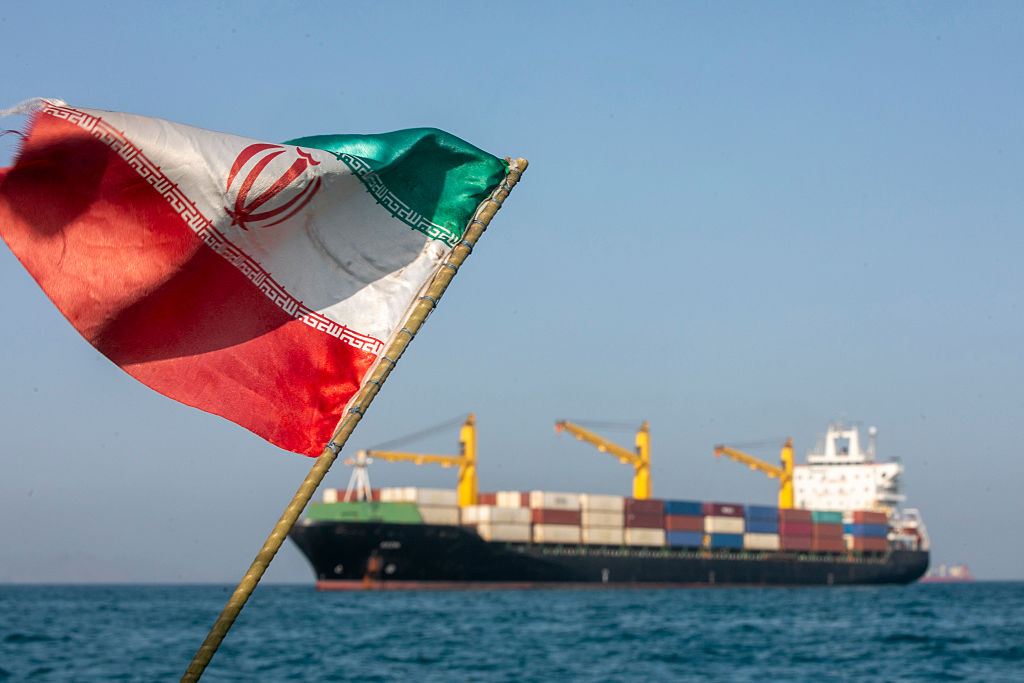
Shippers in Asia and Europe said confidence in resuming transit through the Strait of Hormuz could take weeks to rebuild and navigation will only restart once safety is assured, after the U.S. and Iran agreed on a framework deal to reopen the waterway.
U.S. and Iranian officials are expected to sign a memorandum of understanding to end their war, halt the U.S. blockade of Iran and reopen the strait on Friday. Global oil prices fell about 5% on Monday in response.
Shippers have welcomed news of the deal, but are still waiting for more details, including mine clearance in the strait.
“Initial reactions in the shipping industry are muted. AIS data shows no wave of ships heading towards Hormuz this morning,” Jyske Bank analyst Haider Anjum said in a note to clients.
“The shipping companies probably want to wait until it is clear that the agreement holds, as we have already had Hormuz ‘open’ for a very short time twice before,” he added.
WAR LARGELY STOPPED SHIPPING THROUGH STRAIT
The U.S.-Israeli war with Iran that began on February 28 has largely stopped shipping through the strait, the transit route for roughly a fifth of the world’s oil and liquefied natural gas supply, along with vital products such as aluminium and urea.
While traffic through the waterway remains limited, India’s Petronet, opens new tab sent the LNG tanker Disha through Hormuz on Monday, the only visible shipment so far, data from Kpler and LSEG showed.
The tanker picked up its cargo at Qatar’s Ras Laffan on March 1-2 and had been west of the strait since, with the Dahej terminal in India its eventual destination, according to the data. Petronet did not respond to a Reuters request for comment.
Shipping association BIMCO said on Monday it still considers transits through the strait highly risky, with mines remaining a key concern.
“The next step is for shipowners to be reassured that transiting the Strait of Hormuz is not only permitted but also safe,” said Jakob Larsen, BIMCO’s chief safety and security officer.
CONCRETE INFORMATION AWAITED
A spokesperson for the Japanese Shipowners’ Association said on Monday that while the group welcomed the peace agreement, it wanted to “wait a little longer for more concrete information”.
“Given the situation, we cannot simply say, ‘Right then, let’s go’ based on news of the agreement alone,” he added.
Nippon Yusen (9101.T), opens new tab, the country’s biggest shipper, said it hoped operations would return to normal as soon as possible. Mitsui O.S.K. Lines (9104.T), opens new tab said it would only resume navigation once safety has been fully confirmed.
German shipowners’ association VDR said on Monday it was “cautiously optimistic” about whether the U.S.-Iran deal could reopen the Strait of Hormuz, while German shipper Hapag-Lloyd (HLAG.DE), opens new tab said it hoped that vessels will be able to cross the strait this week.
MANY TANKERS STILL STUCK INSIDE GULF
An estimated 155 tankers, carrying oil and chemicals, were in the Mideast Gulf area as of June 15, shiptracking data from Kpler showed, down from 201 tankers at the end of May.
Oil Brokerage’s estimate stood at 215 tankers. Under unrestricted navigation, the traffic pile-up on either side can be resolved in 8-10 days, said Anoop Singh, Oil Brokerage’s global head of shipping research.
While tankers have been quietly moving barrels along Oman’s coast for weeks, sailing dark with U.S. navy support, it would require weeks of de-mining and normalization of insurance rates for resumption of meaningful traffic, said David Jorbenaze, global oil market leader at ICIS.
“Returning to full pre-conflict volumes is realistically a 2027 story, and only if the agreement holds without incident and production recovers at pace,” he added.
Reporting by Emily Chow, Jeslyn Lerh and Trixie Yap in Singapore, Nidhi Verma in New Delhi, Kentaro Okasaka and Maki Shiraki in Tokyo, Stine Jacobsen in Copenhagen; Additional reporting by Ludwig Berger in Frankfurt, Marie Mannes in Stockholm, Anushree Mukherjee in Bangalore; Writing by Florence Tan and Nerijus Adomaitis; Editing by Tom Hogue and Jan Harvey
(Reuters)


