







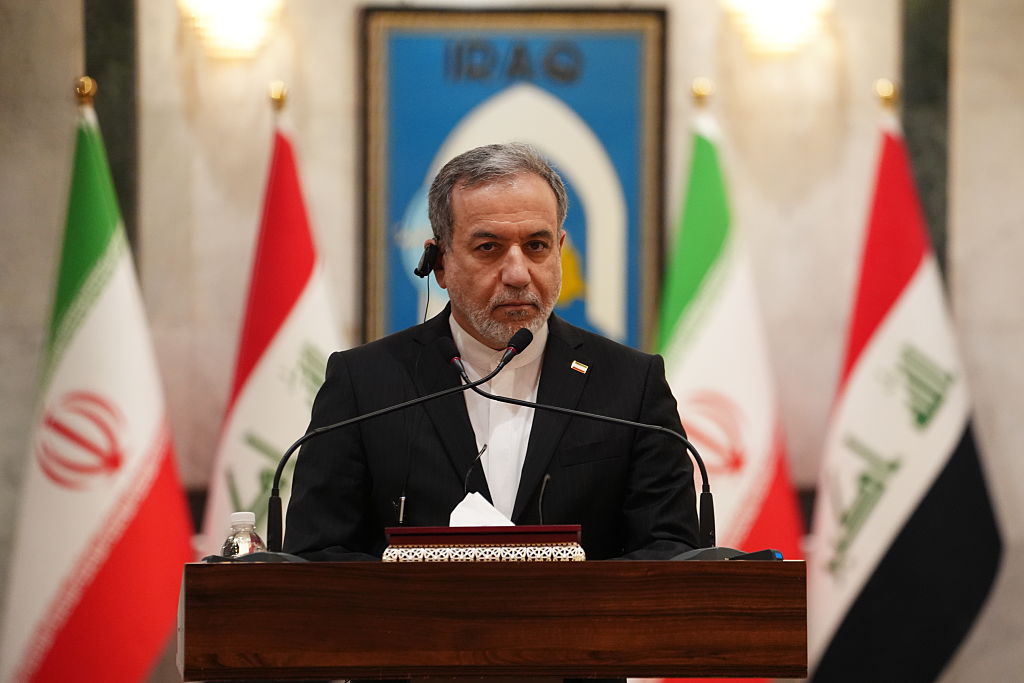
Iran on Wednesday warned that any aggression against the country, including attacks on its infrastructure, would be met with a “powerful and decisive response,” as tensions with the United States continued to escalate over the Strait of Hormuz and the ongoing conflict in the region.
Iranian Foreign Minister Seyed Abbas Araghchi said those supporting any attack on Iran would also be considered “legitimate targets.”
In a post on X, Araghchi said, “Our defense doctrine is clear: eye for an eye. Any aggression against Iran, including our infrastructure, will compel a powerful and decisive response. Those who contribute to such aggression, whatever the kind of support, will also be considered as legitimate targets.”
Echoing the warning, Iranian Parliament Speaker Mohammad Bagher Ghalibaf said the country’s security and the future of the Strait of Hormuz were closely linked, asserting that the waterway would not return to its pre-war status.
“The equation of this war is clear: either all or none. In a region where we do not sell oil, no one will sell oil. If our security is not ensured, no infrastructure will be safe, and the security of the strait is in the absence of American forces. We have repeatedly said that the situation of the strait will not return to pre-war conditions,” Ghalibaf said in a post on X.
Meanwhile, Iran’s state broadcaster Press TV reported that the Khatam al-Anbiya Central Headquarters said the Strait of Hormuz remains closed and that any vessel seeking passage must use designated routes in accordance with previously announced arrangements.
According to Press TV, the military headquarters warned that if the United States carried out its threats against Iran’s civilian infrastructure, Iranian armed forces would prevent the export of oil through the region and target oil, gas, electricity and other economic infrastructure.
Press TV also quoted the Khatam al-Anbiya Central Headquarters as saying that repeated threats by the US military would only expand the conflict across the region and beyond.
The statements came after US President Donald Trump said Iran was “getting hit so hard” and warned that Tehran would face severe consequences if it continued targeting commercial shipping in the Strait of Hormuz.
Speaking to reporters on Wednesday, Trump said, “They’re going to pay a big price; they’re being decimated.”
Asked about public support for the joint US-Israel military campaign against Iran amid rising American military casualties, Trump said, “Americans aren’t against the war.”
Earlier, Trump warned that the United States would strike Iranian infrastructure in response to attacks on commercial vessels in the Strait of Hormuz.
“Any time the Islamic Republic of Iran shoots at a ship in the Strait of Hormuz, whether it be by Missile, Rocket, Drone, or any other device or weapon, the United States will bomb and destroy ONE BRIDGE OR POWER PLANT,” he wrote on social media.
Signalling that the military campaign would continue, Trump said on Tuesday, “We’re not finished at all… we’re not leaving right now.”
The escalation follows renewed maritime tensions around the strategically important Strait of Hormuz, where Iran’s blockade of commercial vessels has disrupted global oil shipments and pushed Brent crude prices higher, increasing concerns over energy markets and fuel costs.
US Secretary of War Pete Hegseth said this week that the military operation has cost USD 37.5 billion so far, defending the administration’s request for additional emergency military funding.
Despite the heightened rhetoric, senior US officials have continued to express support for a diplomatic resolution. Speaking in Manila, US Secretary of State Marco Rubio said Washington remained open to negotiations with Tehran but questioned Iran’s willingness to engage.
“We remain open to working it out in a negotiated way. But right now, they don’t seem to be serious about that,” Rubio said.
(With inputs from ANI)


