







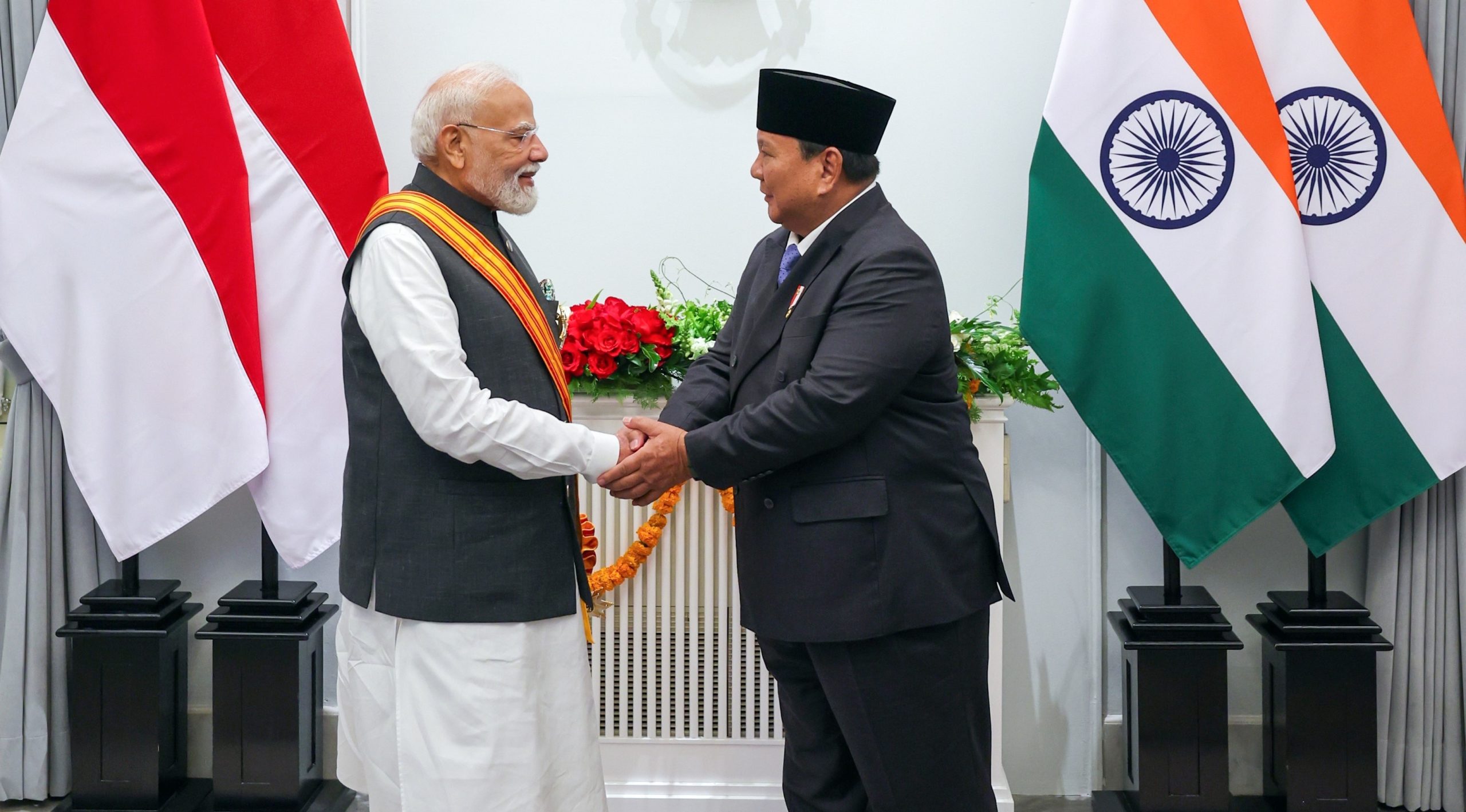
India and Indonesia have unveiled an ambitious roadmap to strengthen cultural, educational and people-to-people ties, announcing the “Tagore-Dewantara Year of India-Indonesia Cultural and Educational Diplomacy” for 2026-27, while expanding cooperation in heritage conservation, tourism, higher education, elections and official statistics during Prime Minister Narendra Modi’s State Visit to Indonesia from July 6-8.
The initiatives were announced in the joint statement issued following bilateral talks between Prime Minister Narendra Modi and Indonesian President Prabowo Subianto as part of efforts to further strengthen the India-Indonesia Comprehensive Strategic Partnership.
A key highlight of the visit was the inauguration by the two leaders of the India-supported restoration and conservation project at the UNESCO World Heritage Prambanan Temple Compounds in Yogyakarta, undertaken by the Archaeological Survey of India (ASI).
Indonesia also appreciated India’s gift of a replica of the original Nalanda Copper Plate, dating to around 860 CE and engraved in Devanagari script and the Sanskrit language, by the National Museum of India. The replica is now displayed in the new museum at Muara Jambi.
The leaders also recalled the principles of the “Kashi Cultural Pathway”, adopted during the G20 Culture Ministers’ Meeting in Varanasi in August 2023, and emphasised the importance of continued consultations on cultural heritage matters in accordance with the laws and procedures of both countries and in a spirit of friendship and mutual respect.
Recognising the enduring intellectual legacy of Rabindranath Tagore and Ki Hajar Dewantara, whose exchanges laid the foundation for closer cultural and educational ties between the two countries, the leaders agreed to commemorate 2026-2027 as the “Tagore-Dewantara Year of India-Indonesia Cultural and Educational Diplomacy”.
The year-long commemoration will mark the centenary of Rabindranath Tagore’s visit to Indonesia in 1927 through a series of joint cultural, educational, academic and people-to-people programmes to be organised in both countries.
Highlighting tourism as a key driver of people-to-people engagement, Prime Minister Modi and President Prabowo reaffirmed their commitment to strengthening tourism cooperation and increasing two-way visitor flows. They also agreed to continue discussions on easing travel and facilitating visa processes for citizens of both countries.
The leaders reviewed ongoing cooperation in the education sector and encouraged greater academic and institutional collaboration, including expanded student exchanges. They also called for the early conclusion of a Memorandum of Understanding on cooperation in primary and secondary education.
Reaffirming their commitment to strengthening higher education, science and technology partnerships, the two countries encouraged greater academic mobility, joint research, knowledge exchange, capacity building and institutional collaboration to support human capital development. They also looked forward to the early conclusion of a Memorandum of Understanding on cooperation in higher education, science and technology.
President Prabowo welcomed the growing interest shown by leading Indian higher education institutions in establishing campuses in Indonesia. The two leaders specifically welcomed the proposed establishment of a campus of the Indian Institute of Management (IIM) Bangalore in Indonesia.
The joint statement also noted ongoing cooperation between the Election Commission of India (ECI) and Indonesia’s General Election Commission (KPU) in the areas of human resource development, election management and technology. Both leaders welcomed the signing of a Memorandum of Understanding between the two election management bodies on cooperation in election management and the use of technology.
In addition, the leaders welcomed the proposed collaboration between India’s Ministry of Statistics and Programme Implementation (MoSPI) and Statistics Indonesia (BPS) to strengthen cooperation in official statistics, capacity building and strategic collaboration.


