







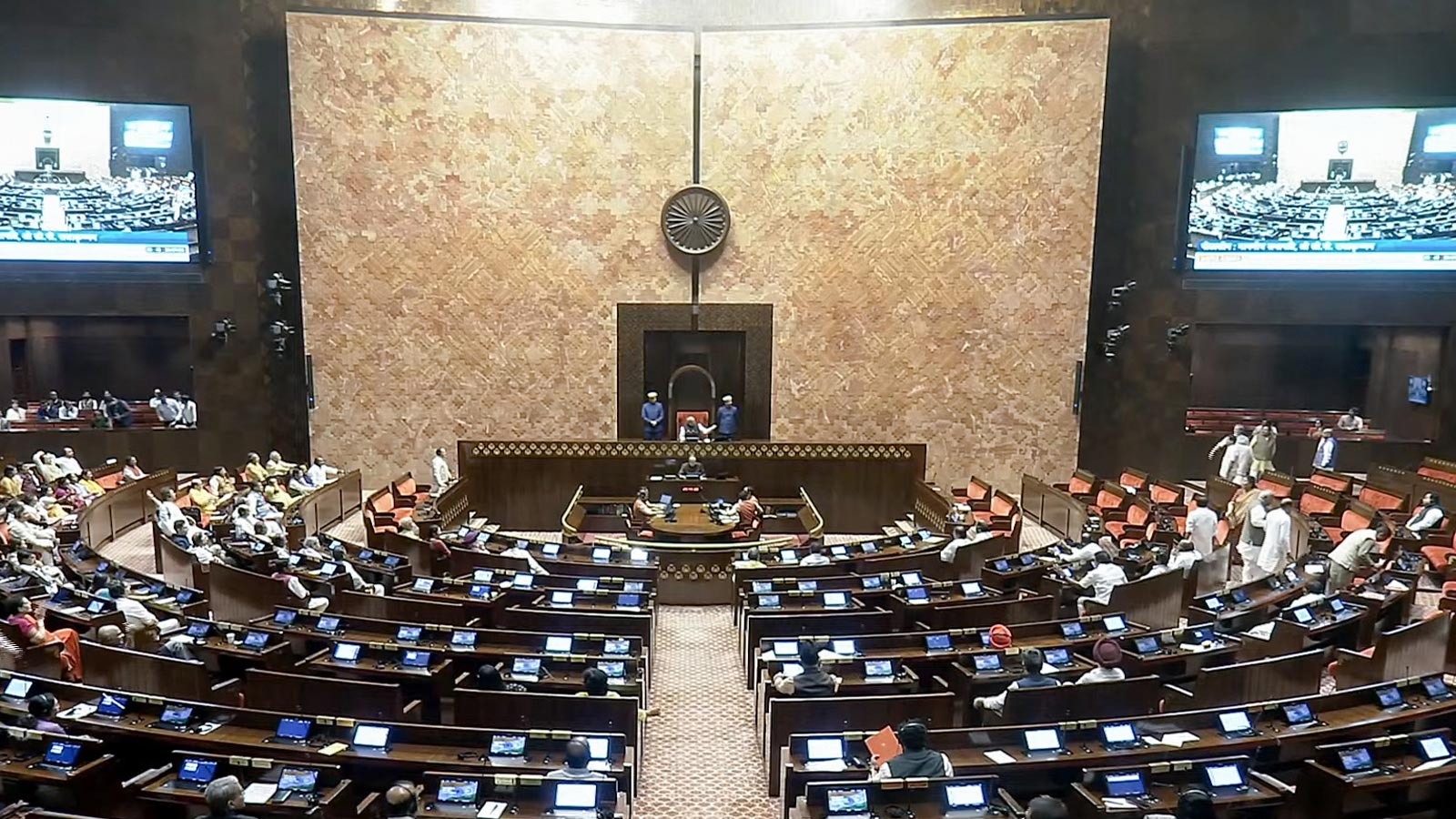
The Parliament on Thursday cleared the Public Examinations (Prevention of Unfair Means) Amendment Bill, 2026, with the Rajya Sabha passing the legislation by voice vote after it had earlier been approved by the Lok Sabha. The Bill aims to strengthen the legal framework to curb unfair practices in public examinations and safeguard the interests of students and job aspirants.
Replying to the debate in the Upper House, Union Minister of State (Independent Charge) for Science & Technology; Earth Sciences and Minister of State in the Prime Minister’s Office, Personnel, Public Grievances and Pensions, Atomic Energy and Space, Dr. Jitendra Singh said the amendments go beyond tackling question paper leaks and seek to comprehensively address all forms of examination-related malpractice.
He said the legislation covers offences such as question paper and answer key leaks, tampering with answer sheets and computer systems, manipulation of examination processes, creation of fake websites and admit cards, and organised attempts to facilitate unfair means during examinations.
“The Government is committed to ensuring that public examinations remain transparent, credible and merit-based so that the sincere efforts of students are protected,” the Minister said, adding that the issue concerns every family as it directly affects the aspirations of the country’s youth.
Singh said the government introduced the amendment with an open mind and welcomed constructive suggestions from Members to further strengthen the law.
Highlighting broader reforms in the education sector, he said the National Education Policy (NEP) 2020 has brought significant changes by increasing academic flexibility and expanding opportunities for students. The Minister said the number of universities in the country has increased from 760 to 1,293, while higher education institutions have grown from 51,534 to 64,896.
He also pointed to reforms in medical education, stating that the number of AIIMS has increased from seven to 22, medical colleges from 387 to 844, undergraduate medical seats from 51,300 to 1.39 lakh, and postgraduate seats from 31,000 to 86,300.
The Minister said educational access has also expanded through 400 operational Eklavya Model Residential Schools. On employment, he noted that government appointments increased from 7.22 lakh during 2004–2014 to 10.96 lakh during 2014–2024, alongside efforts to fill backlog vacancies and improve career progression through special promotion drives.
Highlighting entrepreneurship, Singh said recognised startups in India have grown from around 350-400 at the launch of the Startup India initiative to nearly 2.4 lakh, making India the world’s third-largest startup ecosystem. He also cited significant growth in research, innovation and patent filings.
The Minister said the Public Examinations (Prevention of Unfair Means) Act, 2024 applies to examinations conducted by major recruitment agencies, including the Union Public Service Commission (UPSC), Staff Selection Commission (SSC), Railway Recruitment Boards (RRBs), Institute of Banking Personnel Selection (IBPS) and the National Testing Agency (NTA).
He highlighted several reforms already implemented to improve transparency and efficiency in public examinations, including the abolition of interviews for specified government recruitments, online application systems, candidate-friendly examination processes, provisional answer keys and strengthened cyber security measures. The average recruitment cycle of the Staff Selection Commission has also been reduced from nine months and eight days to eight months and 24 days, he said.
Singh also referred to the Pratibha Setu initiative, which connects meritorious civil services candidates with prospective employers, noting that 335 private companies have already registered on the platform.
The Minister informed the House that implementation of recommendations made by the high-level expert committee constituted to strengthen the public examination system is progressing steadily. Of the committee’s 46 recommendations, 35 have already been implemented, including Aadhaar-based biometric authentication, AI-enabled face authentication, multi-layer frisking, CCTV surveillance, signal jammers, state and district coordination committees, grievance redressal mechanisms and restructuring of the National Testing Agency.
Reiterating the government’s commitment to protecting the integrity of public examinations, Singh said ensuring a fair, transparent and credible examination system requires the collective participation of the government, educational institutions, parents, students and society. He added that the government will continue to strengthen the examination ecosystem while remaining open to constructive suggestions from all stakeholders.


