







India has called for urgent and comprehensive reforms of the United Nations, asserting that the Security Council’s inability to effectively respond to global conflicts has weakened public confidence in the multilateral body and underscored the need to make international institutions more representative and capable of addressing contemporary challenges.
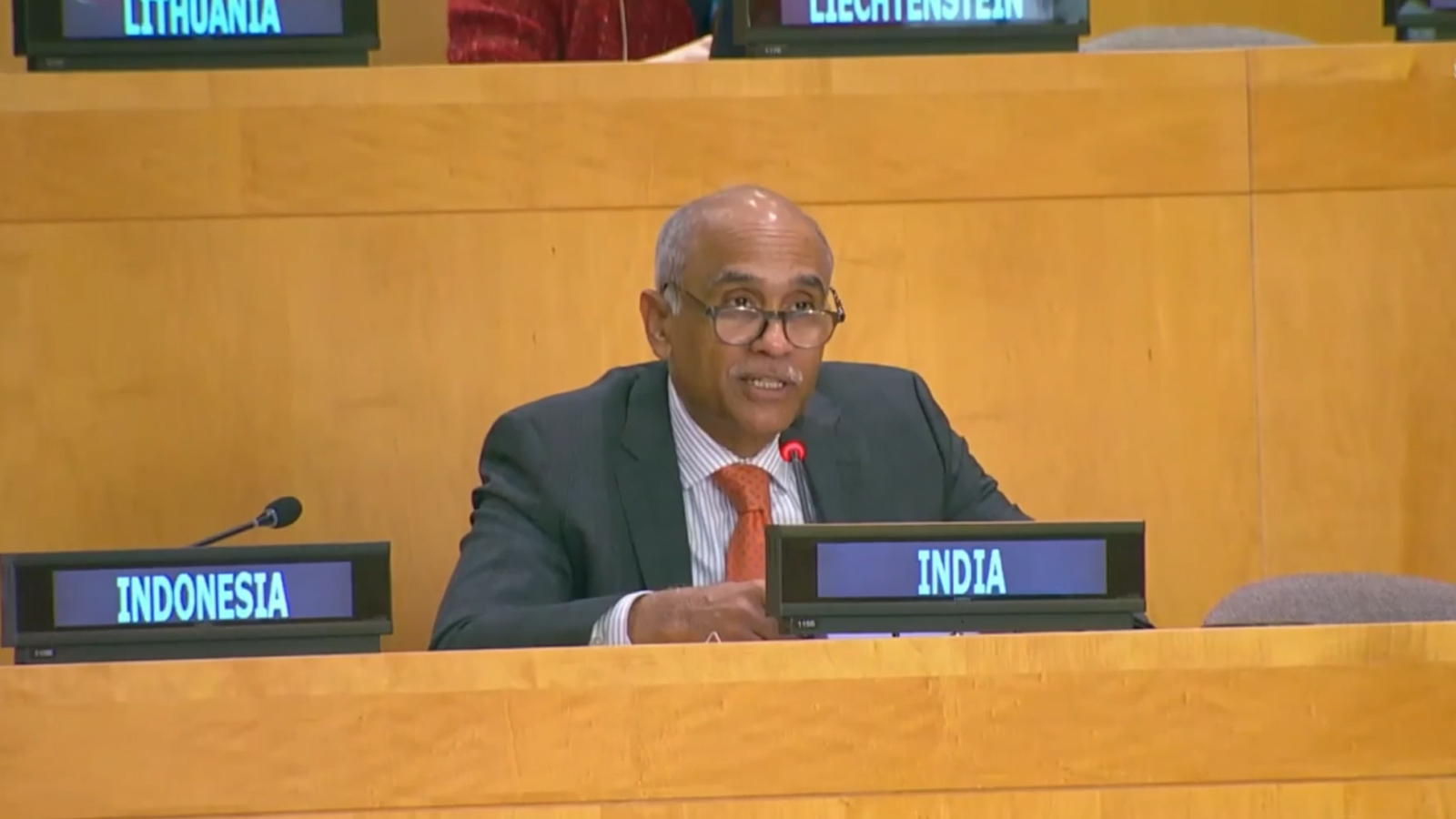
Addressing the Ministerial Roundtable on “Making Multilateralism Fit for the Future” during an informal meeting of the UN General Assembly, India’s Permanent Representative to the United Nations, Ambassador Harish Parvathaneni, said meaningful reform of global governance institutions must begin with overhauling the Security Council.
“For India, making multilateralism fit for the future begins with ensuring that global institutions reflect contemporary realities,” Parvathaneni said. He stressed the need for comprehensive reform of the UN Security Council, revitalisation of the General Assembly, and a stronger role for the Economic and Social Council (ECOSOC) in advancing sustainable development across its economic, social and environmental dimensions.
The ambassador added, “Public perception about the UN has changed adversely in the recent past primarily due to the Security Council’s inability to meaningfully intervene in raging conflicts across different parts of the globe.”
He noted that the Council had failed to end human suffering in conflict-affected regions, raising questions about the UN’s foundational objective of maintaining international peace and security, and the Security Council’s shortcomings stem from its outdated structure.
Parvathaneni said the Council’s architecture, designed nearly 80 years ago, is ill-equipped to address present-day geopolitical challenges.
“An eighty-year-old architecture designed for the 1940s is ill-equipped to address contemporary challenges,” he said, adding that discussions on Security Council reform have remained confined to an “endless cycle of prepared statements” under the Intergovernmental Negotiations (IGN) framework, with little tangible progress.
He also pointed out that Action Points 39 to 41 of the Pact for the Future, relating to Security Council reform, have largely remained unimplemented.
Calling the situation untenable, the ambassador urged member states to move beyond procedural discussions and take concrete steps towards reform.
Parvathaneni also referred to India’s reservations regarding the drafting of the Pact’s provisions on the Intergovernmental Negotiations process, noting that the relevant action points had been prepared by the then IGN Co-Chairs rather than the Pact’s Co-Facilitators.
Despite its concerns, he said, India had supported the Pact in a constructive spirit.
Beyond UN reforms, India also called for changes to the international financial architecture to better address the priorities of developing countries.
The ambassador stressed that achieving the Sustainable Development Goals (SDGs) requires adequate, affordable and predictable financing, and said international financial institutions should become more representative, responsive and development-oriented while preserving their core mandates.
Reiterating India’s commitment to strengthening multilateralism, Parvathaneni said the country would continue to support genuine efforts to reform global governance institutions, including both the UN Security Council and international financial institutions.
“Our joint endeavour must be to make these institutions fit for purpose, equipped to handle the present and future challenges of humanity,” he said.


