







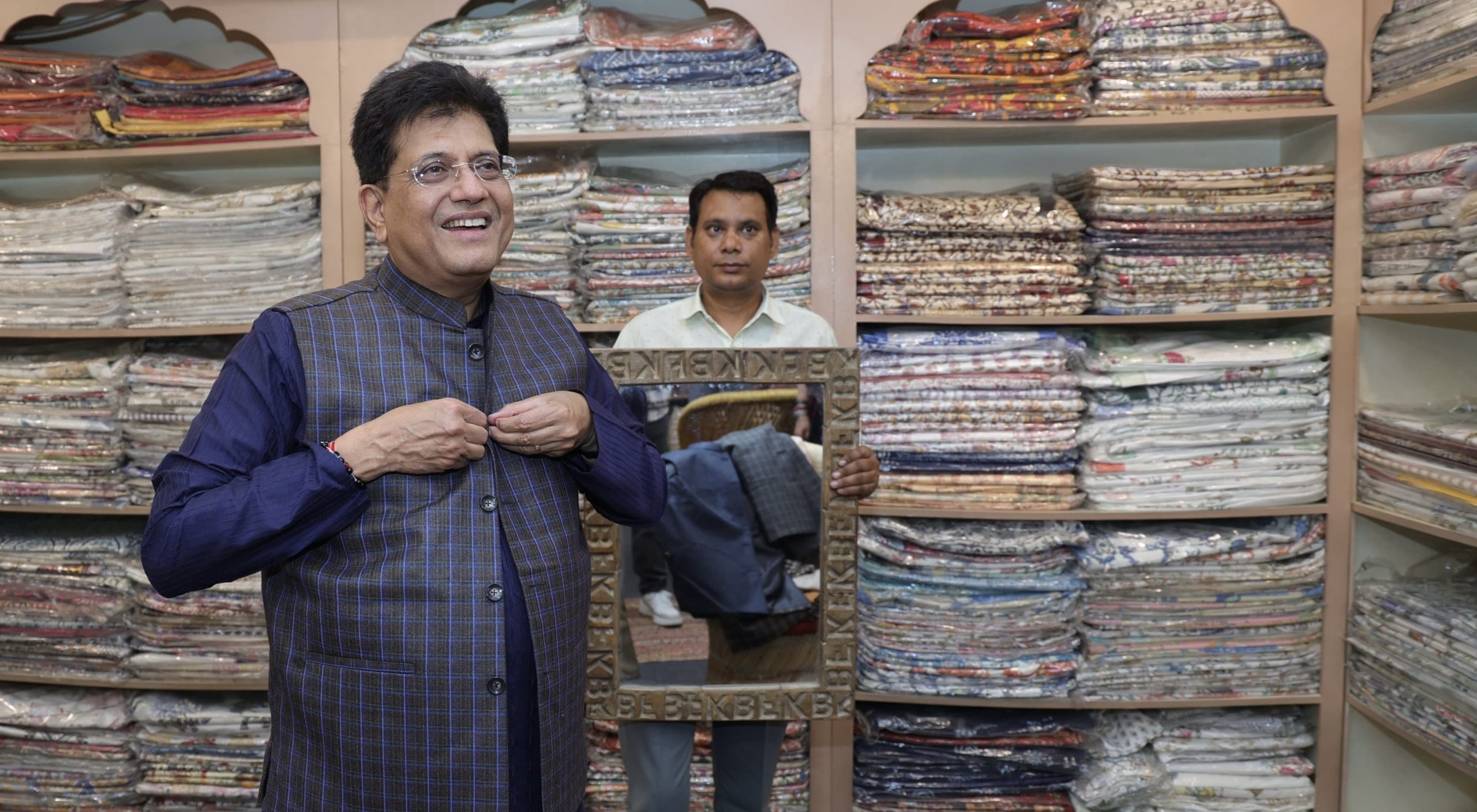
Commerce and Industry Minister Piyush Goyal on Saturday said Bihar’s talent and products are gaining a new identity in global markets, with India’s free trade agreements (FTAs) opening greater opportunities for exporters from the state.
In a post on X, Goyal said the Narendra Modi government’s new FTAs were opening “doors to international markets” for Bihar’s agriculture and agro-processing, textiles, leather, footwear, engineering, chemicals and pharmaceutical products.
His remarks came as India recorded its highest-ever exports of $863.1 billion in 2025-26, with FTAs helping expand global market access, diversify exports and strengthen labour-intensive sectors.
The government has undertaken several measures to diversify export destinations, including signing FTAs, pursuing trade negotiations with major economies and promoting exports through the Export Promotion Mission, Indian diplomatic missions, Export Promotion Councils, industry associations and other stakeholders.
Over the past five years, India has signed nine FTAs, including the India-Mauritius Comprehensive Economic Cooperation and Partnership Agreement (CECPA), India-UAE Comprehensive Economic Partnership Agreement (CEPA), India-Australia Economic Cooperation and Trade Agreement (ECTA), India-European Free Trade Association (EFTA) Trade and Economic Partnership Agreement (TEPA), India-Oman CEPA, India-UK Comprehensive Economic and Trade Agreement (CETA) and the India-New Zealand FTA.
FTAs are primarily aimed at increasing bilateral trade by expanding market access and leveraging complementarities between trading partners.
They provide preferential market access for Indian products, create opportunities for industries and farmers, and support employment generation, particularly in labour-intensive sectors such as textiles, apparel and leather goods.
The government has said the agreements seek to establish comprehensive, balanced and equitable trade frameworks based on fairness, reciprocity and the broader interests of stakeholders.
The FTAs also include provisions on Technical Barriers to Trade aimed at improving understanding of standards, technical regulations and conformity measures, while enhancing transparency and facilitating smoother access for Indian exports.
The government continues to engage with trading partners through bilateral, regional and multilateral mechanisms to address non-tariff barriers and improve market access for Indian goods.
(IANS Inputs)


