







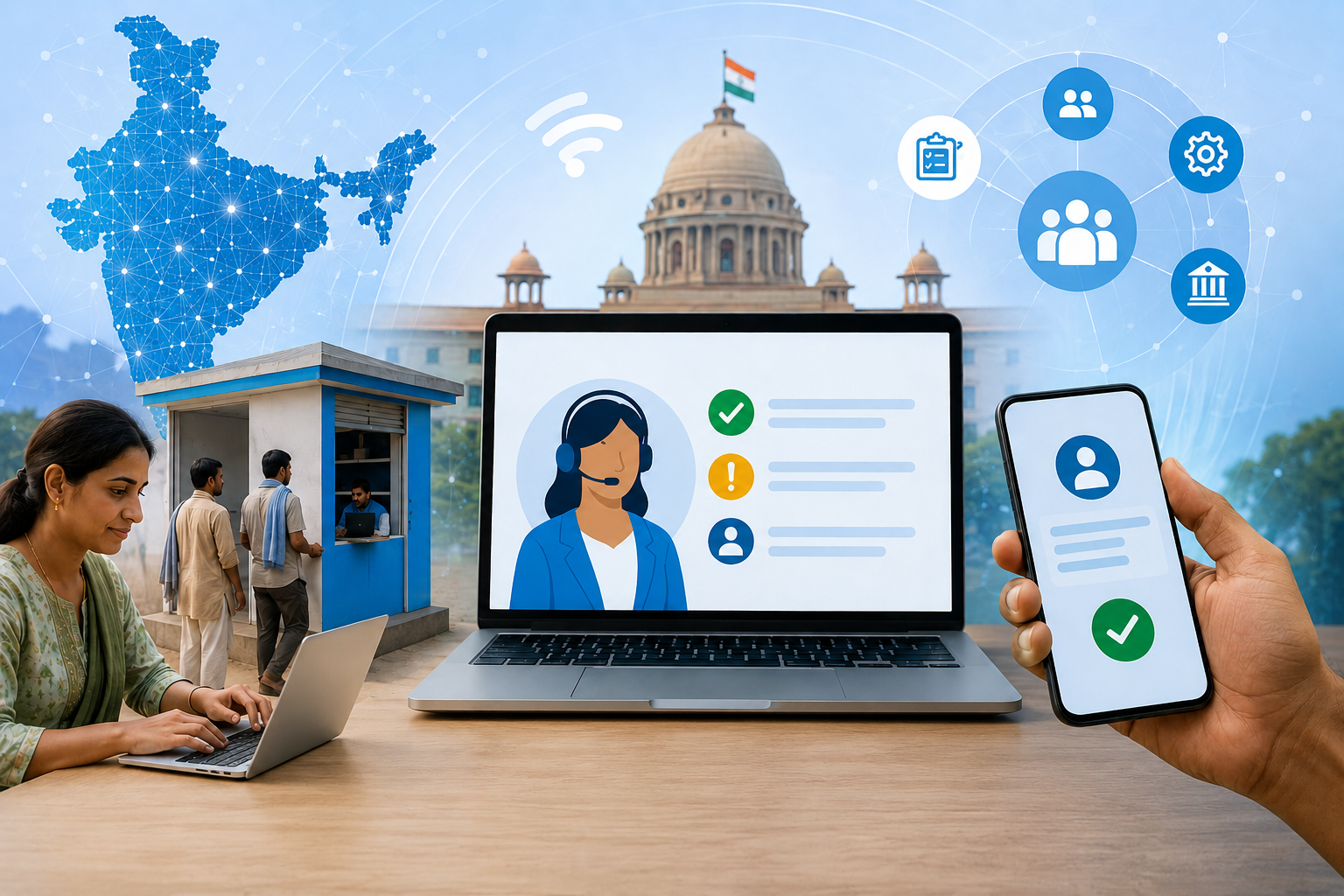
The Centralised Public Grievance Redress and Monitoring System (CPGRAMS) has emerged as a key digital platform for strengthening public grievance redressal and improving citizen-centric service delivery.
The government said CPGRAMS connects Central Ministries and Departments, State Governments and Union Territories through a single platform, enabling citizens to lodge grievances related to public services and track their resolution.
Since 2014, the grievance redressal system has undergone significant transformation, with the number of grievances handled annually increasing from around 3.01 lakh in 2014 to nearly 27 lakh in 2024. The number of Grievance Redressal Officers has also increased from 10,232 in 2014 to more than 1.11 lakh in 2025.
The average time taken to dispose of grievances in Central Ministries and Departments has declined sharply from 157 days in 2014 to 15 days in 2025. Under revised guidelines issued in August 2024, the prescribed timeline for grievance resolution was reduced from 30 days to 21 days.
CPGRAMS provides multiple channels for citizens to register grievances, including its online portal, mobile application and Common Service Centres. The system also enables automatic routing of grievances to the appropriate authority and allows citizens to track their complaints using a unique registration ID.
After a grievance is resolved, citizens are contacted through a dedicated Feedback Call Centre to assess their satisfaction. Those who are not satisfied can approach the appellate mechanism.
In June 2026, CPGRAMS recorded 1,99,968 grievance disposals, marking the 46th consecutive month in which more than one lakh grievances were disposed of. The average disposal time in 2026 stood at 14 days, while the citizen satisfaction rate between January and June was recorded at 76 per cent.
As part of its reforms, CPGRAMS has incorporated artificial intelligence and machine learning for grievance analysis, pattern recognition and identification of systemic issues. The platform also supports grievance submissions in 22 scheduled languages, besides English, with BHASHINI integration enabling grievance officers to respond in the language used by citizens.
A major technological initiative is the AI-enabled voice chatbot, ‘Samadhan Didi’, launched on May 30, 2026. It allows citizens to register grievances through voice in their preferred language. The system uses AI and BHASHINI technologies for speech-to-text, text-to-speech, translation and transliteration, while helping identify the relevant Ministry, Department and grievance category.
The government is also developing NextGen CPGRAMS to further modernise the grievance redressal ecosystem. The proposed platform will include voice-enabled registration, AI-based categorisation and routing, multilingual support, automated escalation, accessibility features and real-time analytics.
It will also incorporate AI-enabled validation of grievance disposal to assess the quality of resolutions and identify cases where grievances may have been transferred or closed without effective resolution.
Through these reforms and technology-driven initiatives, CPGRAMS is being positioned as a more accessible, responsive and transparent mechanism for strengthening citizen participation and improving public service delivery.


