







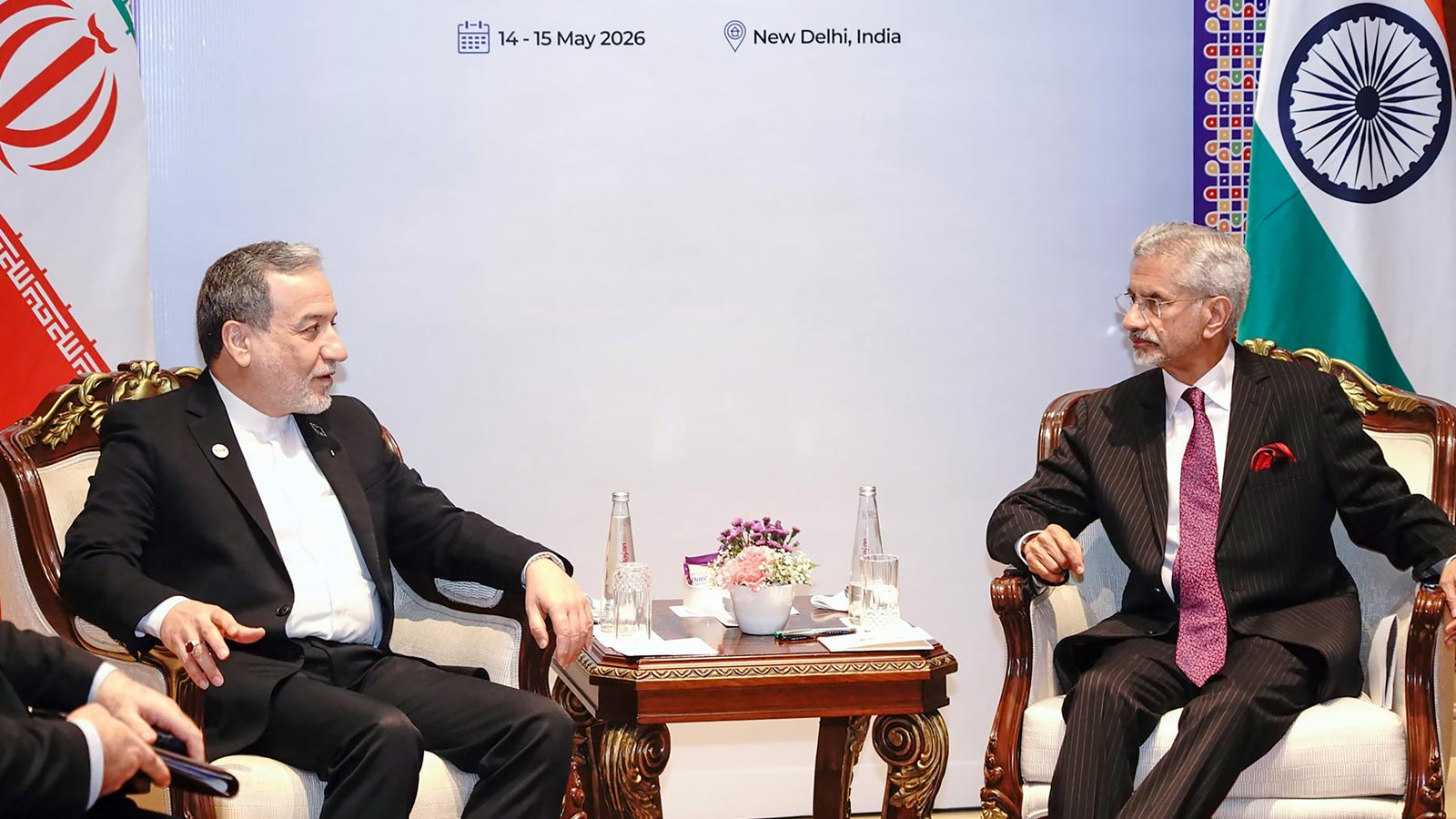
External Affairs Minister S. Jaishankar on Friday expressed India’s deep concern over the escalating hostilities in West Asia and strongly urged Iran to ensure that commercial shipping and seafarers are not targeted under any circumstances.
During a telephonic conversation with Iranian Foreign Minister Seyed Abbas Araghchi, EAM Jaishankar reiterated India’s longstanding position in favour of dialogue and diplomacy to address the ongoing regional crisis.
In a post on X, the External Affairs Minister said, “Had a tele-conversation with FM Seyed Abbas Araghchi of Iran this evening. Conveyed our deep concerns at the ongoing hostilities in the region. Strongly urged that attacks on commercial shipping and seafarers be avoided under any circumstance. India condemns any such attack by any party.”
He added that he was apprised of Iran’s perspective on the evolving situation and the discussions currently underway. “India is always supportive of dialogue and diplomacy,” Jaishankar said.
According to a statement issued by the Iranian Foreign Ministry, the two ministers discussed bilateral relations as well as recent regional developments during the phone conversation.
The discussion comes amid heightened tensions in West Asia, with India closely monitoring the security situation, particularly the safety of commercial shipping routes and Indian seafarers operating in the region, including around the strategically important Strait of Hormuz.
The call also follows growing concerns over the impact of the conflict on Indian nationals in the region.
On Thursday, Minister of State for External Affairs Kirti Vardhan Singh informed the Rajya Sabha that 16 Indian nationals, including 10 seafarers, have lost their lives since the outbreak of the conflict in West Asia.
In a written reply, the minister said the fatalities included eight in Oman, four in the United Arab Emirates, two in Kuwait, one in Saudi Arabia and one in Iraq. He also stated that 75 Indians have been injured during the conflict, including 32 in the UAE, 24 in Oman, 13 in Kuwait, four in Qatar, one in Saudi Arabia and one in Israel.
(With agency inputs)


