







India’s human spaceflight programme has achieved significant milestones, with the first uncrewed experimental Gaganyaan mission scheduled for the fourth quarter of 2026 and the country’s first crewed mission targeted for 2027, the government informed Parliament on Wednesday.
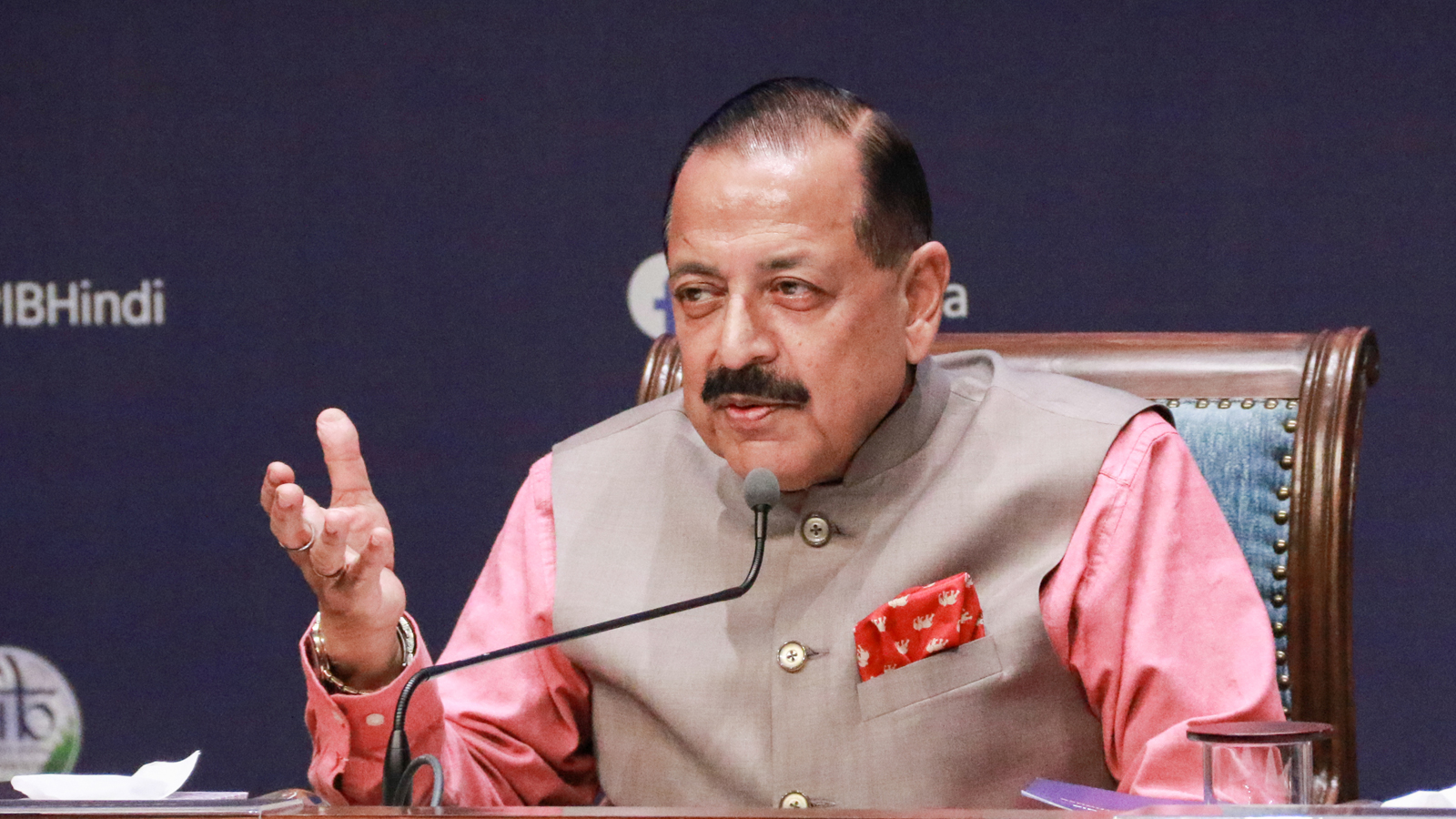
In a written reply in the Lok Sabha, Union Minister of State (Independent Charge) for Science and Technology, Earth Sciences, and Minister of State for Space, Dr. Jitendra Singh, said the Gaganyaan mission has made substantial progress in validating critical human-rating technologies while work is also advancing on the Bharatiya Antariksh Station (BAS), which is planned to become operational by 2035.
The Minister said the development and ground testing of all propulsion stages and structures for the Human Rated Launch Vehicle (HLVM3) have been completed. Major systems of the Orbital Module, including the Crew Module and Service Module propulsion systems, have been developed, tested and qualified. ISRO has also realised the engineering model of the Environmental Control and Life Support System (ECLSS), while key technologies such as the deceleration system, Crew Module uprighting system, thermal protection system and end-to-end avionics have been successfully developed and tested.
Significant progress has also been achieved in the Crew Escape System (CES), with five types of motors developed and successfully undergoing static tests. All Crew Escape System structures have been realised and qualified.
Singh informed Parliament that critical infrastructure required for the mission has already been established, including the Orbital Module Preparation Facility, Gaganyaan Control Centre, Gaganyaan Control Facility, crew training facility and modifications to the second launch pad.
The Minister highlighted that the first Test Vehicle mission (TV-D1), conducted to validate the Crew Escape System during flight, was successfully completed. ISRO has also successfully carried out Integrated Air Drop Test-01 and Integrated Air Drop Test-02 using a simulated Crew Module to validate the deceleration system. Preparations are currently underway for the second test mission, TV-D2.
Ground infrastructure supporting flight operations has also been finalised, with the communication network configuration completed, IDRSS-1 feeder stations and terrestrial links established, and agreements signed with international space agencies for cross-support during mission operations. Recovery assets and operational plans for crew recovery have also been finalised.
Parallel to mission development, ISRO is conducting a series of ground qualification tests to validate newly developed systems. The first uncrewed experimental mission, which will test several technologies being developed for the first time, including the Vyommitra half-humanoid robot, is targeted for the fourth quarter of 2026. This will be followed by two uncrewed missions in the same configuration as the first crewed mission before India’s maiden human spaceflight in 2027.
Singh also informed Parliament that the selected Gaganyatris have completed generic spaceflight training at Glavkosmos in Russia, while mission-specific training is currently underway at the Astronaut Training Facility in Bengaluru.
The government is simultaneously pursuing the development of indigenous technologies essential for future human space missions. Critical technologies, including flight suits, crew seats, viewports and docking systems, have been approved for indigenous development, with prototype hardware currently under design and development.
The Minister said the Union Cabinet had approved a budgetary allocation of ₹20,193 crore in September 2024 for the implementation of eight missions under the Gaganyaan programme.
On India’s long-term human spaceflight plans, Singh said the Bharatiya Antariksh Station is targeted to become operational by 2035. ISRO has finalised the overall configuration of the space station, which will comprise five modules. The government has already approved the development and launch of the first module, BAS-01, while overall system engineering and subsystem technology development are progressing across various ISRO centres.
The Minister also highlighted India’s international collaborations supporting the human spaceflight programme. ISRO is working with the European Space Agency (ESA) to enable network operations support for Gaganyaan missions, while cooperation with the Australian Space Agency (ASA) focuses on crew and Crew Module recovery operations. Collaboration with the French space agency CNES has facilitated specialised training for ISRO’s flight surgeons and ground support teams, while cooperation with Russia’s Roscosmos has enabled the procurement of critical subsystems, including crew seats, viewports and flight suits, along with generic spaceflight training for the first batch of Indian astronauts at the Gagarin Cosmonaut Training Centre.
The government said these developments mark steady progress towards India’s first human spaceflight mission while laying the foundation for the country’s long-term goal of establishing an indigenous space station and expanding its human space exploration capabilities.


