







India has significantly strengthened its position in the global commercial launch market following the successful LVM3-M6 mission, which placed the 6,100-kg BlueBird Block-2 communication satellite of US-based AST SpaceMobile into a 520-km Low Earth Orbit (LEO), the government informed Parliament on Thursday.
The launch marked the heaviest payload ever carried by the LVM3 rocket from Indian soil, demonstrating the country’s growing technological capabilities and enhancing global confidence in India’s heavy-lift launch vehicle.
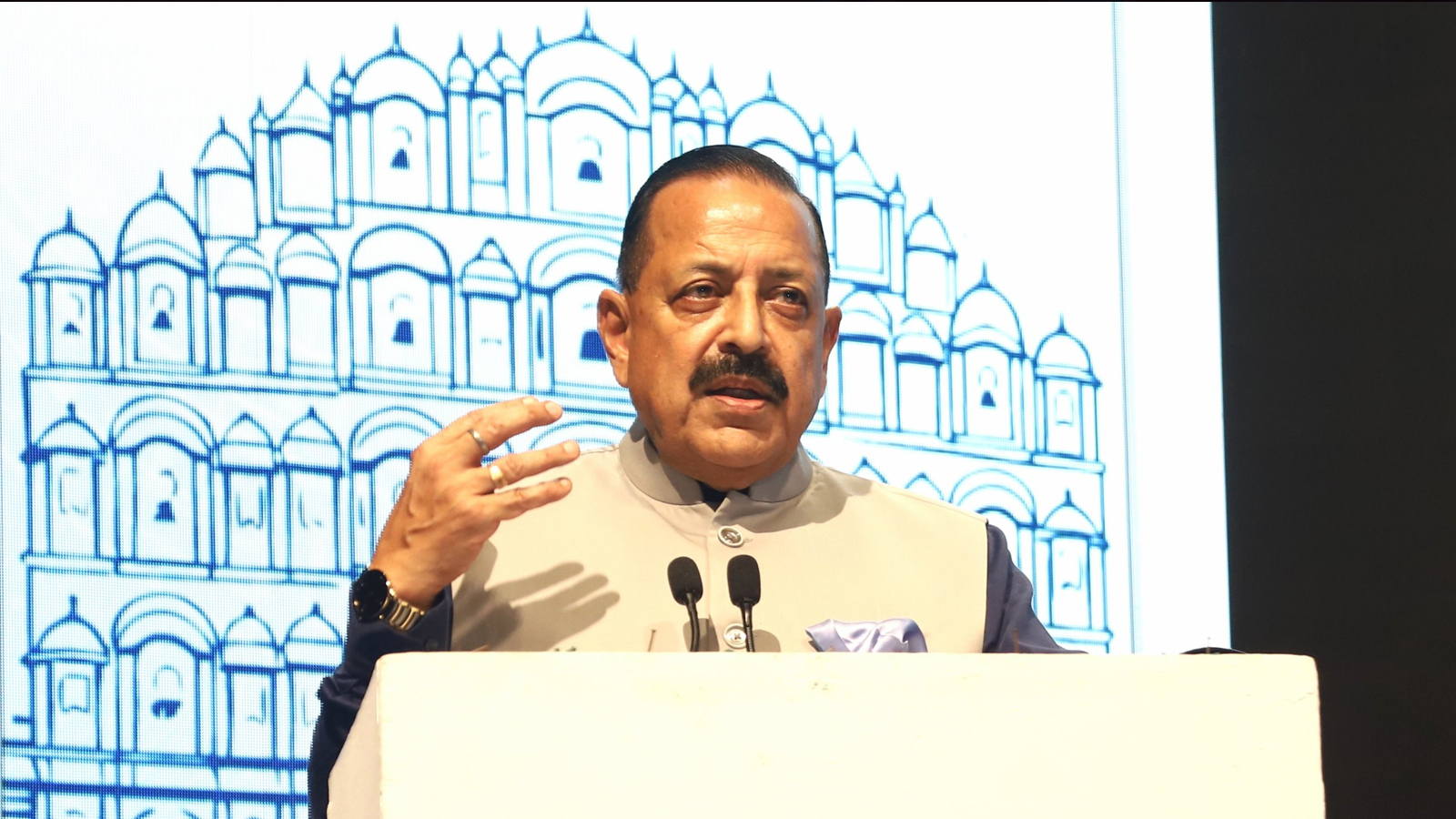
In a written reply in the Rajya Sabha, Minister of State (Independent Charge) for Science and Technology, Earth Sciences, and Minister of State for the Prime Minister’s Office, Atomic Energy and Space, Dr. Jitendra Singh said the mission has established LVM3 as one of the preferred launch vehicles in the international commercial launch services market.
The minister said the government is pursuing an extensive international space cooperation strategy aimed at achieving the goals of Space Vision 2047, which include human spaceflight, an Indian space station and advanced space exploration missions.
According to the Department of Space, the strategy focuses on enhancing launch capabilities, expanding the country’s ground station network, strengthening space infrastructure and applications, and integrating Indian industries into global space supply chains through international partnerships and business collaborations.
To further expand India’s role as a reliable provider of space services, the government is actively encouraging private sector participation through the Indian National Space Promotion and Authorization Centre (IN-SPACe).
Among the key infrastructure initiatives is the development of a second spaceport at Kulasekarapattinam in Tamil Nadu, which is expected to increase India’s launch capacity while enabling greater private-sector participation in launch vehicle operations.
The government is also strengthening regulatory oversight by establishing a comprehensive review and authorisation mechanism for launch systems and developing Indian space standards in collaboration with the Bureau of Indian Standards (BIS) to improve quality assurance and standardisation across the sector.
Singh said efforts are also underway to facilitate the readiness of private launch vehicle developers such as Skyroot Aerospace, Agnikul Cosmos and Hindustan Aeronautics Limited (HAL).
The minister highlighted several initiatives launched by IN-SPACe to promote India’s private space ecosystem. These include the implementation of the India Space Policy 2023, liberalisation of foreign direct investment (FDI) norms for the space sector, discounted access to ISRO facilities for non-government entities, and the establishment of a ₹1,000-crore Venture Capital Fund to support space startups.
The government has also launched a ₹500-crore Technology Adoption Fund to accelerate the development and commercialisation of indigenous space technologies, while providing private companies access to ISRO infrastructure, technical expertise and mentorship.
Additional measures include skill development programmes, the establishment of a technical centre for affordable testing and validation of space systems, technology transfer from ISRO to industry, and opportunities for technology demonstrations through the PSLV Orbital Experimental Module (POEM) platform.
The government has also introduced the Satellite Bus as a Service (SBaaS) initiative to promote indigenous satellite platform development, encouraged states to establish dedicated space manufacturing clusters, and proposed the development of an indigenous commercial Earth observation satellite constellation under the public-private partnership model.
According to the Department, these initiatives are designed to strengthen India’s launch capabilities, expand its commercial space ecosystem and position the country as a major global provider of launch and space-based services while supporting the long-term objectives of Space Vision 2047.


