







Scientists in India have developed a new “smart” cancer drug designed to activate primarily inside cancer cells, potentially offering a more targeted alternative to conventional chemotherapy that can also damage healthy cells.
The drug, named RK-251, has been developed through collaborative research led by Dr. Asis Bala of the Institute of Advanced Study in Science and Technology (IASST), an autonomous institute under the Department of Science and Technology, and Dr. K.P. Bhabak of the Indian Institute of Technology-Guwahati.
Unlike conventional chemotherapy, which can affect both cancerous and healthy cells, RK-251 is designed to remain relatively inactive in normal tissues and become activated in the presence of conditions commonly found inside cancer cells.
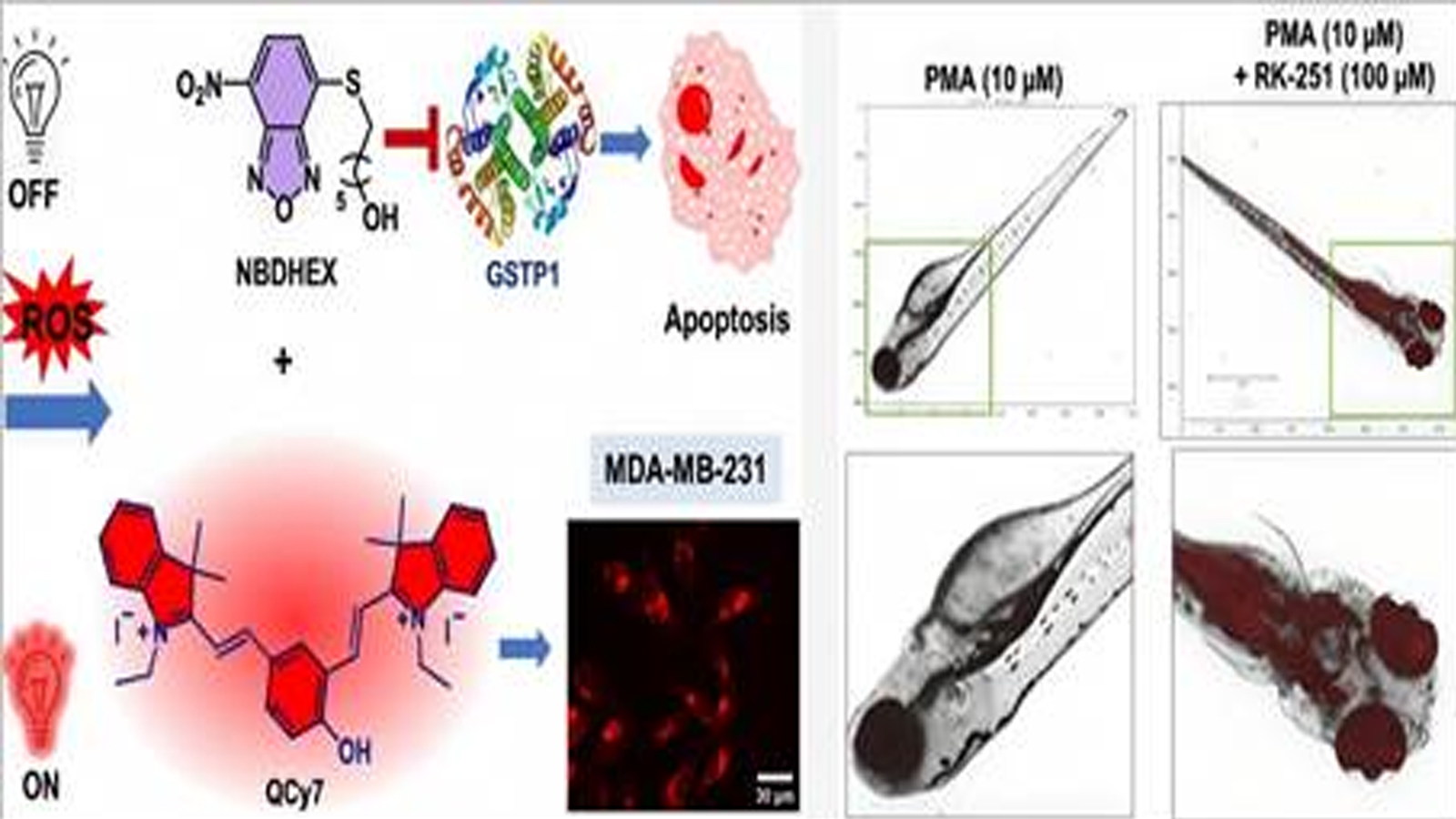
Cancer cells often contain elevated levels of reactive oxygen species (ROS), molecules that can cause cellular damage. The researchers designed RK-251 to exploit this characteristic. Once the drug enters a cancer cell with high ROS levels, the ROS triggers its activation and releases an anticancer compound called NBDHEX.
NBDHEX targets proteins that are used by many cancer cells to survive and resist treatment, thereby helping the drug exert its anticancer effect primarily within tumour cells.
Promising results in preclinical studies
In preclinical experiments, RK-251 demonstrated strong activity against triple-negative breast cancer cells, an aggressive form of breast cancer, while showing substantially lower effects on healthy cells.
The researchers also evaluated the candidate drug using zebrafish embryos (Danio rerio). The behavioural study found no obvious signs of toxicity, while the drug displayed the desired fluorescence in the presence of reactive oxygen species.
The fluorescence response also provides an indication that the drug is being activated in an ROS-rich environment, supporting the underlying mechanism of the targeted approach.
The findings suggest that RK-251 could provide a promising platform for developing cancer treatments that selectively target tumour cells while reducing damage to healthy tissues.
However, the drug remains at the preclinical research stage and further studies are required to establish its safety, effectiveness and suitability before it can be evaluated in human clinical trials.
The research has been published in the Journal of Medicinal Chemistry, an ACS publication.


