







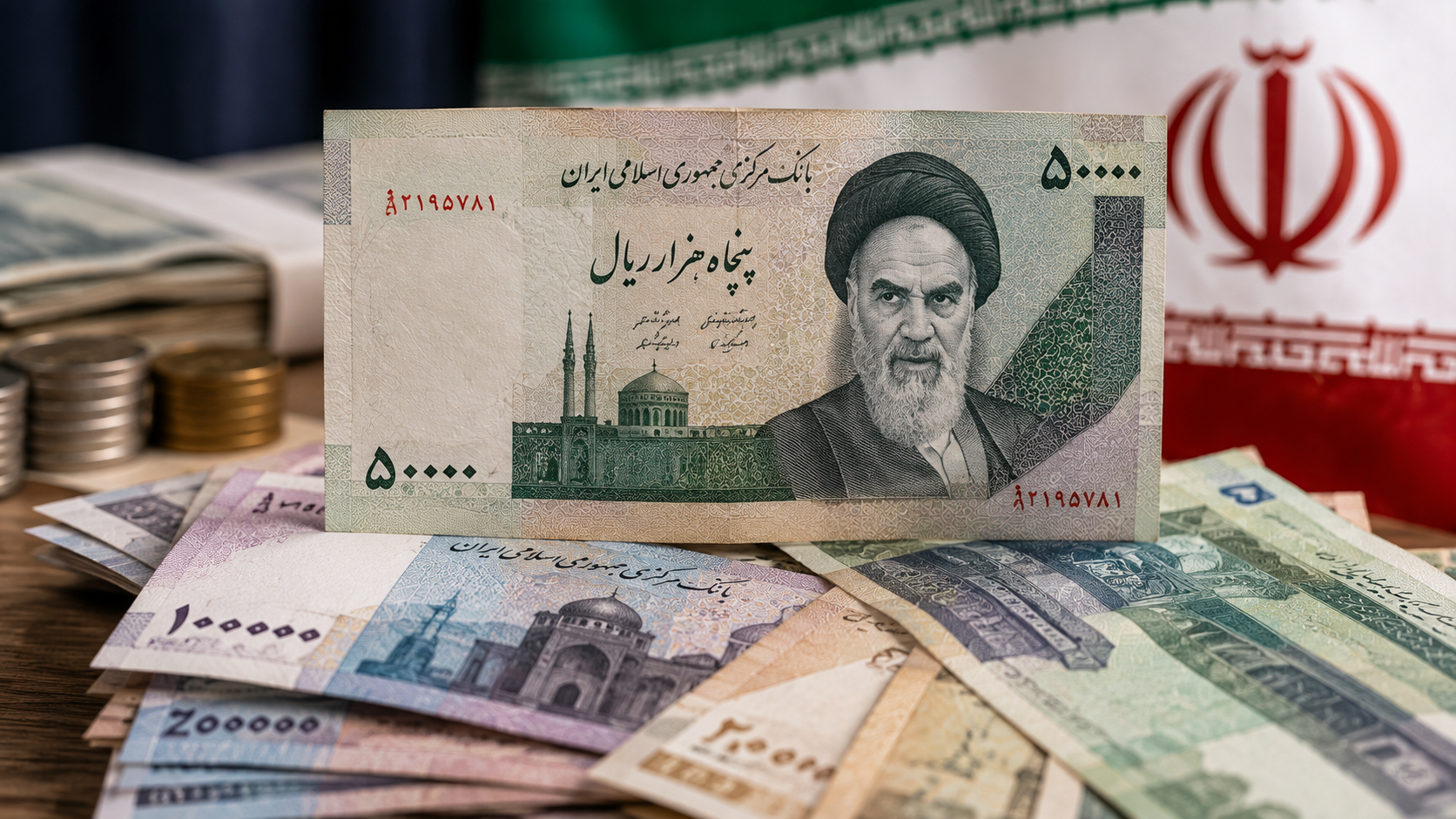
Iran’s currency plunged to a record low on the open market on Monday, hours before the United States was expected to announce a new wave of sanctions aimed at further isolating Tehran.
The Iranian rial fell to 2.02 million against the US dollar as trading opened, while the official exchange rate set by Iran’s Central Bank stood at around 1.5 million rials per dollar.
The currency, which was already under pressure before the joint US-Israeli attacks on February 28, has continued to weaken as nearly six months of conflict have placed additional strain on Iran’s economy.
US Treasury Secretary Scott Bessent on Monday warned of an “economic D-Day” for Iran, announcing what he described as an “economic onslaught against Iran’s financial connections around the globe.”
According to the US Treasury Department, the new sanctions target five key sectors — digital assets, technology, gold, aviation and shipping.
Iranian President Masoud Pezeshkian said the United States must change its tone and approach towards Tehran.
“The US reliance on coercion and bullying will only complicate executive processes,” Pezeshkian said in Tehran on Monday.
He said Washington must fulfil its obligations towards Iran in accordance with the country’s “legitimate rights and international regulations”.
Pezeshkian also expressed hope that the objectives outlined in the US-Iran peace memorandum of understanding would be achieved through continued political will and joint cooperation.
Meanwhile, Iranian Foreign Ministry spokesman Esmaeil Baghaei said Tehran would not accept an end to the war based on conditions set by what he described as the “aggressive” parties.
“We have definitely not been the party to start the war, but we will not let the war’s end be based on the aggressive parties’ conditions,” Baghaei told a weekly press conference in Tehran.
He said Iran remained determined to defend its territory and would not compromise with the “aggressive parties” or surrender to what he termed their “excessive demands”.
Baghaei also rejected US claims that the Strait of Hormuz remained open and that millions of barrels of oil were passing through it daily, describing such assertions as part of “psychological and media warfare”.
(With IANS inputs)


