







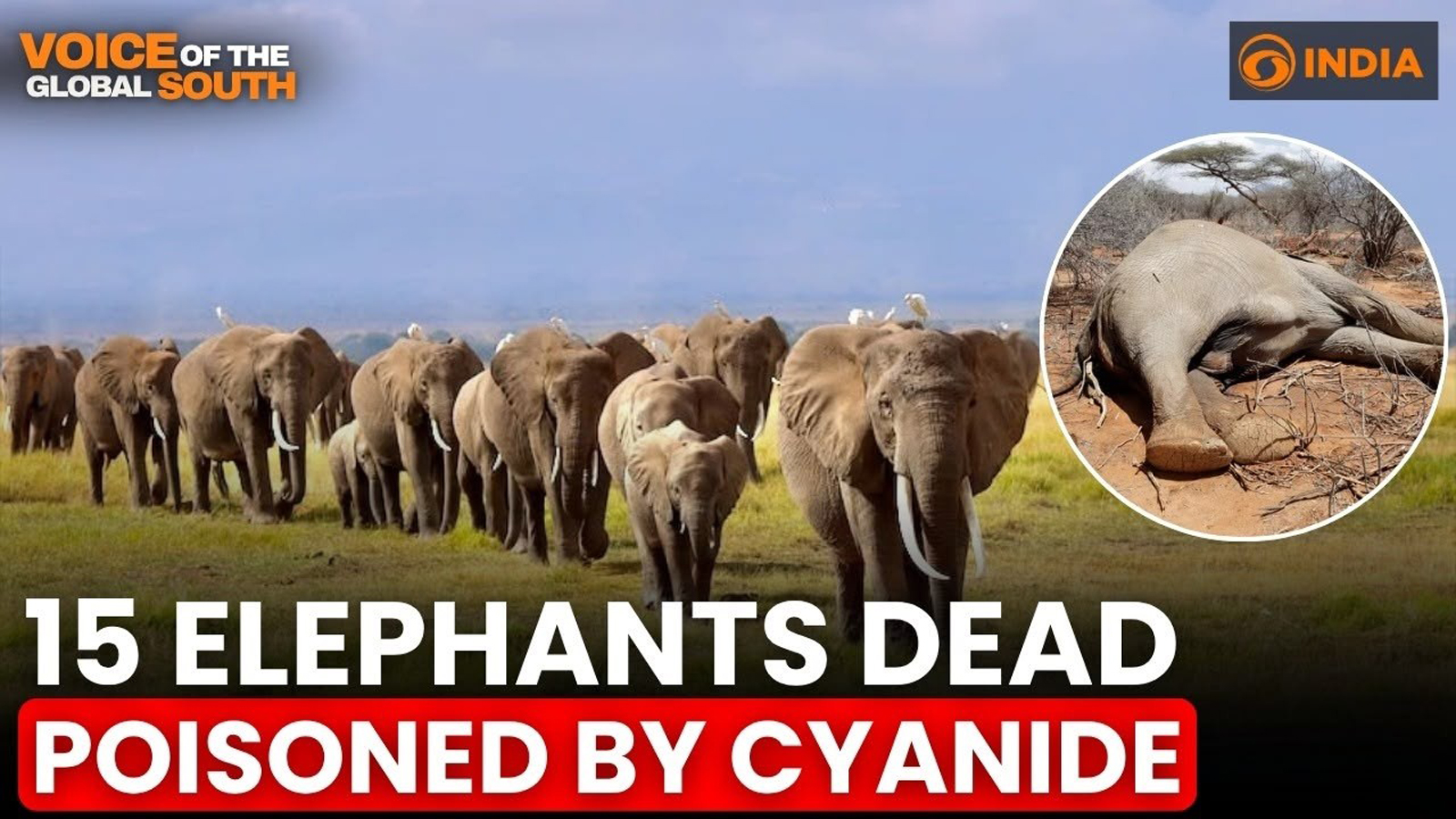
Authorities suspect pesticide poisoning but conservation experts wonder why other animals sharing the environment have not been affected
The tragedy reignites a fierce debate over protecting Kenya’s wildlife amid growing pressure from agriculture
Amboseli National Park is one of Africa’s most iconic wildlife destinations. It is famous for its massive elephant herds and spectacular views of Mount Kilimanjaro. However, today, this world-famous ecosystem is at the centre of a grim mystery following the sudden deaths of 15 elephants in just one month.
Preliminary findings suggest that the elephants died after eating tomatoes contaminated with cyanide. This region has a history of intense human-wildlife conflict where farmers have previously been accused of poisoning elephants to protect their crops.
According to wildlife officials, 10 of the elephants showed signs of partial paralysis, leaving them unable to stand before they died. It is a critical symptom that points directly towards toxic poisoning.
Intrigued investigators note that the casualties were almost strictly adult females and their calves with only a single adult male among the dead.
The International Fund for Animal Welfare has described the incident as deeply alarming, warning that it highlights a critical need for continued investment in science, wildlife monitoring, and collaborative conservation efforts.
The deaths took place in the Kimana Sanctuary and the Kuku Group Ranch, both vital buffers for the wider Amboseli ecosystem. While the national park itself covers 392 square kilometres, it relies on these neighbouring community conservancies to help support more than 1,600 elephants.
The area surrounding Kimana is heavily dominated by tomato farming. Researchers from the Route to Food Initiative — a Kenyan food-safety programme — have previously sounded the alarm on the use of cyanide substances on local crops.
In fact, a 2024 report by the group revealed that a farmer in Kimana was actively using an illegal insecticide featuring a toxic, cyanide-based compound.
However, some conservation experts remain deeply sceptical. Paula Kahumbu, an elephant conservation expert with nearly three decades of experience, says the available information does not yet provide enough certainty. She questions whether the amount of pesticide residue on crops would be sufficient to kill so many elephants in such a short period.
Local landowner Daniel Nina also questions the explanation, pointing out that elephants share the same grazing areas and water sources with other wildlife, including zebras, antelopes, and wildebeests. He wonders why cyanide would affect elephants while leaving other animals in the same environment unharmed.
Kenya has previously recorded cases of elephants being poisoned due to poaching and conflicts between wildlife and communities. Across Africa, elephant populations have faced serious threats from ivory poaching, habitat loss and increasing pressure from human expansion. Kenya has made significant progress through stronger conservation measures, including anti-poaching laws, increased ranger patrols, wildlife monitoring technology, and G.P.S. tracking of elephants. These efforts have helped the country’s elephant population recover in recent years. However, as farms and settlements expand, conflicts between people and wildlife are increasing.
The deaths of 15 elephants in Amboseli highlight the challenge of protecting wildlife while supporting communities that share the same land. The investigation continues, with authorities examining environmental samples and gathering more evidence to determine the exact cause of the deaths.


