







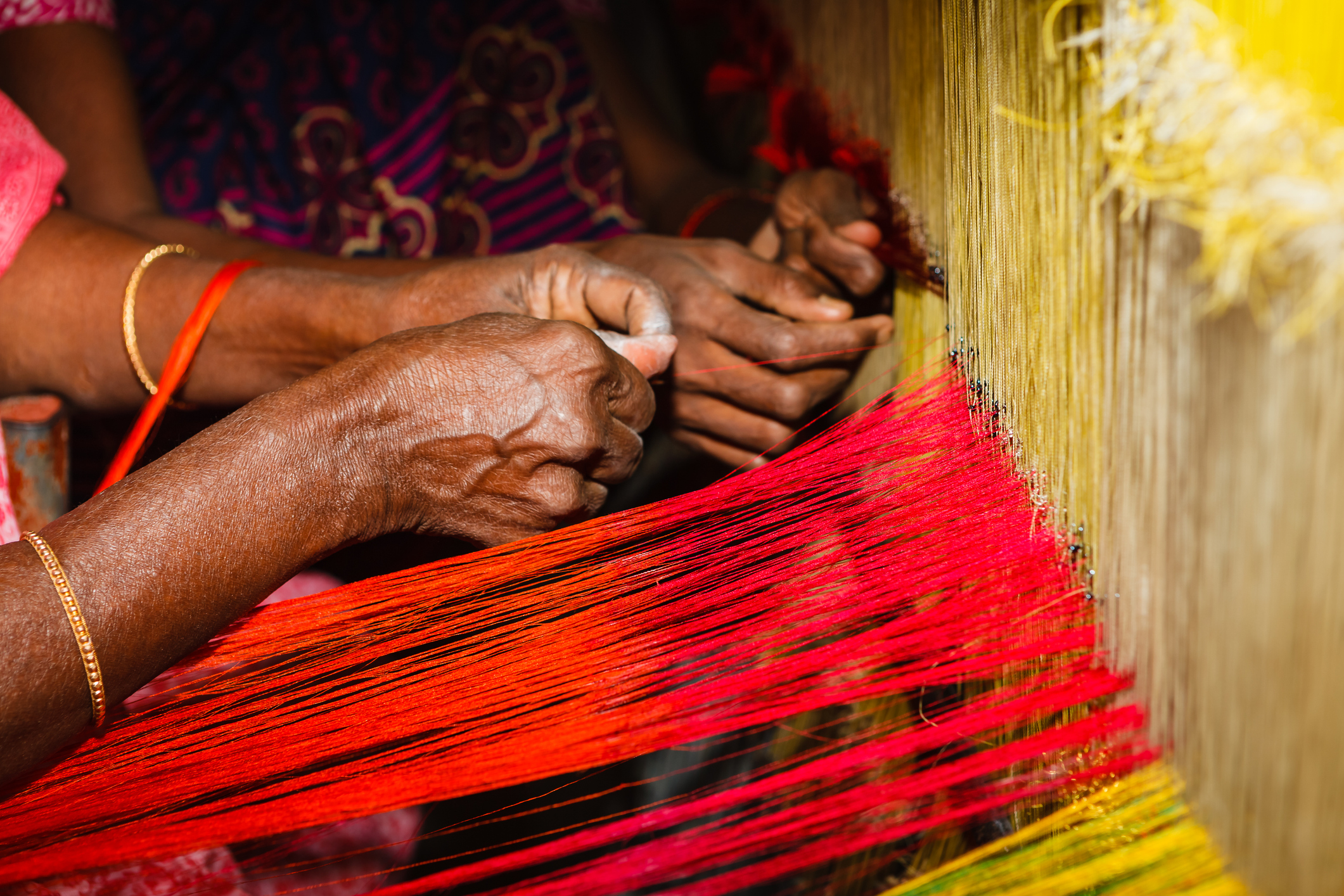
India is observing National Handloom Day today, recognising the country’s rich weaving heritage and the contribution of more than 35.22 lakh handloom weavers and allied workers, over 72 per cent of whom are women.
Observed annually since 2015, National Handloom Day commemorates the launch of the Swadeshi Movement on August 7, 1905, which promoted indigenous products and self-reliance. The day also highlights the socio-economic and cultural contribution of India’s weaving communities.
The handloom sector remains deeply rooted in traditional craftsmanship while increasingly adapting to contemporary design, digital platforms and international markets.
Women at the heart of the sector
According to the Fourth All India Handloom Census (2019-20), India has 35.22 lakh handloom weavers and allied workers, including 8.48 lakh people engaged in pre-loom and post-loom activities such as dyeing, warping and winding. Women account for 25.46 lakh workers, or more than 72 per cent of the workforce.
The census recorded 28.20 lakh handlooms across the country, with nearly 90 per cent located in rural areas, highlighting the sector’s role in supporting rural livelihoods.
The government has expanded efforts to improve access to welfare schemes and formalise the handloom workforce. The e-Pehchan portal, launched in January 2025, enables workers to register and obtain digital identity cards. By July 2026, around 84,000 additional workers had been approved for e-Pehchan cards.
Government support and welfare measures
The National Handloom Development Programme (NHDP) and the Raw Material Supply Scheme (RMSS) continue to form the backbone of government support for the sector.
Under the NHDP, 357 handloom clusters have been sanctioned between 2021-22 and June 2026, while 200 Handloom Producer Companies have been established to organise weavers into professionally managed enterprises.
The government said interventions such as improved worksheds and electronic jacquards have significantly enhanced productivity and earnings. Daily production under workshed projects increased by 53 per cent, while electronic jacquards helped raise average monthly income from ₹9,600 to ₹15,000.
Marketing support has also been expanded through the Handloom Marketing Assistance scheme. More than 960 marketing events, including national and state-level handloom expos and craft fairs, have been organised since 2021 to provide direct market access to weavers.
The Ministry also continues to confer the Sant Kabir Handloom Award and the National Handloom Award to recognise excellence in weaving and innovation.
Financial support is being extended through the Concessional Credit/Weaver MUDRA Scheme, under which around 40,000 loans worth over ₹280 crore have been sanctioned between 2021-22 and June 2026.
Social security measures, including the Pradhan Mantri Jeevan Jyoti Bima Yojana (PMJJBY) and Pradhan Mantri Suraksha Bima Yojana (PMSBY), have also seen increased enrolment among handloom workers.
Innovation and global outreach
The Ministry said Indian handlooms are increasingly finding space in contemporary fashion, design and cultural events. Initiatives such as Vishwa Sutra, showcased at the 61st Femina Miss India, Breathing Threads at Bharat Tex 2025, and Handloom Sarees in Motion at the International Film Festival of India (IFFI) 2025 have presented traditional Indian weaves through modern design narratives.
The recently launched Handloom Hackathon 2026 also aims to encourage students, researchers, startups and artisans to develop innovative solutions in design, sustainability, digital technology and market access.
Expanding markets for Indian handlooms
India’s handloom exports stood at around ₹1,330.96 crore in 2025-26, with the UAE, the United States, France, the United Kingdom and Spain emerging as major export destinations.
To strengthen buyer confidence, the government continues to promote the Handloom Mark, India Handloom Brand and Geographical Indication (GI) certification. As of June 2026, over 29,400 Handloom Mark registrations and 2,305 India Handloom Brand registrations had been issued.
The government said 106 handloom products have been granted GI registration, helping protect the identity and authenticity of India’s regional weaving traditions.
With sustained policy support, innovation and expanding global visibility, the Ministry said the handloom sector continues to preserve India’s cultural heritage while creating new opportunities for weavers in domestic and international markets.


