







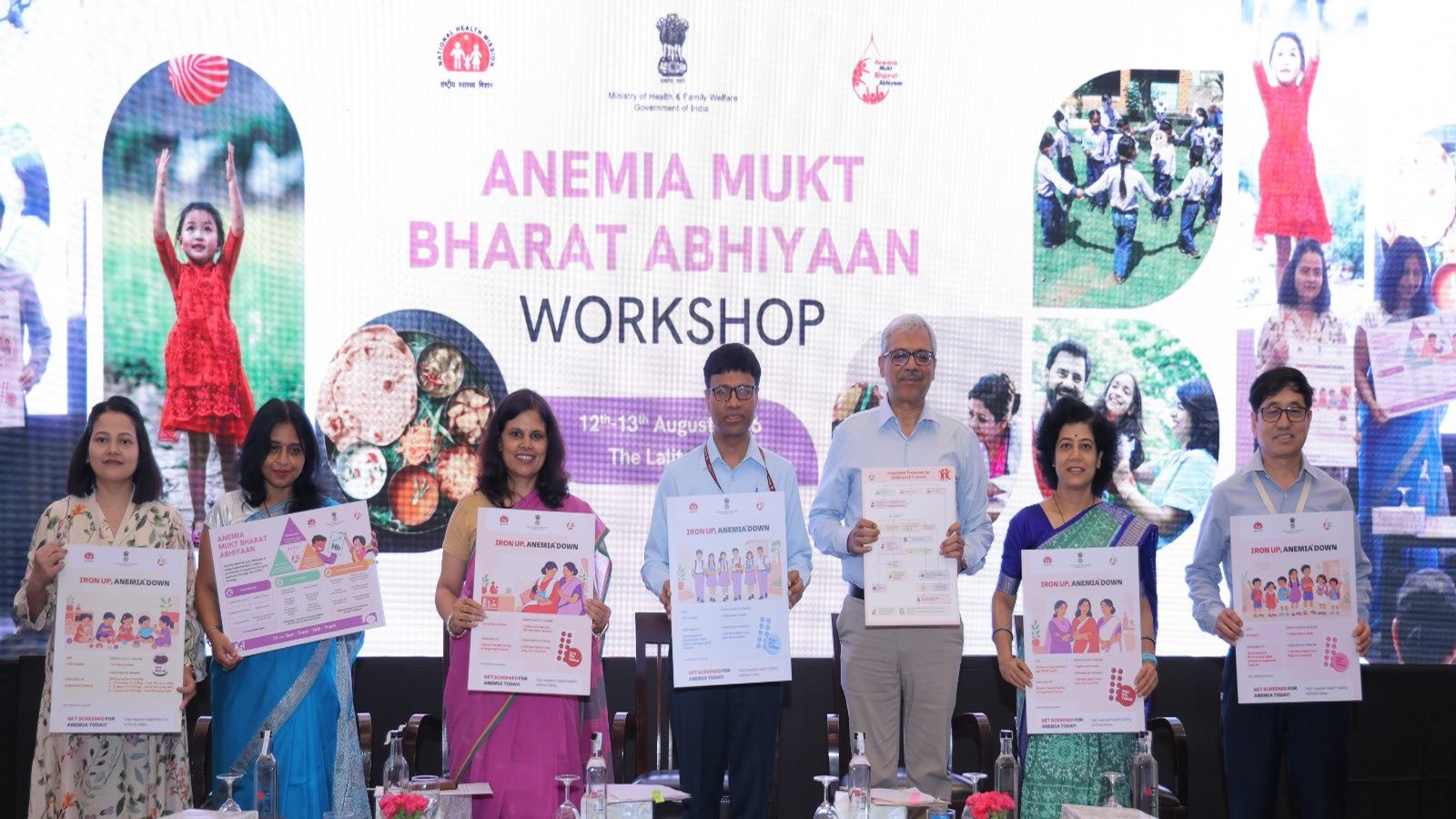
The Union Ministry of Health and Family Welfare (MoHFW) on Wednesday concluded a two-day national workshop on the Anemia Mukt Bharat Abhiyaan (AMB), bringing together more than 160 representatives from all States and Union Territories along with officials from several Union ministries, experts and development partners.
Held in New Delhi on August 12–13, the workshop focused on strengthening implementation of the revised AMB framework and translating the 7×7×7 strategy into effective action at the grassroots level.
The revised AMB Operational Guidelines, launched by Union Health Minister J.P. Nadda on June 29, mark a shift from an approach focused largely on supplementation and prophylaxis towards testing, case-based management, treatment compliance, dietary diversity and digital tracking of beneficiaries.
Addressing the workshop, Union Health Secretary Punya Salila Srivastava called for stronger convergence among health programmes and closer coordination between ministries to tackle anaemia comprehensively. She stressed the need for better-aligned screening and service delivery mechanisms, greater public awareness and extending supplementation efforts beyond pregnancy through a life-course approach.
Additional Secretary and Mission Director, National Health Mission, Aradhana Patnaik, highlighted the transition from the earlier 6×6×6 framework to the strengthened 7×7×7 approach. She stressed improving compliance with iron supplementation, strengthening community participation through Jan Bhagidari and ensuring that innovations at the State level translate into measurable improvements.
Joint Secretary (RCH) Meera Srivastava emphasised moving from a static, compliance-oriented programme towards one centred on testing, tracking and timely resolution. She also called for beneficiary-level digital line-listing, improved data management and greater integration with existing health platforms.
Director General of the Indian Council of Medical Research, Dr Rajiv Bahl, underlined the importance of evidence-based anaemia management, including timely testing, severity- and cause-specific treatment and repeat testing after three months. He also stressed the role of iron-rich diets, appropriate newer iron formulations and implementation research.
NITI Aayog Member Dr M. Srinivas advocated a multi-sectoral approach, highlighting the importance of micronutrients, iron and protein intake, dietary diversity and identification of underlying diseases and clinical conditions. He also called for greater use of digital convergence, advanced analytics and artificial intelligence to identify high-burden clusters and plan targeted interventions.
Digital platform launched for beneficiary tracking
A key highlight of the workshop was the launch of the Anemia Mukt Bharat Abhiyaan Application and Portal. The digital platform is designed to enable beneficiary-level tracking of people identified through screening, monitor treatment and compliance, and ensure timely follow-up until resolution.
The platform will also help identify gaps requiring intervention and generate data for programme reviews and corrective action, strengthening continuity of care and accountability in anaemia management.
The workshop also saw the launch of new information, education and communication (IEC) materials and recognition of States and Union Territories that demonstrated strong performance in implementing AMB interventions.
Technical sessions covered anaemia screening and testing, digital applications and data analytics, prophylaxis and deworming, treatment compliance and responsibilities across different levels of service delivery.
On the second day, State and UT teams participated in structured group discussions on Jan Bhagidari and community ownership, inter-ministerial coordination and implementation challenges. Participants shared field-level experiences and innovations, with the learnings contributing to the national roadmap for strengthening the programme.
The workshop also included technical discussions on therapeutic management, including oral and intravenous iron protocols, community participation and nutrition initiatives such as Eating Right.
The Ministry said the deliberations underscored the need for coordinated action involving government departments, healthcare workers, communities, academic and research institutions and implementation partners to strengthen the Anemia Mukt Bharat Abhiyaan and contribute towards a Swasth Viksit Bharat.


