







What happens when a woman becomes famous, financially independent, and visible in Pakistan? In many cases, she is treated as a threat.
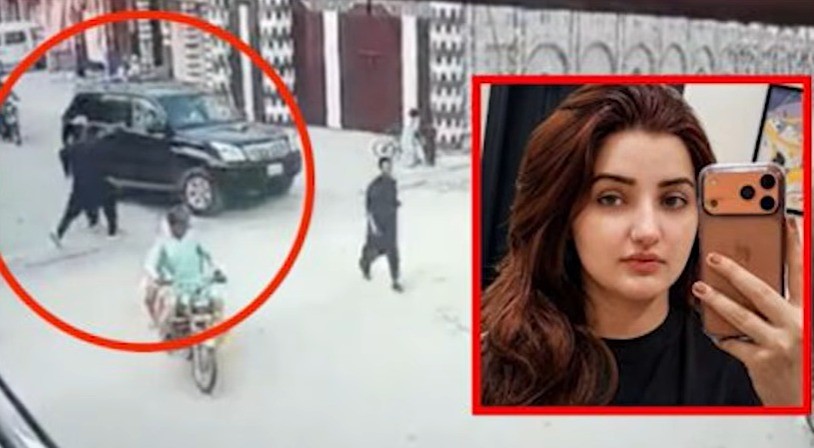
On 14 August 2026, as Pakistan celebrated its Independence Day, 28-year-old TikTok creator Shamsoo Bibi, known online as Ayesha Gilamana, was shot dead in Taxila. Bibi had more than 1.3 million followers and over 30 million likes on TikTok.
According to the police complaint filed by her father, Fazal Sahibzada, the incident began with a phone call. A man identified as Kashif alias Kashi asked Bibi to come outside her home immediately. She left in a car with her brother and 15-year-old sister Aseema.
Near a petrol station, two men on a motorcycle opened fire on their vehicle. A bullet struck Bibi in the neck. She died at the scene. The car then crashed into a dumper truck, seriously injuring her 15-year-old sister. CCTV footage from the area, which is now part of the investigation, reportedly shows two men leaving on a motorcycle after the shooting. Her father’s complaint states that Shamsoo had financial dealings with two men and had received death threats over repayment demands.
The family says she had already complained to Islamabad police, but no action was taken. After the murder, police registered a case and detained four suspects for questioning in operations across Taxila, Attock and parts of Khyber Pakhtunkhwa.
Investigators are examining CCTV footage, phone records and bank transactions.
A Pattern of Targeting Women Creators
Officials and rights groups say the case is not isolated. Digital fame has increasingly become a target for extortion gangs in Pakistan. The pattern, as described by creators and activists, involves tracking a creator’s public information, estimating earnings from brand deals and lifestyles, and demanding protection money. When refused, the groups resort to blackmail — threatening to leak private photos, deepfakes, or messages to families.
Shame is used as a weapon. Many creators stay silent, fearing a public police case could destroy brand partnerships, bring more harassment, or force families to stop them from creating content.
Slow Justice System
Activists allege that Pakistani police often move slowly in cases involving women, while courts move even slower, allowing killers and gangs to act with impunity. The case has parallels with other recent killings.
In June 2025, 17-year-old TikTok creator Sana Yousaf was shot dead inside her Islamabad home after she rejected a man’s advances. He was later sentenced to death.
In March 2026, creator Sana Javed was shot in Islamabad. In July 2025, 16-year-old Mehak Shehzadi was killed in Rawalpindi in a suspected honour killing linked to her TikTok activity. Rights groups report at least eight female influencers were murdered in Pakistan in just one year.
The Qandeel Baloch Case
The case recalls the 2016 murder of Qandeel Baloch, who was strangled by her brother for bringing “shame” to the family. Her brother was convicted, then freed in 2022 after the family pardoned him under Pakistani law, which allows families to pardon killers in honour cases.
The Human Rights Commission of Pakistan has recorded hundreds of honour killing cases in recent years where women were murdered by relatives for using social media, choosing partners, or living independently.
Forced Conversions
Forced religious conversions remain another major concern. According to a report by the UN Office of the High Commissioner for Human Rights in April 2026, around one thousand girls from Hindu and Christian communities are abducted, forced to convert to Islam, and married off every year in Pakistan.
The UN noted that in 2025, about 75 percent of the women and girls affected by forced conversion through marriage were Hindu and 25 percent Christian. Almost 80 percent of incidents occurred in Sindh province. Most victims were between 14 and 18 years old. Courts often accept the conversions without real checks, and Pakistan still lacks a strong national law to end the practice.
Allegations Against Security Forces
Human rights groups have also documented allegations of enforced disappearances, torture and mistreatment of women in custody, especially in Balochistan. Women have allegedly been taken in raids, held without due process, with little accountability.
Lawyer and activist Khadija Siddiqi and women’s activist Shafaq Zaidi have said that when influential people are involved, cases are often delayed or weakened by money and influence.
After Shamsoo Bibi’s death, her family deleted her social media accounts. Social media remains one of the few ways for many Pakistani women to earn independently. Less than a quarter of women work in the formal sector in Pakistan. For many, that independence is now met with threats, blackmail, and violence.
The investigation into Shamsoo Bibi’s murder is ongoing.


