







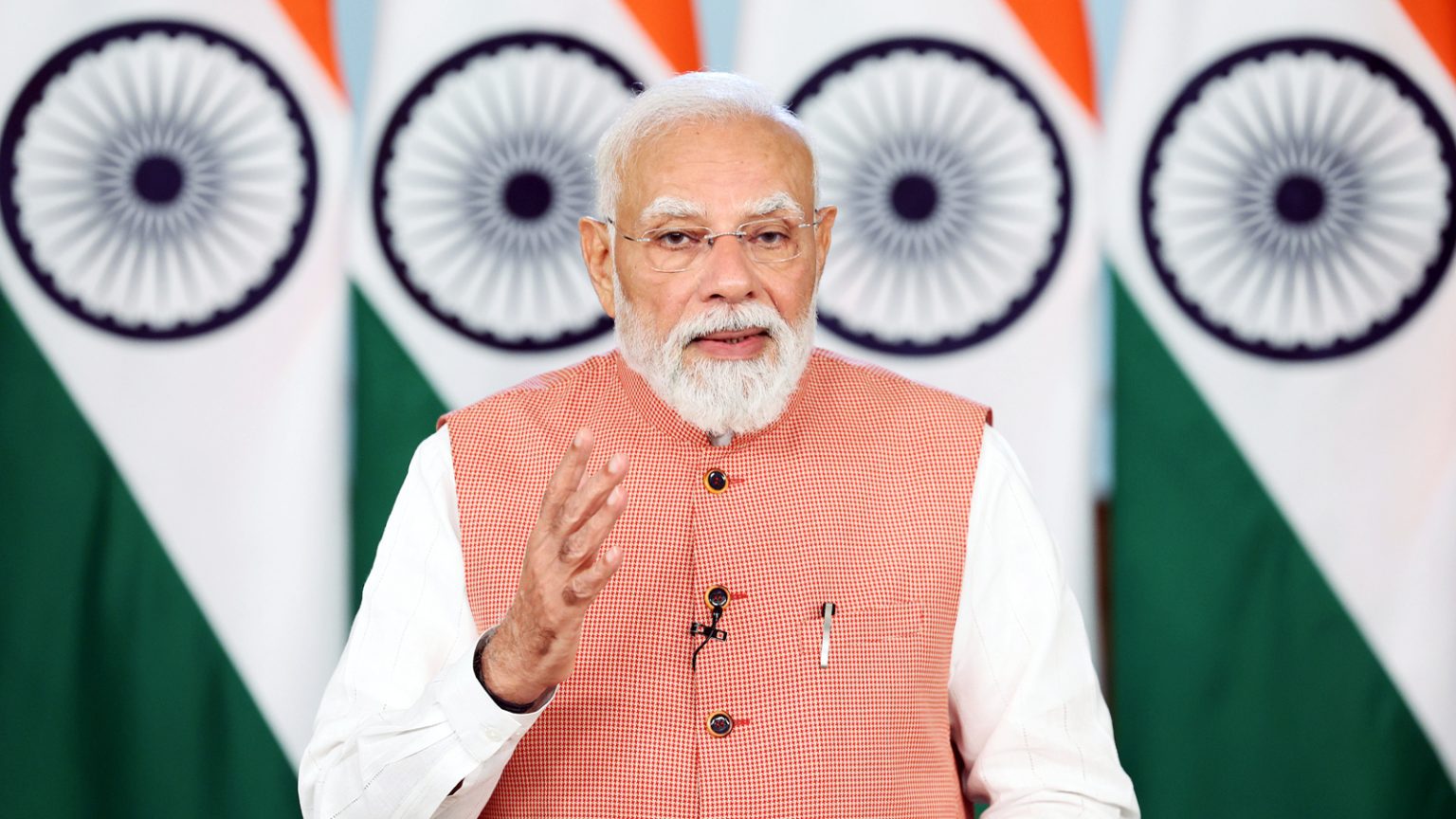
Prime Minister Narendra Modi on Tuesday hailed the Unified Payments Interface (UPI) as a “major turning point” in India’s digital payments journey as the country’s flagship real-time payment system completed a decade, highlighting its unprecedented scale, reach and growing global footprint.
In a post on X, PM Modi said the rollout of UPI a decade ago had transformed the way Indians make payments and urged citizens to share how the platform had impacted their lives.
“A decade ago, UPI was rolled out, marking a major turning point in India’s digital payments journey. The sheer scale and reach of UPI are something every Indian must be proud of. Tell me about your UPI experience and how it impacted your life,” the Prime Minister said.
Launched by the National Payments Corporation of India (NPCI) in April 2016 with 21 member banks and rolled out to the public on 25th August 2016, UPI has emerged as the backbone of India’s digital payments ecosystem. It enables instant, interoperable bank-to-bank and merchant payments through mobile applications, operating round the clock.
Over the past decade, UPI’s transaction volume has expanded from 1.78 crore transactions in FY 2016-17 to 24,162 crore in FY 2025-26, marking an almost 13,000-fold increase. Transaction value rose from ₹0.07 lakh crore to around ₹314 lakh crore during the same period.
The platform recorded 2,365.8 crore transactions worth about ₹29.87 lakh crore in July 2026, its highest monthly volume so far. Daily transactions have averaged around 66 crore in 2026, while the number of banks live on UPI has increased to 741 as of July.
UPI accounted for about 84 per cent of India’s digital payment transactions in FY 2025-26. Its growing adoption has also strengthened financial inclusion by enabling individuals, small businesses and merchants to make and receive digital payments without relying on traditional payment infrastructure.
The platform’s usage is particularly strong in low-value retail transactions. Person-to-merchant (P2M) payments account for about 63 per cent of transaction volume, while 86 per cent of P2M transactions in FY 2025-26 were below ₹500. Person-to-person (P2P) transactions, meanwhile, accounted for around 71 per cent of transaction value.
UPI has also evolved significantly since its launch. The BHIM app was introduced in December 2016, followed by dynamic QR payments in 2017 and UPI 2.0 in 2018. Subsequent innovations included UPI AutoPay, UPI Lite, UPI 123PAY for feature-phone users, credit-line integration, UPI Circle and on-device authentication.
The platform has increasingly expanded beyond routine payments. UPI is now used for IPO applications, recurring payments, tax payments and other financial services, while higher transaction limits have been introduced for selected categories.
The payment system has also emerged as an important component of India’s Digital Public Infrastructure and has gained international recognition. According to the data, UPI accounted for nearly 49 per cent of global real-time payment transaction volume in 2025, with the International Monetary Fund recognising its scale and interoperability.
Its international footprint has expanded to 11 countries, including Bhutan, Nepal, Singapore, the UAE, France, Sri Lanka, Mauritius, Qatar, Cambodia, Greece and the Maldives. Recent initiatives have enabled UPI acceptance and cross-border remittances in several of these markets.
The government said UPI’s next decade would focus on bringing more users and merchants into the ecosystem, promoting innovation and strengthening India’s digital payments infrastructure.
From a system involving just 21 banks at launch to one processing billions of transactions every month across hundreds of banks and multiple countries, UPI has become a defining element of India’s digital transformation over the past decade.


