







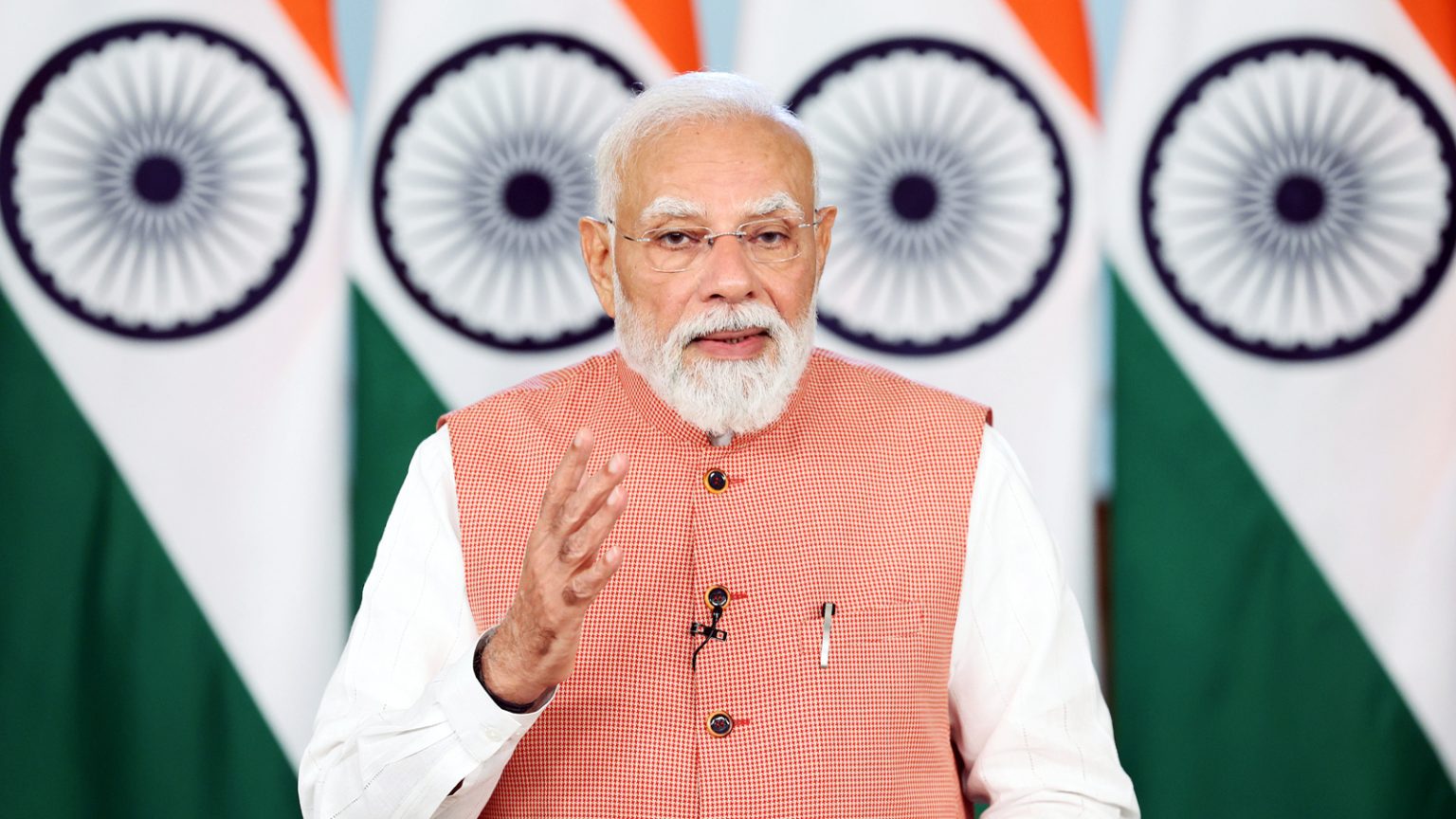
Prime Minister Narendra Modi on Friday shared an article by Union Textiles Minister Giriraj Singh on the occasion of National Handloom Day, highlighting India’s handloom tradition as one of the country’s greatest civilisational strengths and calling upon the youth to combine heritage with technology and innovation to transform the sector into an engine of growth.
In a post on X, the Prime Minister said the article celebrates India’s rich regional textile traditions and underscores the role of handloom in strengthening rural livelihoods, women’s empowerment, sustainability and global competitiveness.
“As India marks National Handloom Day today, Union Minister Shri Giriraj Singh lauds handloom as one of India’s greatest civilisational strengths, highlighting the countless regional traditions of Indian textiles. The Minister calls upon India’s youth to bring together heritage and technology, creativity and enterprise, to shape the next chapter of handloom, thereby strengthening weavers’ livelihoods,” PM Modi said.
In his article, Singh said the handloom sector has the potential to turn India’s rich cultural heritage into a globally competitive creative industry as the country works towards the vision of Viksit Bharat 2047.
He said India’s handloom traditions, which date back to the Indus Valley Civilisation and once dominated global textile trade, are well positioned to meet the growing international demand for sustainable, authentic and handcrafted products.
“India’s next handloom revolution must export not just textiles, but also craftsmanship, heritage, innovation and trust, making every handwoven product an ambassador of Brand India,” Singh said.
Highlighting the sector’s economic significance, the Minister noted that handloom is India’s largest cottage industry, supporting the livelihoods of more than 35 lakh weavers and allied workers, with women accounting for nearly 72 per cent of the workforce.
He outlined several initiatives undertaken over the past decade to strengthen the sector, including the Raw Material Supply Scheme, development of 797 handloom clusters, distribution of more than 1.24 lakh improved looms, skill upgradation programmes for nearly 97,000 artisans, and promotion of Producer Companies, GI-tagged products, Handloom Mark certification, India Handmade certification, Urban Haats and Design Resource Centres.
Singh said the Government is also strengthening 29 Weavers’ Service Centres, which provide training, design development, raw material support and market linkages, as well as 11 Indian Institutes of Handloom Technology to expand advanced training and develop high-value handloom products.
He said the proposed National Handloom and Handicraft Programme will further expand support to 1,800 clusters across more than 500 districts, benefiting around 65 lakh weavers and artisans while establishing “Handmade in India” as a globally recognised brand.
Emphasising the role of technology, Singh said innovation has always been integral to India’s handloom journey, from Mahatma Gandhi’s Ambar Charkha to modern initiatives such as Assam’s Maina Loom and the Chitranjan Handloom developed in Sivasagar.
He said the Centre of Excellence for Handloom Technology, set up with the Indian Institutes of Technology (IITs), is developing lighter, stronger and easier-to-use looms to improve productivity, including for persons with disabilities.
The Minister also referred to the Handloom 4.0 initiative, under which digital technologies and artificial intelligence are being used to monitor productivity, quality and maintenance of looms. The project is currently being piloted on 100 looms before wider implementation across the country.
“Technology should empower the artisan, not replace the artisan,” Singh said, adding that platforms such as VisioNXT can help forecast market demand, identify design trends, authenticate genuine handloom products and connect weavers directly with global markets.
He said greater product diversification, improved branding, value addition and direct market access would enable weavers to earn higher incomes, with the long-term goal of helping them achieve dignified and aspirational monthly earnings.
Calling weavers “entrepreneurs, innovators and creators of value,” Singh urged India’s youth to combine heritage with creativity and enterprise to shape the next chapter of the country’s handloom story.
He said every handloom product purchased not only strengthens the livelihood of a weaver but also preserves India’s rich cultural legacy and carries the country’s story to global markets.


