







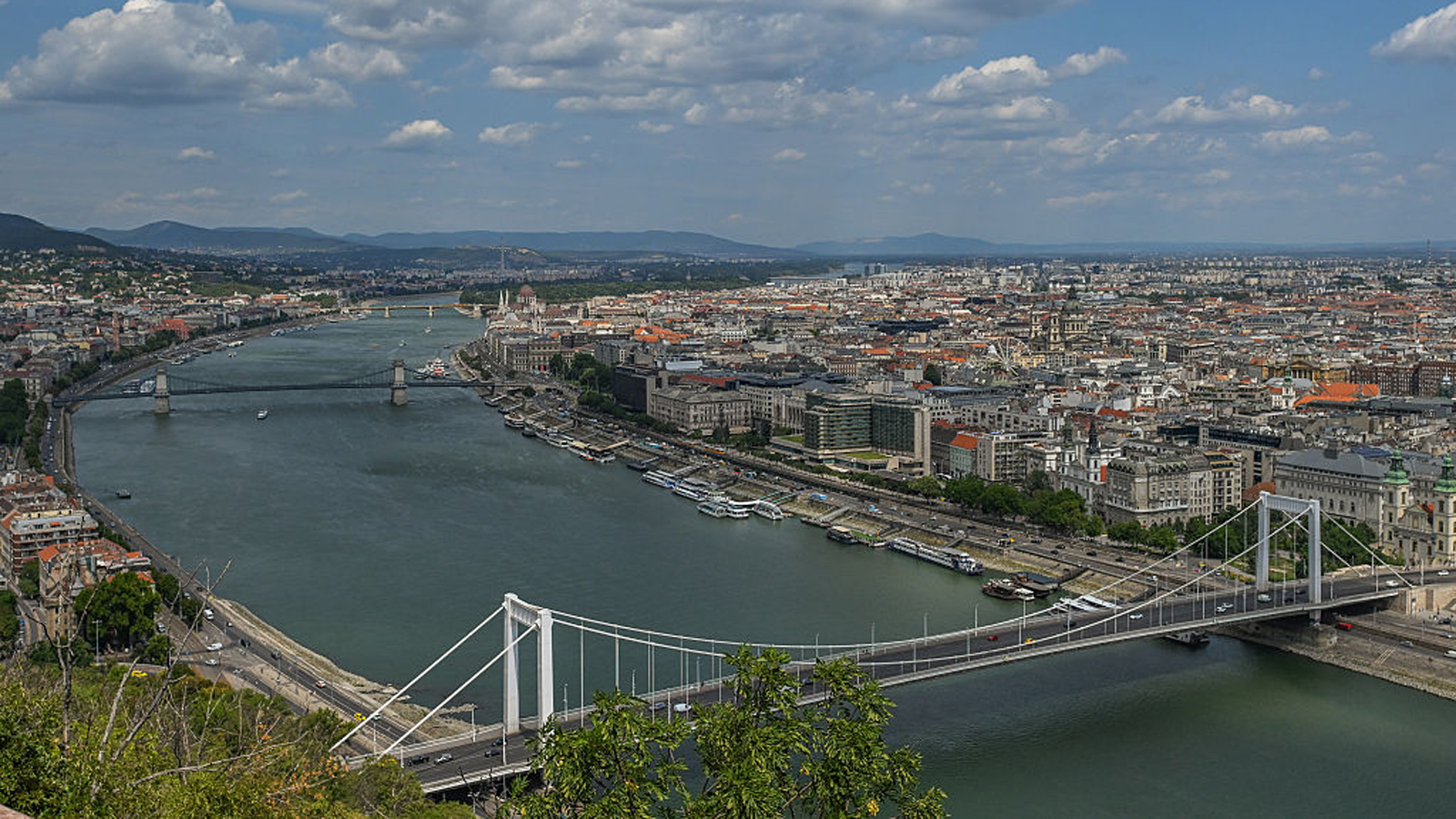
Europe’s second-longest river has long been a symbol of trade, connectivity and prosperity. Today, the Danube is becoming a symbol of something else: how extreme weather can ripple through transport, energy, tourism and local livelihoods.
A look at what’s happening along the Danube:
Stretching nearly 2,900 kilometres from Germany’s Black Forest to the Black Sea, the Danube flows through or borders ten countries and serves as one of Europe’s busiest inland waterways.
But after months of exceptional heat and below-average rainfall, large sections of the river have fallen to record-low levels, disrupting shipping, exposing long-submerged relics and placing unexpected pressure on the region’s energy infrastructure.
The images emerging from the Danube basin have been extraordinary. A young woolly mammoth buried for thousands of years has resurfaced from the riverbed. In Croatia, low water levels have revealed a long-submerged shipwreck and old artillery shells. In Serbia, German warships deliberately scuttled in the Danube during the Second World War have re-emerged. In Budapest, authorities temporarily closed the Elisabeth Bridge after falling water levels exposed what is believed to be an unexploded wartime shell. In Bulgaria, a Swiss cruise ship carrying nearly 200 passengers ran aground before its passengers were evacuated.
While these discoveries have drawn global attention, they are also reminders of a much deeper problem. The Danube is a vital commercial artery, carrying millions of tonnes of grain, steel, fuel, fertiliser and manufactured goods every year. As the river has become shallower, cargo vessels have been forced to reduce loads, ferries have suspended services and cruise operators have cancelled sailings, affecting businesses and tourism across Central and Eastern Europe.
The drought is also exposing a vulnerability that receives far less attention: Europe’s dependence on rivers to cool power stations.
Hungary’s Paks Nuclear Power Plant, which uses water from the Danube for cooling, has been forced to operate at just over 10 per cent of its capacity because of exceptionally low river levels and unusually warm water. To reduce pressure on the electricity grid, Hungary has switched off decorative lighting at government buildings, bridges and landmarks, including the Parliament building.
Romania has taken a different approach. Authorities have prepared an emergency engineering intervention that would involve sinking four rock-filled barges into the Danube to redirect more water towards the cooling canal serving the Cernavodă Nuclear Power Plant, highlighting the extraordinary measures governments are considering to maintain electricity generation.
Speaking to Reuters, Professor Attila Aszódi of the Institute of Nuclear Techniques in Budapest said there is a possibility that similar events could become more frequent in the future. While short-term interventions may help keep existing reactors operating during periods of exceptionally low water, he argued that future projects, including Hungary’s planned Paks II nuclear plant, should reassess their cooling systems to account for more frequent extreme weather.
Scientists say the immediate cause of the crisis is a combination of successive heatwaves and an extended rainfall deficit across the Danube basin. Hot, dry air moving northwards from the Sahara has suppressed rainfall across much of Central and Eastern Europe, while persistent heat has accelerated evaporation, pushing river levels to seasonal lows weeks earlier than usual.
Nor is the Danube alone. Rivers including the Rhine and the Vistula have also experienced unusually low water levels during this summer’s prolonged heat and drought, underlining how vulnerable Europe’s waterways have become to extended periods of extreme weather.
The Danube’s shrinking waters are therefore more than a local environmental story. They illustrate how one prolonged drought can disrupt supply chains, strain power generation, damage tourism, affect fishing communities and expose the limits of infrastructure designed for a different climate. As Europe grapples with more frequent extremes, the Danube is offering an early glimpse of the challenges many major rivers may increasingly face.


