







India’s judicial system is undergoing one of the most significant technological transformations in its history. Once characterised by paper files, manual processes and time-consuming physical visits to courts, the justice delivery system is steadily evolving into a digitally enabled, transparent and citizen-centric ecosystem through the e-Courts Mission Mode Project.
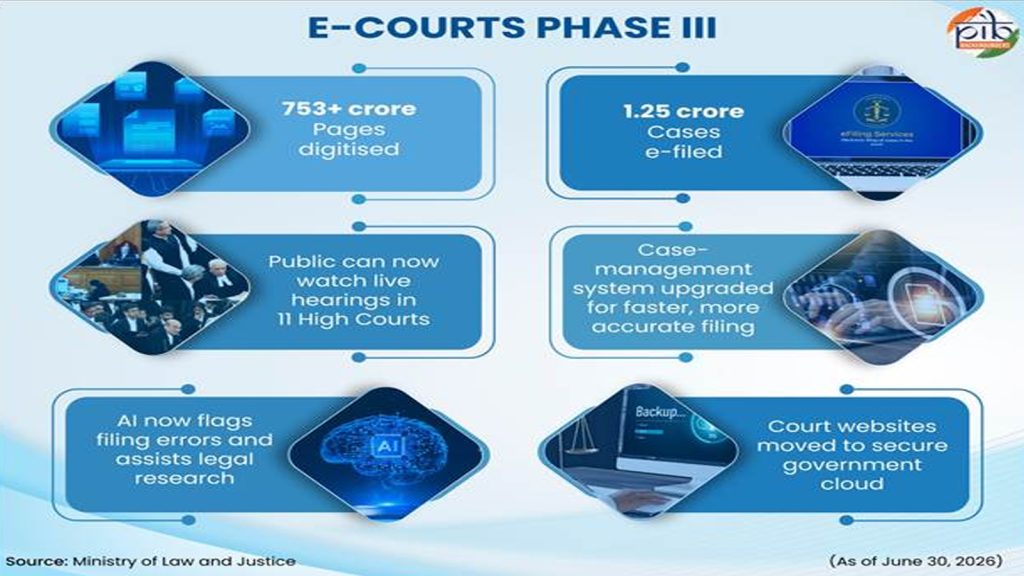
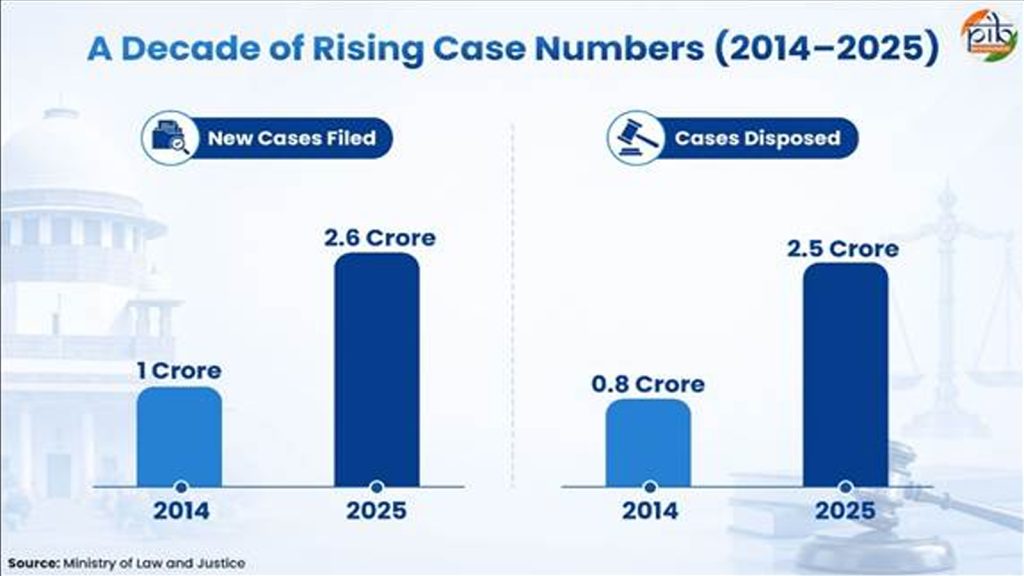
The initiative has fundamentally changed how courts function and how citizens interact with the judiciary. Since 2014, both case filings and disposals have nearly tripled, with courts consistently disposing of more cases than are filed each year. More than 753 crore pages of court records have been digitised, while thousands of e-Sewa Kendras have expanded access to judicial services by helping bridge the digital divide. These reforms are making the justice system faster, more transparent and more accessible across the country.
The e-Courts Mission Mode Project was launched in 2007 to modernise India’s paper-based judicial system, which serves more than a billion people. For decades, litigants, lawyers and court staff relied heavily on physical records and in-person visits, making the delivery of justice slow, cumbersome and expensive. The project seeks to address these challenges by digitising court proceedings and records while improving accessibility, affordability and transparency.
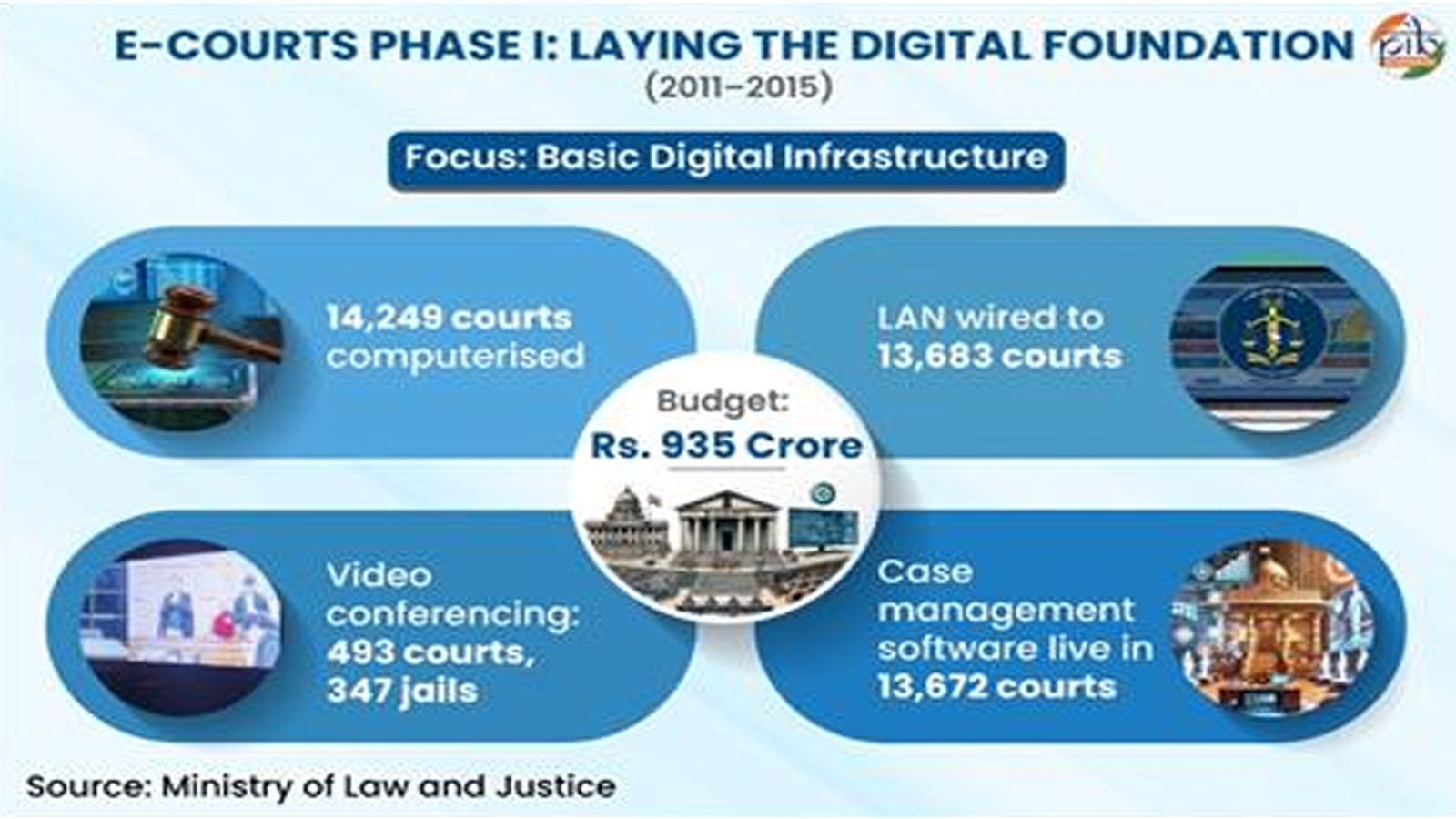
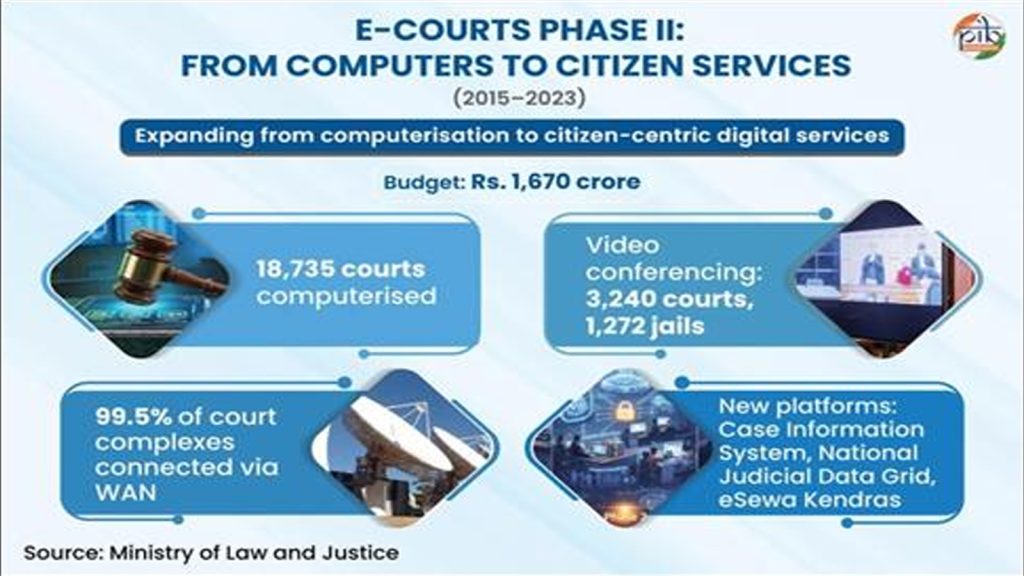
The transformation has been implemented in phases. The first phase, carried out between 2011 and 2015, focused on creating the technological foundation by computerising more than 14,000 courts and establishing the basic network infrastructure needed for digital judicial services. The second phase, spanning 2015 to 2023, expanded citizen-centric services through the introduction of the National Judicial Data Grid (NJDG), e-Filing facilities and e-Sewa Kendras. During this period, video conferencing infrastructure increased more than fivefold, significantly improving virtual access to court proceedings.
The ongoing third phase, which runs from 2023 to 2027, aims to create digital, paperless and intelligent courts. It emphasises large-scale digitisation of records, wider adoption of virtual hearings, interoperability among justice institutions and the use of emerging technologies such as Artificial Intelligence, analytics and Optical Character Recognition. As part of this phase, 1,806 fully functional e-Sewa Kendras have been established across court complexes, while 474 courts have been equipped with hardware for paperless functioning. Infrastructure for virtual courts has been created in 538 courts and e-filing facilities have been extended to 4,519 courts. Video conferencing facilities are now available across 7,553 establishments, including courts, jails and hospitals. Solar-powered infrastructure has been installed in 1,626 court complexes to ensure uninterrupted ICT services, while 6,895 courts have adopted the National Service and Tracking of Electronic Processes (NSTEP). All High Courts have implemented the Inter-operable Criminal Justice System (ICJS), 734 court websites have migrated to the S3WAAS platform and extensive training programmes have been conducted for stakeholders.
One of the most significant outcomes of the project has been the creation of the National Judicial Data Grid. Introduced during the second phase, the online platform provides real-time public access to information on court orders, judgments and case details across the Supreme Court, High Courts and District Courts. The platform enables citizens and judicial administrators to monitor pending and disposed cases, track proceedings at different stages and identify reasons for delays. By making judicial data publicly accessible, the system has strengthened transparency, accountability and judicial planning.
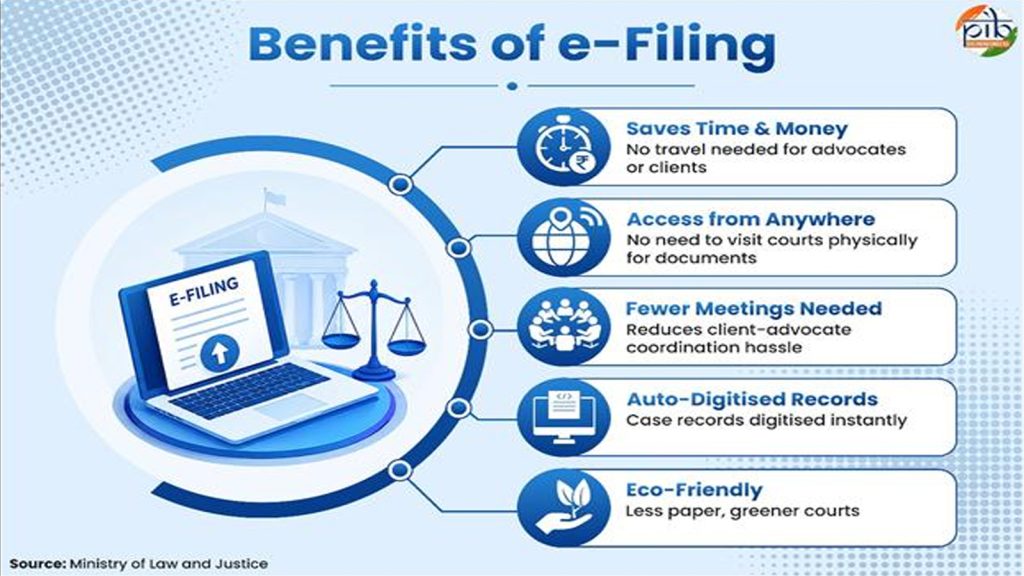
The e-Filing platform has also transformed the filing of court documents by allowing complaints, written statements, applications and other pleadings to be submitted online. The multilingual platform supports English as well as regional languages and serves District Courts, High Courts and the Supreme Court. It provides facilities such as online payments, electronic signing of documents, online video recording of oaths, submission of vakalatnamas, collaborative portfolio management for advocates, dashboards for monitoring case status and ready-made templates for commonly filed pleadings. Since its inception until June 30, 2026, more than 1.25 crore cases have been filed through the platform. During the same period, the e-payment system processed transactions worth Rs. 1,404 crore in court fees and Rs. 75 crore in fines.
The large-scale digitisation of legacy court records has become another major component of judicial reform. Crores of older records are being digitised under the third phase of the mission, helping preserve important documents while making retrieval, storage and legal research significantly faster and more efficient.
Technology has also transformed court hearings. Video conferencing now enables litigants, lawyers, witnesses and other stakeholders to participate in proceedings remotely, reducing travel costs and improving access to justice across geographical boundaries. More than 4.18 crore remote hearings have been conducted nationwide, while livestreaming of court proceedings has become operational in 11 High Courts. Thirty-one Virtual Courts have been established for online adjudication of traffic challans, receiving 11.33 crore challans amounting to Rs. 1,135.79 crore. The launch of Nyaya Shruti in 2024 under the Inter-operable Criminal Justice System has further enabled accused persons, witnesses, police officials, prosecutors, scientific experts and prisoners to participate virtually in judicial proceedings, reducing delays and improving efficiency.
The digital transformation extends well beyond the courts. The Inter-operable Criminal Justice System now electronically links police, courts, prisons, forensic laboratories and prosecution agencies, enabling seamless exchange of FIRs, charge sheets, court orders and forensic reports. Supporting platforms such as the Crime and Criminal Tracking Network and System, Investigation Tracking System for Sexual Offences, e-Sakshya, e-Summons, MedLEaPR, e-Forensic, e-Prison, e-Prosecution and the National Automated Fingerprint Identification System have strengthened digital coordination across the criminal justice system.
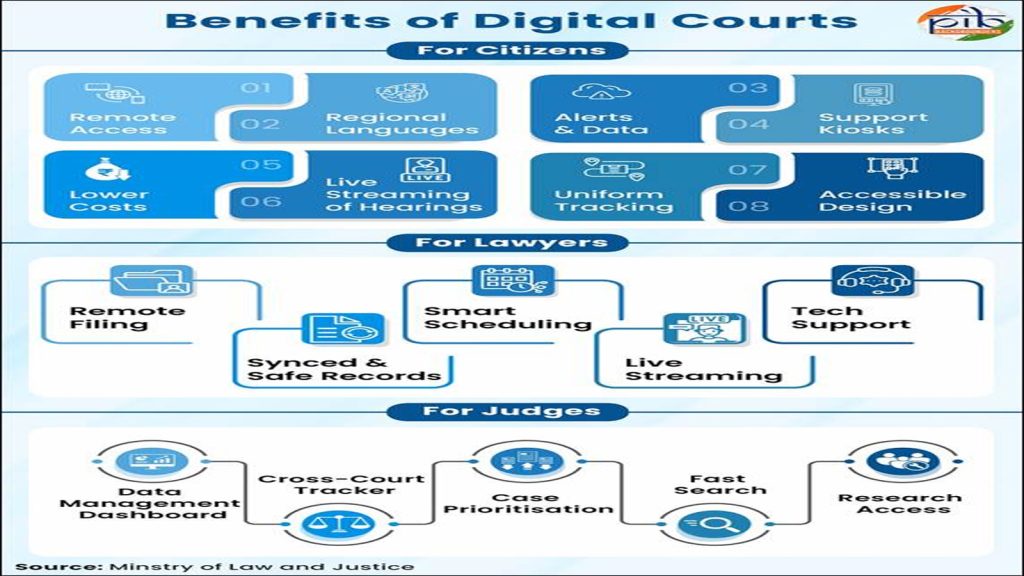
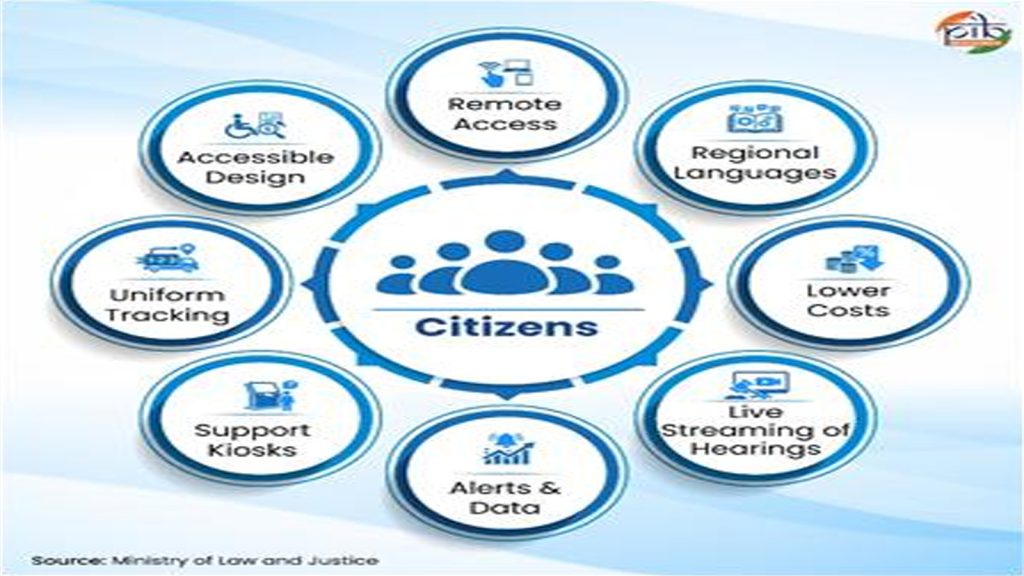
Digital platforms have also improved communication between the judiciary and the public. Lawyers, litigants and judges can track case status through multilingual portals, mobile applications, email and SMS services. More than four lakh SMS messages and six lakh emails are sent daily, while the multilingual e-Courts Services Portal records nearly 35 lakh visits every day. The e-Courts Services mobile application has been downloaded 3.84 crore times, enabling users to access case information, cause lists and other services. Judges also benefit from the JustIS application, which assists them in organising and monitoring judicial work. Meanwhile, the GPS-enabled National Service and Tracking of Electronic Processes has replaced traditional paper-based service of summons with a transparent and trackable digital mechanism.
To ensure that technology remains inclusive, e-Sewa Kendras have emerged as citizen-friendly facilitation centres within court complexes. These centres assist people with checking case status, obtaining certified copies, filing petitions electronically, making online payments, securing Aadhaar-based digital signatures, downloading the e-Courts mobile application, scheduling jail visits, accessing free legal aid, joining video-conference hearings and receiving copies of judgments electronically. As of June 30, 2026, 49 e-Sewa Kendras were operational across High Courts and 2,535 were functioning in District Courts.
Artificial Intelligence and Machine Learning now represent the next frontier of judicial reform under Phase III. Out of the project’s total outlay of Rs. 7,210 crore, Rs. 53.57 crore has been allocated for AI and ML initiatives. Pilot projects currently underway include AI tools that transcribe oral arguments in Constitutional Bench matters, the Legal Research and Analysis Assistant (LegRAA) to support judges in legal research and document analysis, and Digital Courts 2.1, which enables judges to manage cases in a completely paperless environment. Voice-to-text and translation technologies are also assisting in drafting judgments and orders, while judgments are being translated into 18 Indian languages through the eSCR portal. By March 2025, more than 83,000 judgments had been translated, including over 36,000 in Hindi. An AI system developed with the Indian Institute of Technology Madras is also being tested to automatically identify defects in electronically filed petitions and extract case-related data.
The e-Courts Mission Mode Project has transformed a traditionally paper-heavy and process-driven judiciary into a technology-enabled system that places greater emphasis on transparency, efficiency and accessibility. With digital records, virtual hearings, online services and emerging AI tools becoming integral to judicial administration, the initiative is reshaping the way justice is delivered across the country. As the third phase progresses through 2027, the project continues to advance the vision of a modern judiciary capable of delivering faster, more transparent and more affordable justice regardless of a citizen’s location or circumstances.


