







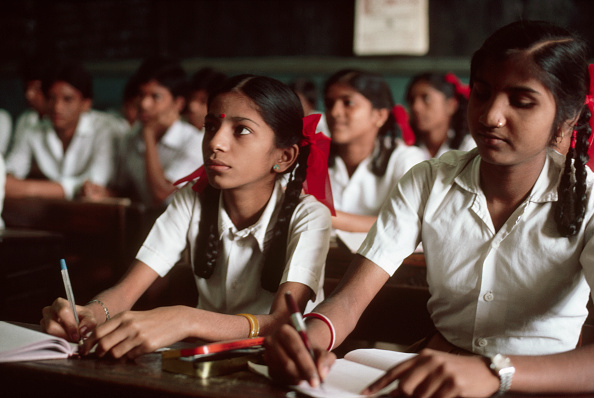
India’s school education system is undergoing a significant transformation driven by a sustained focus on access, quality, equity, inclusion and technology. The latest UDISE+ 2025-26 report provides compelling evidence of this progress, reflecting the Narendra Modi government’s commitment to building an education system that prepares young Indians for the opportunities and challenges of the 21st century.
The scale of India’s school education system itself is remarkable. The country now has nearly 14.67 lakh schools, 1.03 crore teachers and more than 24.72 crore students. Against this enormous scale, improvements in teacher availability, enrolment, retention, infrastructure and digital connectivity demonstrate the importance of sustained policy attention and data-driven governance.
One of the most encouraging developments is the improvement in the pupil-teacher ratio. In 2025-26, the overall ratio stood at 24:1, comfortably within the National Education Policy 2020 benchmark of 30:1. At the foundational, preparatory, middle and secondary stages, the ratios stood at 10:1, 12:1, 17:1 and 21:1 respectively. Better teacher availability means greater individual attention for students and creates a stronger foundation for improving learning outcomes.
The government’s emphasis on ensuring that children remain within the education system is also producing encouraging results. Dropout rates have declined significantly compared with 2022-23, with the rate at the preparatory stage falling to 1.8 percent and at the secondary stage to 7 percent. Strong transition rates between successive stages further indicate that more children are continuing their educational journey rather than being pushed out of it.
The decline in single teacher and zero enrolment schools is another positive development. The number of single teacher schools fell by around 3 percent to 1,00,843 in 2025-26, while zero enrolment schools declined by 29 percent to 5,663. These changes point towards better deployment and utilisation of educational resources across the country.
The transformation is equally visible in the area of gender equality and social inclusion. Girls constitute 48.4 percent of total student enrolment, while women account for 54.9 percent of the teaching workforce. The participation of students from scheduled castes, scheduled tribes and other socially disadvantaged groups demonstrates the broadening reach of school education. The continued focus on children with special needs further underlines the government’s commitment to making education accessible to every section of society.
Infrastructure development has emerged as another important pillar of this transformation. Electricity is now available in 95 percent of schools, while safe drinking water reaches 99.5 percent. Girls’ toilets are available in 98.5 percent of schools and boys’ toilets in 97.2 percent. Libraries are available in 90.5 percent of schools, while handwashing facilities have reached 96.9 percent. Such basic facilities are fundamental to creating a safe, dignified and conducive environment for learning.
With the Narendra Modi government recognising that the school of the future must be digitally connected, the proportion of schools equipped with computers has risen to 69.9 percent, while internet connectivity has reached 67.4 percent. This expansion of digital infrastructure can help bridge geographical and socio-economic divides and give students access to new learning resources, technology and knowledge networks.
The UDISE+ system itself represents an important governance innovation. By creating a comprehensive national database covering schools, teachers and students, it enables policymakers to identify gaps, monitor progress and allocate resources more effectively. Its role in tracking the implementation of the National Education Policy 2020 strengthens the government’s ability to make education policy increasingly evidence-based rather than dependent on fragmented information.
The broader significance of these developments lies in their alignment with the vision of NEP 2020. The policy seeks to create an education system based on universal access, equity, quality, holistic development and technology-enabled learning. The latest UDISE+ data indicates that this vision is increasingly being translated into measurable improvements on the ground.
India’s young population is one of its greatest national assets. The quality of education provided to this generation will directly influence the country’s productivity, innovation capacity, social mobility and global competitiveness. The Narendra Modi government’s sustained emphasis on strengthening the foundations of school education is therefore not merely an investment in classrooms and infrastructure, it is an investment in India’s human capital and its long-term development.
The journey is continuing and challenges remain. Ensuring universal digital connectivity, improving learning outcomes, reducing secondary level dropouts further and strengthening education quality across regions will require sustained effort. Yet the progress captured by UDISE+ 2025-26 provides considerable reason for optimism.
From better teacher availability and improved retention to stronger infrastructure, digital readiness, gender balance and social inclusion, India’s school education system is steadily becoming more accessible and resilient. These gains reflect a governance approach that combines policy reform with measurable outcomes and technology-enabled monitoring. By strengthening the educational foundations of millions of children, the Narendra Modi government is helping prepare a confident, skilled and empowered generation that can contribute meaningfully to the making of a ‘Viksit Bharat’.


