







In a decade, the Unified Payments Interface (UPI) has moved from being a new digital payment mechanism to becoming an integral part of everyday life in India. From small-value payments at neighbourhood shops to bank transfers and cross-border transactions, UPI has fundamentally changed the country’s digital payments landscape.
Developed by the National Payments Corporation of India (NPCI), UPI was conceived as an interoperable, simple and secure platform that could bring multiple banking services onto a single interface. Launched on a pilot basis in April 2016 with 21 member banks and opened to the public on 25th August, 2016, the platform has since evolved into a key pillar of India’s Digital Public Infrastructure.
Its scale today stands in sharp contrast to its modest beginnings.
From 1.78 crore transactions to more than 24,162 crore transactions
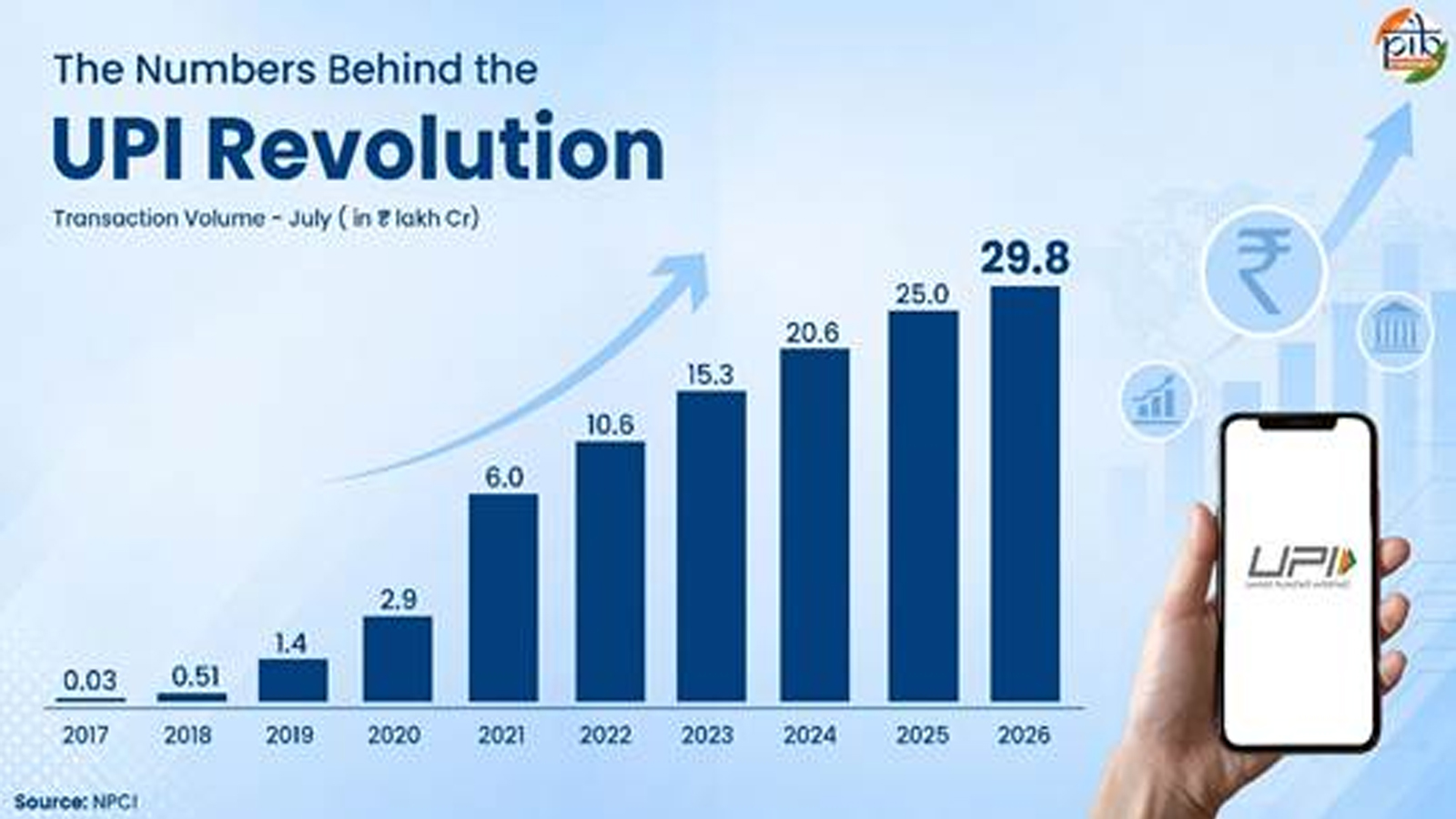
The growth of UPI over the past decade has been extraordinary. Annual transaction volume increased from around 1.78 crore transactions in FY 2016-17 to more than 24,162 crore transactions in FY 2025-26, representing nearly a 13,000-fold increase.
The value of transactions expanded even more dramatically, rising from ₹0.07 lakh crore to approximately ₹314 lakh crore over the same period – an increase of more than 4,000 times.
The momentum has continued into 2026. In July, UPI processed 2,365.8 crore transactions worth ₹29.87 lakh crore, with the ecosystem comprising 741 live banks.
The figures underline how deeply digital payments have become embedded in India’s everyday economic activity.
A payment system that kept evolving
UPI’s growth has been accompanied by a steady expansion of its capabilities.
In December 2016, the launch of the BHIM application gave users a dedicated interface for making direct bank-to-bank payments through mobile devices. Dynamic QR payments followed in 2017, making merchant transactions easier by automatically incorporating payment details.
The introduction of UPI 2.0 in 2018 brought additional features, including invoice notifications, signed intent and QR payments, recurring payment mandates and overdraft account linking.
In 2019, UPI was introduced as an alternative payment mechanism for retail investors participating in IPOs. The platform crossed the landmark of one billion transactions in a single month in October that year, signalling the rapid adoption of digital payments across the country.
The following years brought UPI AutoPay, UPI 123PAY and UPI Lite. These initiatives helped expand the reach of digital payments beyond smartphone users and made low-value transactions faster and more convenient.
UPI also began accommodating a wider range of financial products. Credit cards were integrated with the platform, while Credit Line on UPI was introduced in 2023, allowing eligible users to link pre-sanctioned bank credit lines as a funding source.
Making digital payments more accessible
One of UPI’s defining characteristics has been its ability to serve users across different sections of society.
UPI 123PAY brought digital payments to feature-phone users through mechanisms including interactive voice response, missed calls and proximity-based sound payments. UPI Lite was designed to facilitate smaller-value transactions without requiring a PIN for every payment.
In 2024, UPI Circle was introduced, allowing a primary user to authorise secondary users to make payments subject to predefined limits.
The Reserve Bank of India (RBI) also raised the UPI transaction limit for tax payments from ₹1 lakh to ₹5 lakh per transaction, while the limit for UPI 123PAY was increased to ₹10,000. The UPI Lite wallet limit was raised to ₹5,000, with the per-transaction limit increased to ₹1,000.
Further efforts to simplify authentication came in 2025 with on-device authentication using smartphone fingerprints or face unlock, as well as Aadhaar-based face authentication for UPI PIN onboarding.
From a domestic innovation to a global platform
UPI’s transformation has not remained confined to India.
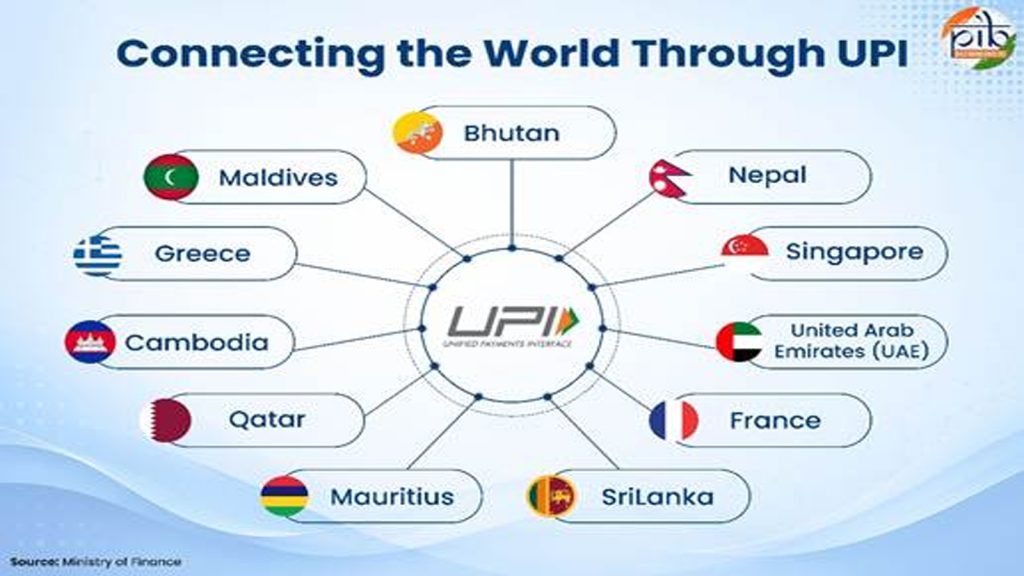
The platform began its international journey with Bhutan and has since expanded to several other countries. It is now operational in 11 foreign countries, including Bhutan, Nepal, Singapore, the UAE, France, Sri Lanka, Mauritius, Qatar, Cambodia, Greece and the Maldives.
Cambodia joined the expanding network in June 2026 after NPCI International Payments Limited partnered with ACLEDA Bank to enable UPI acceptance.
The same month, UPI-based cross-border remittances went live between India and Greece through Eurobank. On July 30, India and the Maldives launched cross-border remittances between UPI and the Maldives’ instant payment system, Favara.
The international expansion reflects an effort to take India’s digital payment infrastructure beyond its domestic market and create easier channels for cross-border payments and remittances.
A major player in global real-time payments
UPI’s scale has also placed India at the forefront of the global real-time payments ecosystem.
According to the Ministry of Finance, UPI accounted for around 49 per cent of global real-time payment transaction volume in 2024. The achievement was highlighted by the International Monetary Fund in its June 2025 report, “Growing Retail Digital Payments: The Value of Interoperability”.
The platform’s significance lies not only in the number of transactions it handles but also in its interoperable architecture. Users can operate multiple bank accounts through a single application, while merchants can accept payments without requiring customers and businesses to use the same banking service.
The next decade
UPI’s first decade has been marked by rapid adoption, technological innovation and expanding international reach. What began with 21 banks has developed into an ecosystem involving hundreds of banks and millions of users and merchants.
The evolution from basic bank transfers to recurring payments, credit facilities, feature-phone transactions, delegated payments and international remittances demonstrates how the platform has continuously adapted to changing consumer and economic needs.
As India looks towards the next phase of its digital transformation, UPI is expected to remain a central component of its Digital Public Infrastructure. Its first decade has established the scale; the challenge for the next decade will be to expand that reach further while maintaining security, interoperability and accessibility.
For India, UPI’s story is ultimately more than a story about a payment application. It represents how a digital public infrastructure built around openness and interoperability can reshape everyday economic activity – from a small merchant transaction to India’s growing presence in the global digital payments ecosystem.


