







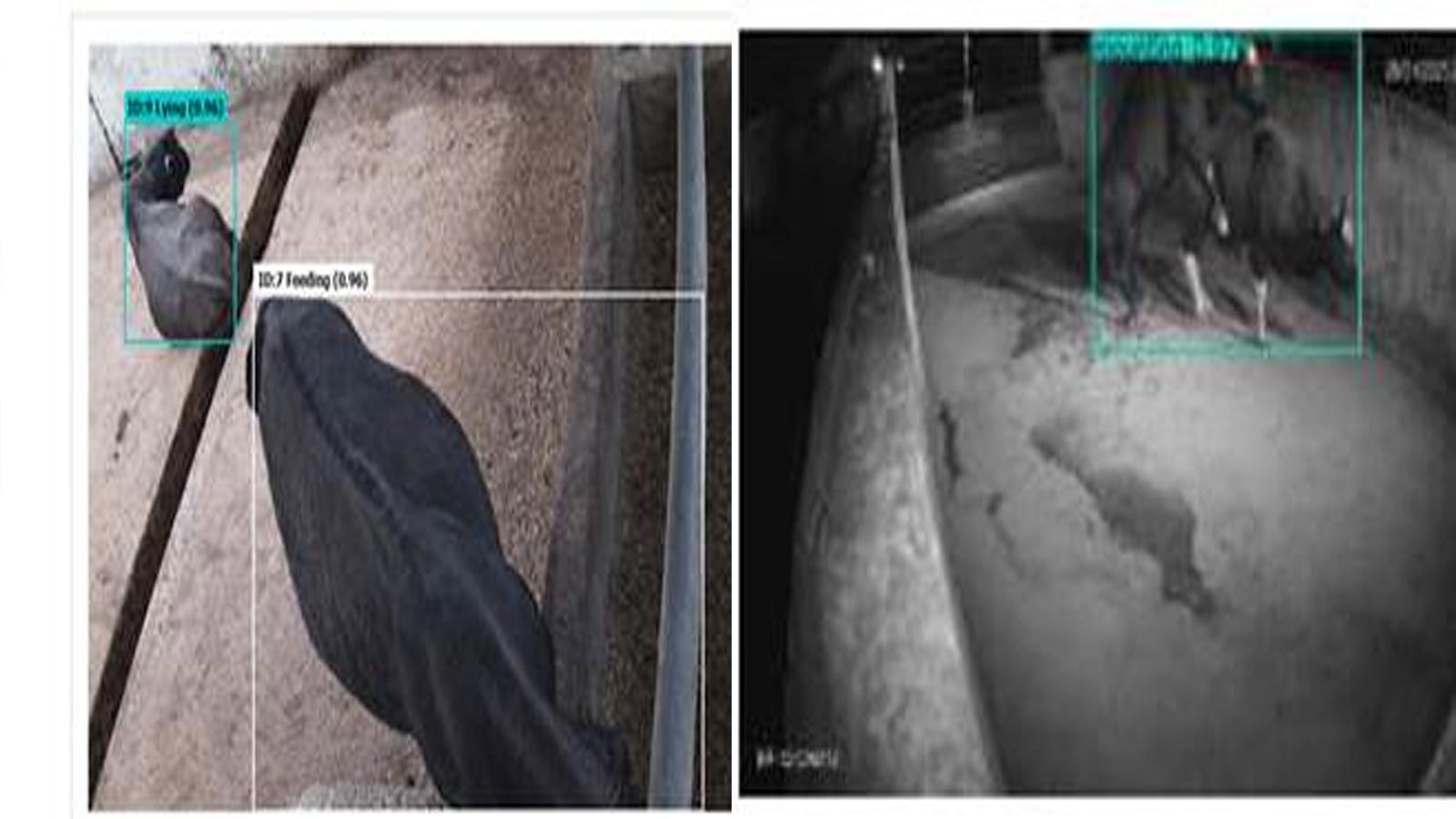
Researchers at the ICAR-National Research Centre on Mithun (ICAR-NRC on Mithun) in Nagaland have developed an artificial intelligence-based system that can detect and track the behaviour of Mithun in real time, a development that could transform livestock monitoring and help farmers manage animal health, welfare and reproduction more efficiently.
Mithun, scientifically known as Bos frontalis and popularly called the “Cattle of the Hills”, holds considerable social, cultural and economic importance for tribal communities across Northeast India. The animal also plays an important role in livelihoods and food security in the region.
The AI-based system uses cameras and computer vision to monitor Mithun continuously in a natural farm environment without requiring physical contact or constant human observation.
AI monitors animals day and night
The research team installed 12 high-definition CCTV cameras across two sheds at the ICAR-NRC on Mithun farm in Nagaland. The cameras provide continuous day-and-night surveillance, including infrared monitoring.
Using the recorded footage, researchers created a dataset of 3,000 manually annotated images covering four key behaviours – feeding, standing, lying and mounting.
The AI framework combines the YOLOv8n model for detecting behaviour with DeepSORT technology to track individual animals across video frames and assign them persistent identities.
The system can therefore identify what an animal is doing while simultaneously tracking individual Mithun in real time.
High accuracy under challenging farm conditions
The YOLOv8n model achieved a mean average precision of 99.5 per cent at mAP@0.5, with a recall rate of 99.6 per cent.
It processed footage at approximately 31 frames per second on an NVIDIA RTX 3060 graphics processing unit, demonstrating its potential for real-time use.
Researchers also tested the system under difficult conditions commonly encountered in farm environments, including partial obstruction of animals, background clutter, uneven and wet ground, shadows, motion blur and nighttime infrared footage.
Such continuous monitoring could be particularly useful because changes in feeding, standing and lying patterns can indicate variations in an animal’s health, comfort, nutrition or physiological condition. Detection of mounting behaviour, meanwhile, could provide useful information for reproductive and oestrus management.
Could reduce dependence on manual monitoring
Livestock behaviour is an important indicator of animal health and wellbeing, but conventional monitoring relies heavily on human observation. Maintaining such surveillance around the clock can be labour-intensive and particularly difficult during nighttime hours.
An automated system could allow farmers and livestock managers to monitor animals continuously and access behavioural information without having to physically observe the herd throughout the day and night.
The researchers, however, said the technology is still at the research and validation stage. The system has so far been evaluated at a single farm and will require further testing across different farms, geographical regions, seasons, stocking densities and camera configurations.
The current framework is also limited to four behaviours, while severe obstruction of animals can affect detection and tracking performance. Further research is required to quantitatively assess identity tracking using standard tracking metrics.
Next step: detecting disease and other behaviours
Researchers plan to expand the system to recognise additional behaviours, including aggression, grooming and disease-related inactivity.
Future work could also incorporate temporal AI models, deploy the technology on edge devices and develop larger datasets covering different farms and seasonal conditions.
The study demonstrates how artificial intelligence and computer vision can be combined with livestock science to create technology-driven solutions for precision livestock farming. Continuous, data-based behavioural monitoring could ultimately help farmers identify changes in animal condition earlier and improve health, welfare and reproductive management.
The research was published in Engineering Research Express, Volume 8 (2026), Article 175213. It was conducted by researchers from ICAR-NRC on Mithun, Nagaland, in collaboration with NIT Nagaland, Nagaland University and CHRIST (Deemed to be University).


