







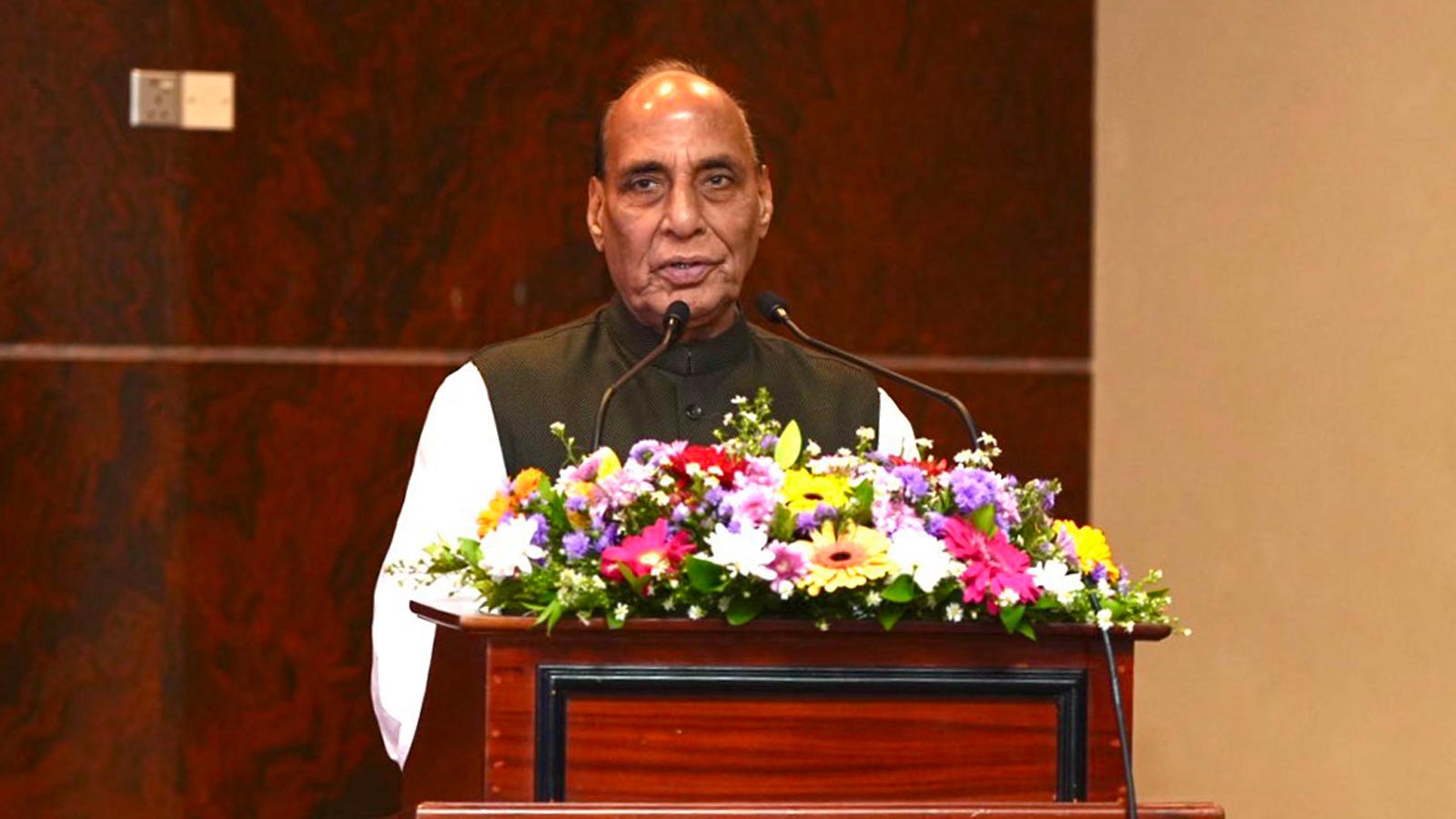
Defence Minister Rajnath Singh on Monday said the landmark BRICS 2026 New Delhi Declaration is a statement of India’s growing global influence under the leadership of Prime Minister Narendra Modi, asserting that India’s leadership at the summit placed the Global South at the centre and championed a more inclusive, representative and balanced world order.
Taking to X, Rajnath Singh said,
“The historic BRICS Summit has successfully concluded in New Delhi. Under the visionary leadership of PM Shri @narendramodi, India underlined Resilience, Innovation, Cooperation and Sustainability as its foremost priorities as BRICS Chair.
Guided by these priorities, India has laid special emphasis on connecting BRICS cooperation directly with the common people. This inclusive and human-centric approach became the hallmark of BRICS Summit in New Delhi.
The signing of a landmark BRICS 2026 New Delhi Declaration is also big achievement. It is not just a document, it is a statement of India’s growing global influence under the leadership of PM Modi.”
He further said India has placed the Global South at the centre.
“India has put the Global South at the centre, not at the margins, championing a more inclusive, representative and balanced world order.
Rooted in our civilisational ethos of Vasudhaiv Kutumbkam, India has once again shown that leadership is not about having the loudest voice, but the strongest consensus. As India leads, the world listens.
I congratulate PM Modi for the super success of BRICS Summit in New Delhi. Its success has indeed left an indelible mark on the global stage.”
The historic BRICS Summit has successfully concluded in New Delhi. Under the visionary leadership of PM Shri @narendramodi, India underlined Resilience, Innovation, Cooperation and Sustainability as its foremost priorities as BRICS Chair.
Guided by these priorities, India has…
— Rajnath Singh (@rajnathsingh) September 14, 2026
The 18th BRICS Summit, hosted by India on September 12 and 13 under the theme “Building for Resilience, Innovation, Cooperation and Sustainability”, concluded with the adoption of the New Delhi Declaration.
The declaration covers issues including global governance, economic cooperation, trade, energy security, technology, climate change and reforms of international institutions.


