







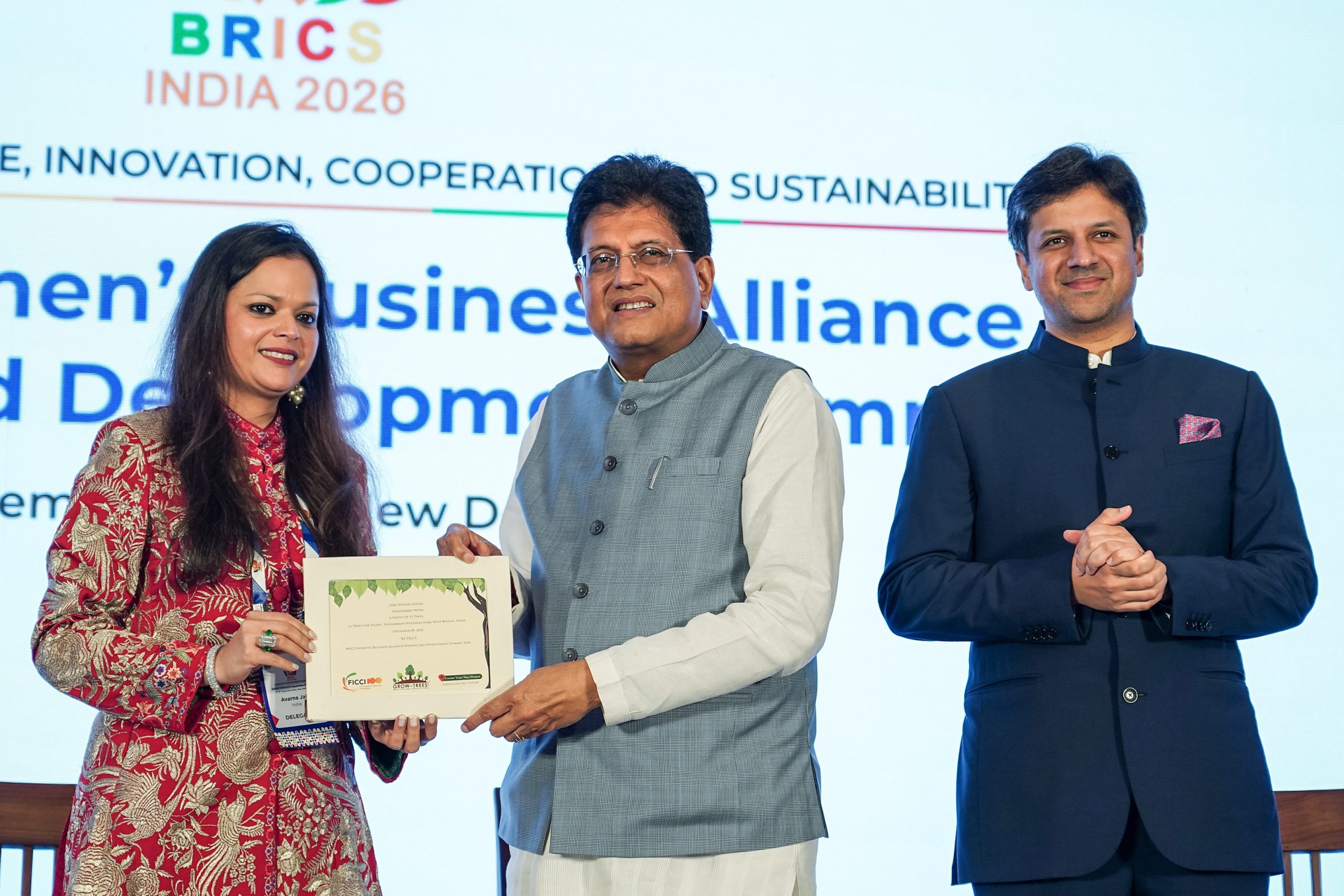
India’s presidency of BRICS has been “absolutely phenomenal”, said Avarna Jain, Chairperson of the BRICS Women’s Business Alliance (WBA), highlighting the body’s work on a knowledge paper on digital public infrastructure modelled on India’s Unified Payments Interface (UPI).
Delhi is set to host the 18th BRICS Leaders’ Summit on September 12-13, as India concludes its 2026 chairship of the expanded grouping of major emerging economies and developing countries.
“I think India’s presidency thus far has been absolutely phenomenal. We’ve worked on a specific knowledge paper on digital public infrastructure, what India has created with UPI. There are seven other knowledge papers that will be released, which are knowledge papers from across the BRICS nations,” Jain said on Wednesday.
Jain outlined the release of several collaborative research frameworks developed across BRICS member nations, highlighting the alliance’s focus on knowledge-sharing and cross-border cooperation.
Underlining the significance of hosting the 2026 BRICS Summit in India, Jain said the Alliance’s economic and developmental agenda is guided by a core principle of putting humanity first.
“The fact that we are hosting the BRICS Summit 2026 in India is actually a very iconic moment, and our humanity-first approach, I think, is the core of whatever we are working on,” she added.
Her remarks came after the BRICS WBA Women-Led Development Summit 2026 in New Delhi, which brought together entrepreneurs, industry leaders and delegates from BRICS member nations to discuss finance, technology, market access and stronger cross-border business partnerships.
Welcoming delegates to the summit, Jain emphasised women’s contributions to enterprise, employment, innovation and markets, while stressing the need for greater access to capital, technology, skills and mentorship.
The summit organised discussions across five thematic panels, including sessions on advancing women in STEM, aligning skilling with market demands, establishing recognised qualifications for women outside formal education, and exploring how digital health, telemedicine and artificial intelligence can expand primary, preventive and maternal healthcare to rural and underserved communities.
Marking the event, two major research papers were also launched — “Digital Public Infrastructure: Enabling Women-Led Development” and “Beyond Access: Women’s Economic Empowerment & Resilience Across BRICS Nations.”
According to the council, the publications set out specific pathways to promote financial inclusion, strengthen women’s economic participation and build greater resilience across BRICS economies.
-with inputs from agencies


