







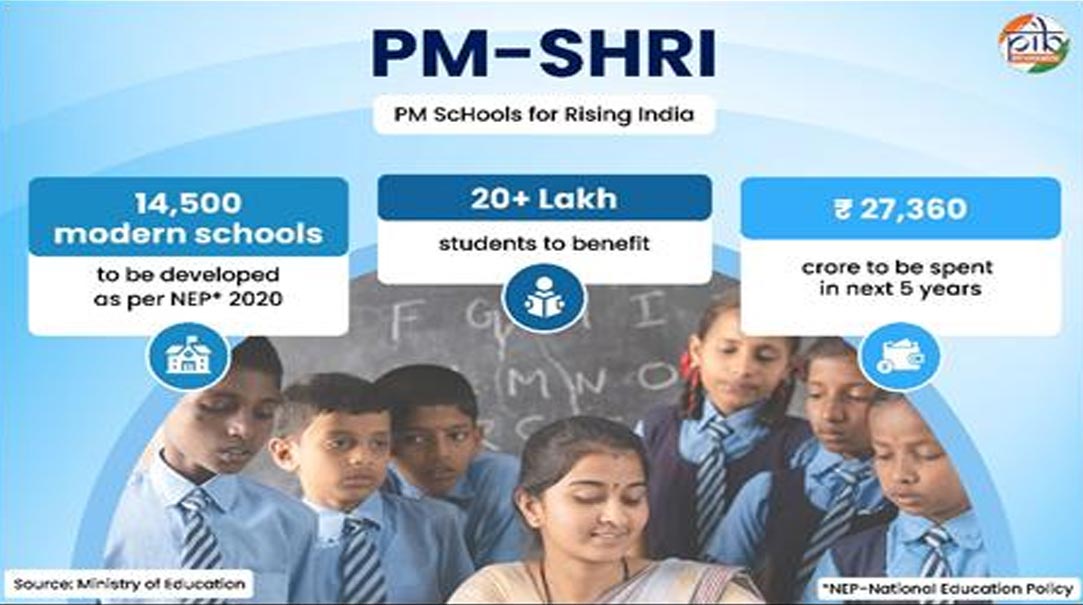
India’s school education system is undergoing a gradual shift from an infrastructure-focused approach towards one centred on quality, inclusion, experiential learning and future-ready skills. At the heart of this transformation is the Pradhan Mantri Schools for Rising India (PM SHRI) Scheme, which seeks to turn more than 14,500 existing schools into exemplar institutions aligned with the National Education Policy (NEP) 2020.
Launched on September 7, 2022, PM SHRI is being implemented as a Centrally Sponsored Scheme by the Department of School Education and Literacy, Ministry of Education. With a total project cost of ₹27,360 crore for 2022–23 to 2026–27, including a Central share of ₹18,128 crore, the initiative aims to demonstrate what a modern, inclusive and holistic school can look like.
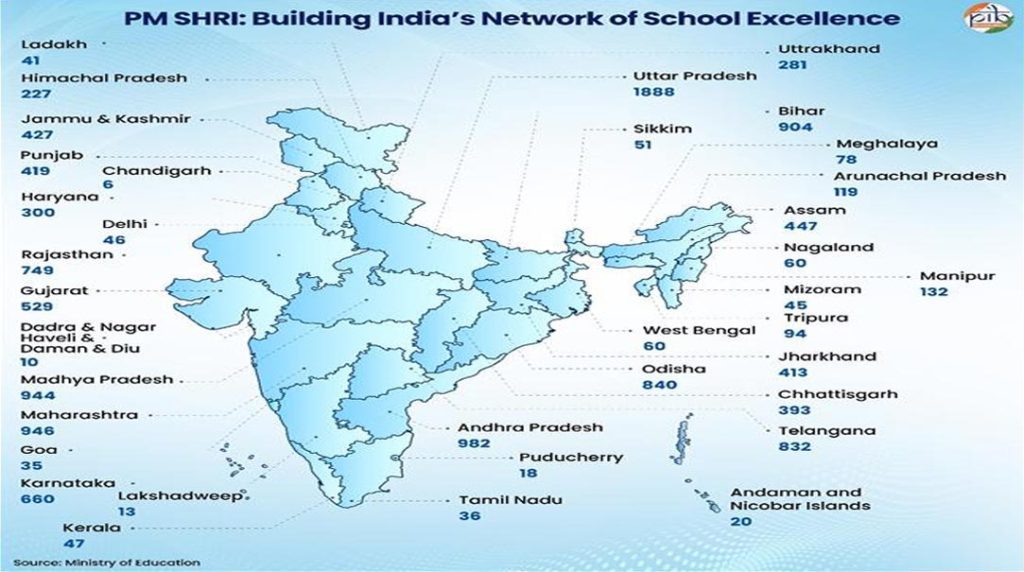
As of July 2026, 13,092 schools have been selected across 36 States and Union Territories, covering about 90 per cent of the target. The network spans 725 districts and 8,340 blocks/urban local bodies and is expected to directly benefit more than 20 lakh students.
Schools Designed to Lead by Example
PM SHRI is not conceived merely as a programme to upgrade buildings or provide new facilities. The selected schools are expected to become models for neighbouring institutions, sharing innovative practices through mentoring, handholding, collaboration and clustering.
The initiative seeks to create safe, welcoming and stimulating learning environments while promoting competency-based education, technology integration, sustainable practices and holistic student development.
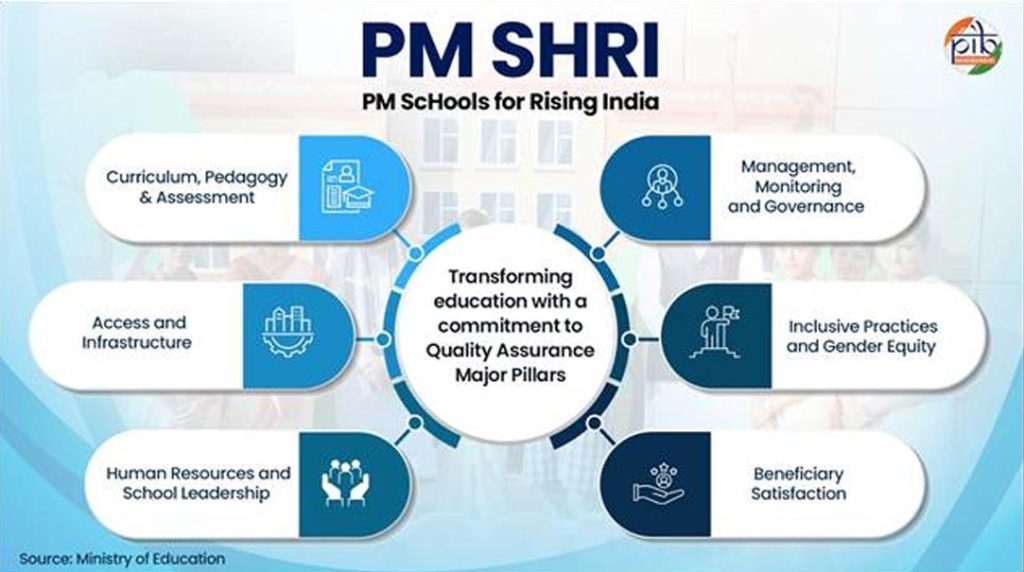
The scheme is structured around six broad pillars derived from NEP 2020. These include inclusive learning, mentorship, green schools, experiential learning, improved learning outcomes and quality infrastructure, supported by the School Quality Assessment Framework (SQAF).
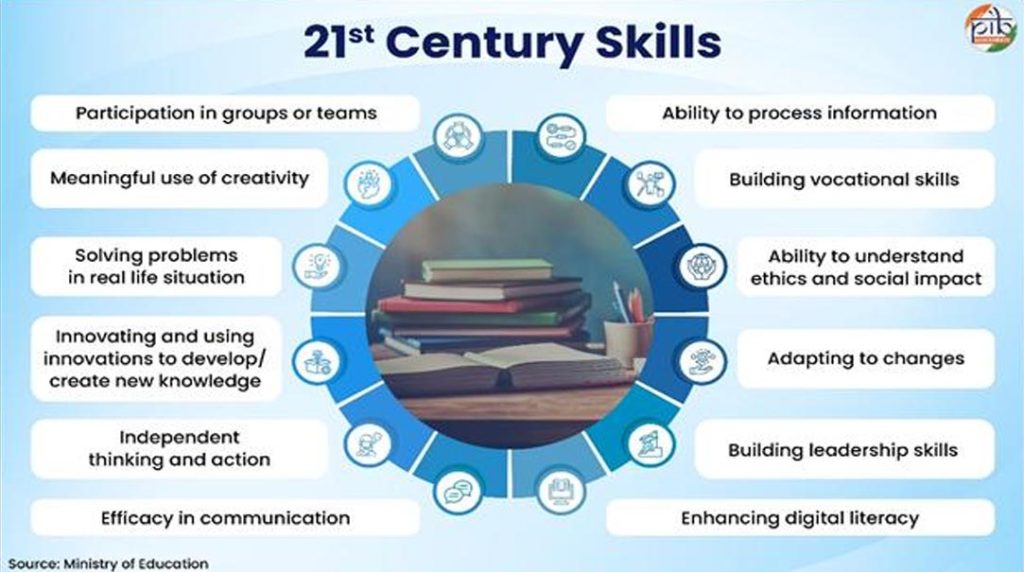
Infrastructure is assessed not only for availability but also for adequacy, functionality, aesthetics and safety. Schools are also expected to promote 21st-century skills and establish links with local entrepreneurial ecosystems.
From Rote Learning to Experiential Education
A major feature of PM SHRI is its emphasis on making learning more relevant to children’s lives. Schools follow the CBSE or relevant State/UT curriculum while adopting the 5+3+3+4 curricular and pedagogical structure prescribed under NEP 2020.
Experiential learning is encouraged through bagless days, internships with local artisans, exposure to local arts and crafts, cultural activities and the preservation of indigenous knowledge.
The approach extends beyond academics. Sports, arts, life skills and socio-emotional development are integrated into school life to help students build creativity, leadership, resilience and adaptability.
Inclusion and Multilingual Learning
Equity and inclusion are central to the PM SHRI model, particularly for children from rural and underserved communities. Schools are encouraged to use the mother tongue, local or regional language, especially during the early years of education.
The UDISE+ 2025–26 data records 6,102 Sanskrit teachers, 1,994 Urdu teachers and 9,152 regional language teachers in PM SHRI schools.
The emphasis on local languages is also intended to strengthen foundational literacy and numeracy while allowing communities to participate more actively in the learning process.
Technology and Future-Ready Skills
Technology-enabled learning is another important component. PM SHRI schools are being equipped with ICT facilities, smart classrooms, internet connectivity, digital learning platforms and STEM-based programmes to make education more interactive and learner-centred.
Platforms such as DIKSHA provide access to digital educational resources, while technology integration is aimed at building digital literacy, critical thinking and problem-solving abilities.
Teacher development is similarly prioritised. Financial assistance of up to ₹3 lakh per DIET is provided for capacity-building programmes, while support of up to ₹2,500 per teacher is available for training teachers, principals, special educators, ICT teachers and master trainers.
A Network Spanning the Country
The 13,092 selected schools include 1,305 primary, 3,102 upper primary, 3,141 secondary and 5,544 higher secondary schools. The network also includes 80 Kasturba Gandhi Balika Vidyalayas, 913 KVS schools, 620 NVS schools and four NCERT schools.
The scale of the programme reflects the government’s attempt to create a national network of schools capable of demonstrating how the principles of NEP 2020 can translate into everyday classroom practices.
Selection Based on Quality
PM SHRI schools are selected through a three-stage Challenge Mode, rather than simply on the basis of infrastructure requirements. States and UTs first sign an MoU with the Centre, following which eligible schools are identified using prescribed benchmarks and UDISE+ data.
The schools then participate in a challenge-based assessment covering areas such as infrastructure, learning outcomes, pedagogy, PM POSHAN, vocational education, green initiatives and stakeholder commitment.
Urban schools must secure at least 70 per cent, while rural schools require a minimum score of 60 per cent. Physical inspections are conducted before final recommendations are made to the Ministry of Education.
From Model Schools to Systemic Change
The larger ambition of PM SHRI lies beyond the 14,500 schools targeted under the scheme. By making selected institutions centres of innovation and mentorship, the programme seeks to create a ripple effect across the wider school system.
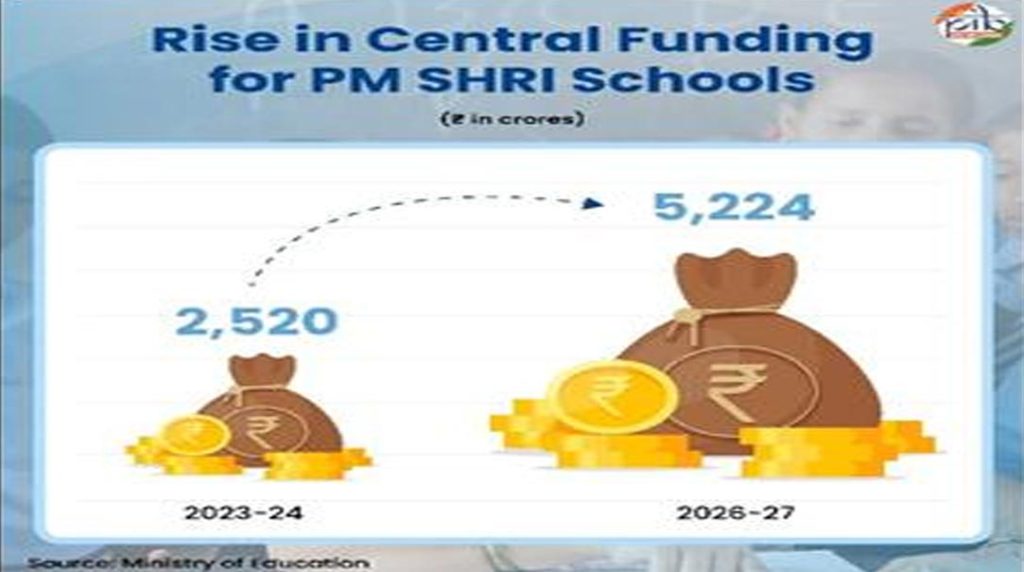
The rise in the Central share of approved Project Approval Board outlay—from ₹2,520 crore in 2023–24 to ₹5,224 crore in 2026–27, an increase of about 107 per cent—also reflects the expanding scale of the initiative.
Ultimately, PM SHRI represents an effort to redefine what school development means: not simply better buildings, but better learning, stronger teachers, inclusive classrooms, digital capabilities, environmental consciousness and well-rounded students.
The vision is to ensure that exemplar schools do not remain isolated success stories, but become catalysts for change—helping move India’s vast school education network towards a more equitable, inclusive, innovative and future-ready system.


