







India’s growing aerospace capabilities, supported by cost-competitive manufacturing, engineering talent and indigenous technologies, are opening new opportunities in the global aviation and space ecosystem, according to a recent Jefferies report.
The report identifies aerospace as one of the emerging industrial frontiers where India can benefit from the global demand-supply imbalance. Boeing and Airbus currently source around US$1.4–1.6 billion annually from India, while Indian companies such as Aequs, Azad Engineering, DYTC, BHFC, Motherson and Sansera are expanding as global original equipment manufacturer (OEM) and Tier-1 suppliers.
Against this backdrop, India’s indigenous GAGAN (GPS Aided GEO Augmented Navigation) system represents an important development in advanced aviation technology.
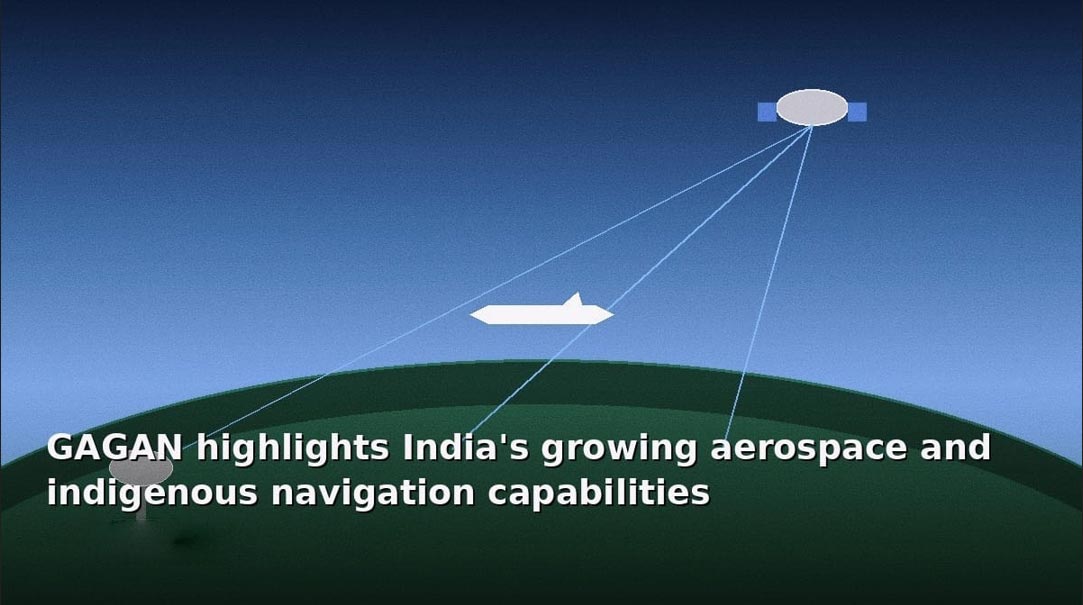
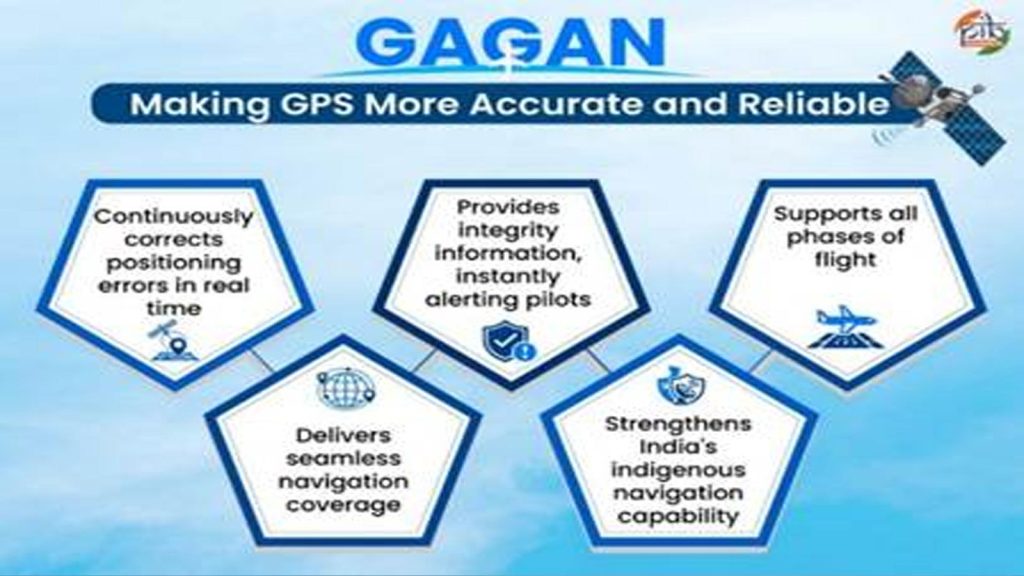
Developed jointly by the Indian Space Research Organisation (ISRO) and the Airports Authority of India (AAI), GAGAN is a Satellite-Based Augmentation System (SBAS) that improves GPS accuracy and provides integrity information for safer aircraft navigation.
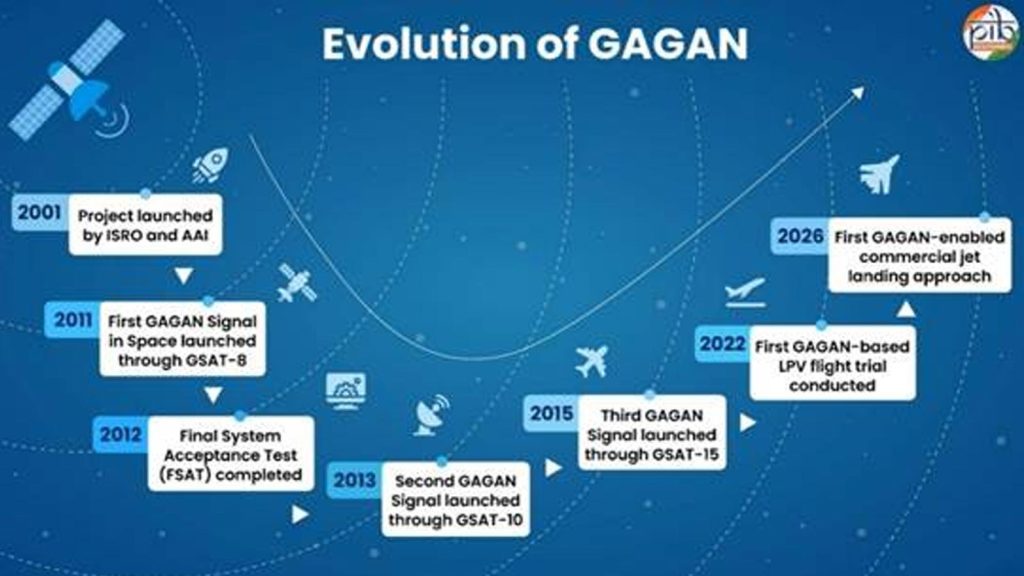
The system has been fully operational since 2015, placing India among a select group of countries with an operational SBAS. In June 2026, the Directorate General of Civil Aviation (DGCA) successfully conducted India’s first satellite-based landing system approach on a commercial jet aircraft using GAGAN.
Indigenous navigation infrastructure
GAGAN operates through 15 Indian Reference Stations, two Indian Master Control Centres and three Indian Land Uplink Stations, supported by communication networks and three geostationary satellites carrying GAGAN payloads.
The satellites – GSAT-8, GSAT-10 and GSAT-15 – broadcast corrected navigation signals and integrity information to users. GAGAN is also the first SBAS certified for the equatorial region and is interoperable with international systems including the US WAAS, Europe’s EGNOS and Japan’s MSAS.
Beyond aviation, the technology has potential applications in maritime navigation, road transport, railways, disaster management, defence, telecommunications, surveying and mapping.
GAGAN complements NavIC, India’s indigenous regional navigation system. While NavIC provides positioning, navigation and timing services across India and up to about 1,500 km beyond the country’s boundary, GAGAN enhances GPS signals for precise aviation navigation.
India’s broader navigation ecosystem is also gaining international reach. In 2025, India signed an agreement with South Africa to establish a NavIC reference station, strengthening cooperation in satellite-based navigation.
The development of GAGAN, alongside India’s expanding aerospace manufacturing base, reflects the broader industrial shift highlighted by Jefferies – from domestic capability-building towards higher-value technology, global supply chains and greater indigenous value addition.


