







Gujarat’s Food and Drug Control Administration (FDCA) cancelled the sales licences of 50 drug firms and ordered the closure of two drug manufacturing units after inspections found serious deficiencies, while more than 42,988 kg of suspected products worth an estimated Rs 93.47 lakh were seized across the state in August.
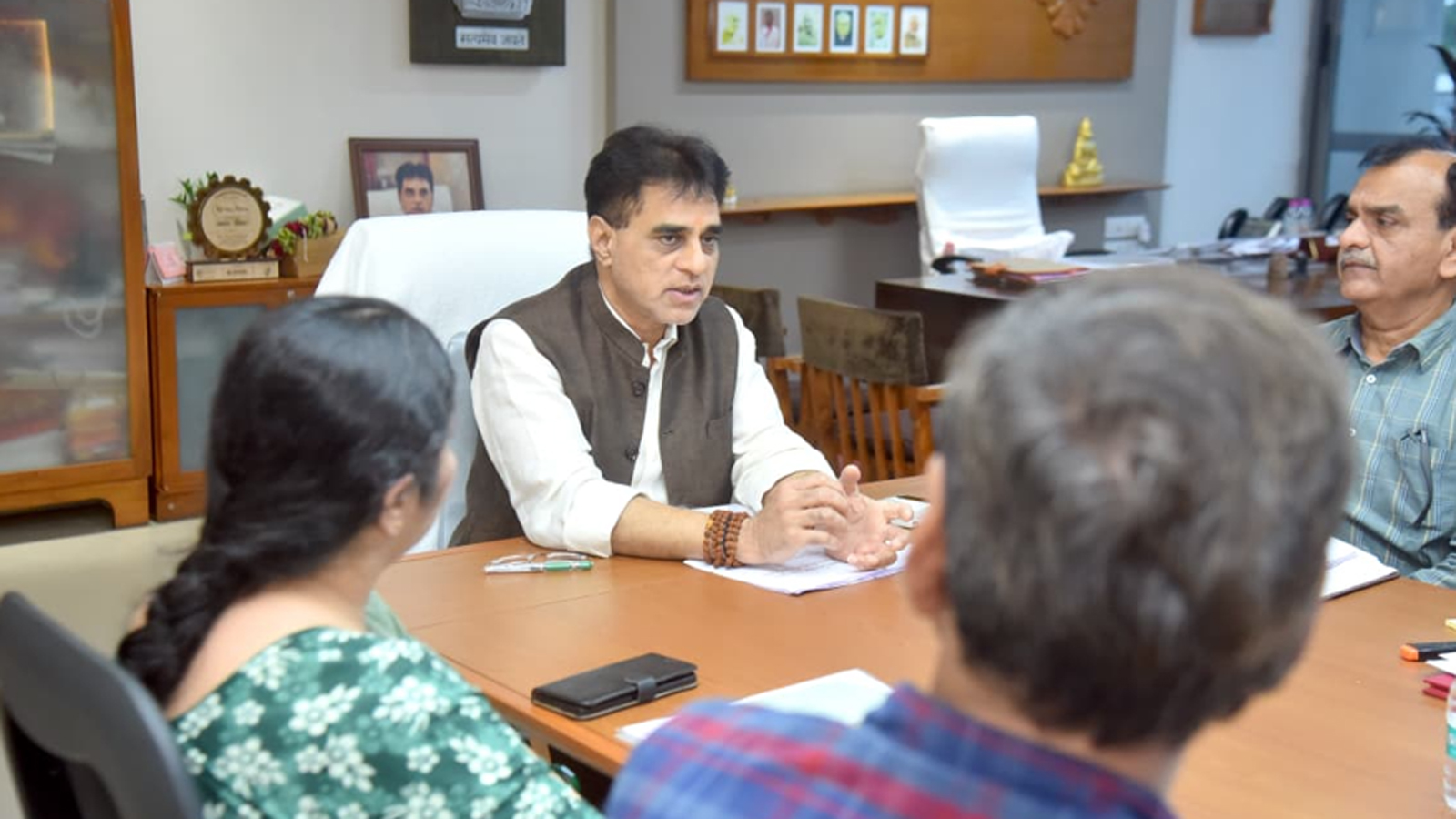
The action was reviewed at a high-level meeting at the Secretariat under the chairmanship of state Health Minister Praful Pansheriya, who directed officials to maintain a ‘zero tolerance’ approach towards fake, substandard and illegally sold medicines and food products.
According to the details presented at the meeting, the FDCA also suspended the licences of eight drug manufacturing firms and cancelled manufacturing licences for 11 medicines following risk-based inspections.
Show-cause notices were issued to manufacturers of 20 medicines that were found to be substandard during laboratory testing.
Of 42 blood storage centres inspected across the state, three were issued closure orders and 12 received show-cause notices. Pansheriya said the government would take strict legal action against those compromising public health.
“A special drive to assess the quality of antibiotics in rural areas resulted in 588 medicine samples being collected for testing,” he said.
The FDCA also carried out action against alleged networks involved in the illegal sale of narcotic and counterfeit medicines in Ahmedabad, Gandhinagar and Mehsana.
During a joint investigation with the Special Operations Group, officials seized a stock of narcotic injections, including tramadol, from a shop next to a medical store in Waghodia of Vadodara district.
Proceedings under the Narcotic Drugs and Psychotropic Substances Act are being initiated, according to the department.
In a separate case involving counterfeit ‘Nicardia Retard 10’ tablets, inspections were conducted at more than 30 locations as officials traced the supply chain of tablets falsely shown as having been manufactured by J.B. Chemicals. Suspicious stock worth more than Rs 1.75 lakh was seized or prohibited.
The investigation traced a supply chain from Sena Pharma in Lucknow, Uttar Pradesh, to Ahmedabad and Sanand. A complaint was registered with the Ahmedabad Crime Branch for further investigation into the source of the counterfeit medicines.
The FDCA also seized cosmetics worth more than Rs 2.68 lakh from Aanki Herbal in Tragad of Ahmedabad, which was allegedly operating without a licence.
At Bavishi Dispensary in Dholikui of Kapadvanj, officials detected the illegal manufacture of a medicine described as being for small children and seized material worth Rs 66,400.
The food safety campaign covered more than 2,238 food business operators in August, with around 2,591 samples collected for laboratory testing.
Among the largest seizures were 14,709 kg of oil and 6,495 kg of edible oil in Patan; 5,157 kg of ghee in Kamrej, Surat; 7,138 kg of milk in Jamnagar; and 6,071 kg of chilli powder in Deesa of Banaskantha.
The department also inspected more than 1,625 restaurants and dhabas to check hygiene and food quality.
Improvement notices were issued to 306 establishments where deficiencies were found, while action, including licence cancellation, was taken against 38 establishments for serious lapses.
Intensive inspections were conducted in Surat, Valsad, Anand, Jamnagar and Mehsana. Action was also taken against the illegal sale and use of dairy analogues.
The FDCA inspected 3,078 firms, collected 145 suspicious samples and destroyed 2,553.10 kg of substandard dairy analogue products valued at Rs 7,54,386.
Pansheriya instructed officials to maintain continuous surveillance over commonly consumed products, particularly milk, ghee, oil and spices.
The minister said ensuring access to pure and quality food remained a priority and directed authorities to continue surprise inspections and legal action under the Food Safety and Standards Act, 2006 and applicable regulations.
The latest action builds on the state government’s stated zero-tolerance approach towards the illegal sale of fake, substandard and intoxicating medicines. Similar enforcement action against suspicious medicines and pharmaceutical firms has also been reported earlier this year.
(IANS)


