







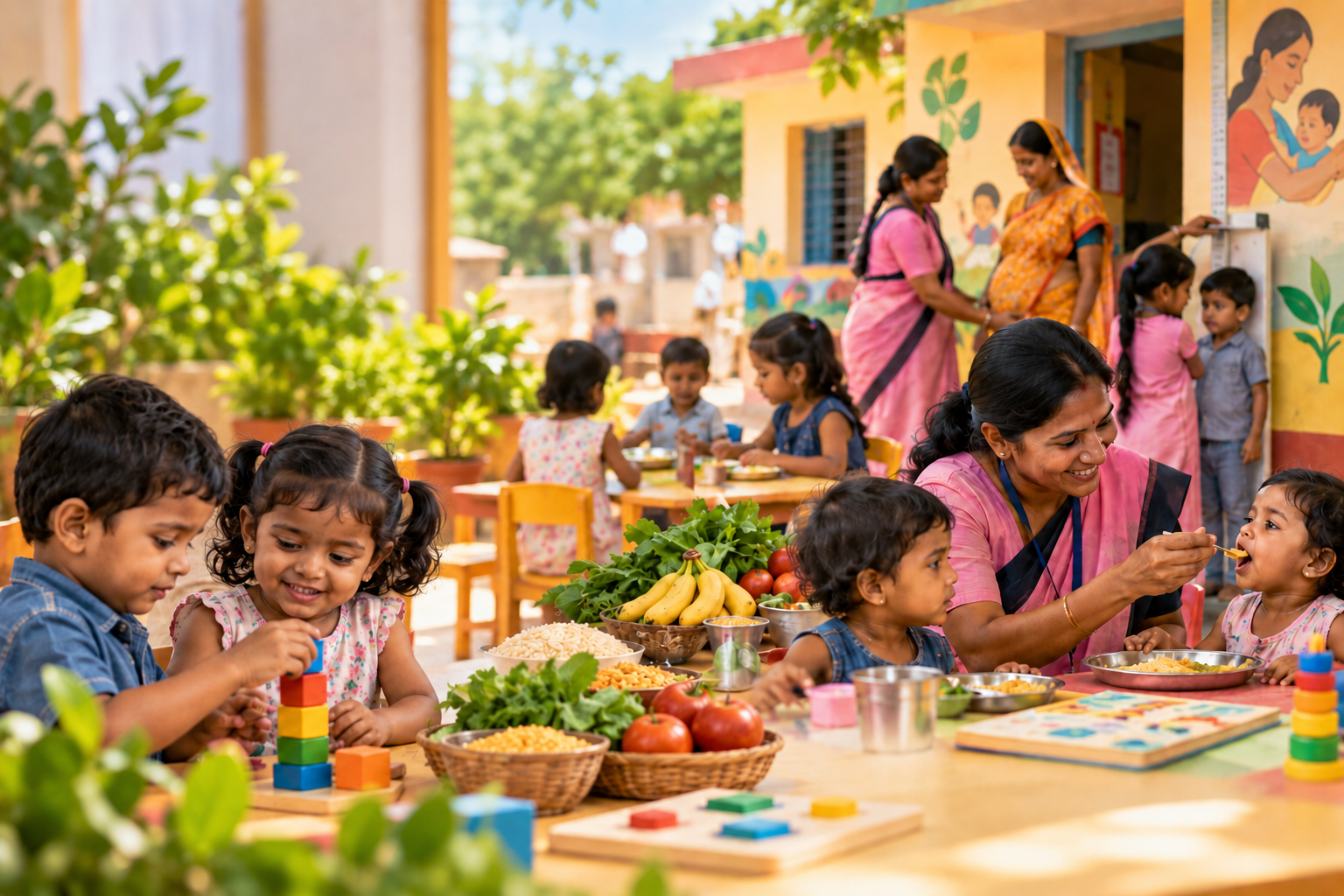
Prime Minister Narendra Modi on Tuesday shared an article by Union Minister Annpurna Devi highlighting the government’s initiatives to strengthen the Anganwadi system and improve nutrition outcomes for children, women and adolescent girls.
The article, shared by the Prime Minister, focuses on 10 years of the Matru Vandana Yojana and Poshan Maah, and underlines the need to transform the Anganwadi system into a people’s movement.
Sharing the article, the Prime Minister’s Office said on X that the initiative highlights how Direct Benefit Transfer (DBT), social audits and nutritious food are supporting children, women and adolescent girls.
The Prime Minister’s Office said, “On the occasion of 10 years of Matru Vandana Yojana and Poshan Maah, this article by Union Minister Smt Annpurna Devi gives the message of making the Anganwadi system a people’s movement.”
It further highlighted the role of DBT, social audits and nutritious food in providing support to children, women and adolescent girls.
The article also emphasises the vision of “Hamari Anganwadi, Hamari Zimmedari”, or “Our Anganwadi, Our Responsibility”, as an important part of efforts towards building a malnutrition-free and developed India.
The focus on strengthening Anganwadi services comes as nutrition remains an important component of efforts aimed at improving the well-being of women and children. The article highlights the role of community participation and accountability mechanisms, including social audits, alongside nutritional support.
The Matru Vandana Yojana and Poshan Maah have been highlighted in the article as part of the broader efforts to improve nutrition and support vulnerable sections of society.
The Prime Minister’s Office said these initiatives, guided by the vision of “Hamari Anganwadi, Hamari Zimmedari”, are paving the way towards a malnutrition-free and Viksit Bharat.
The emphasis on making Anganwadis a people’s movement also seeks to underline the role of communities in supporting nutrition initiatives and ensuring that Anganwadi centres remain an important part of efforts focused on children, women and adolescent girls.


