







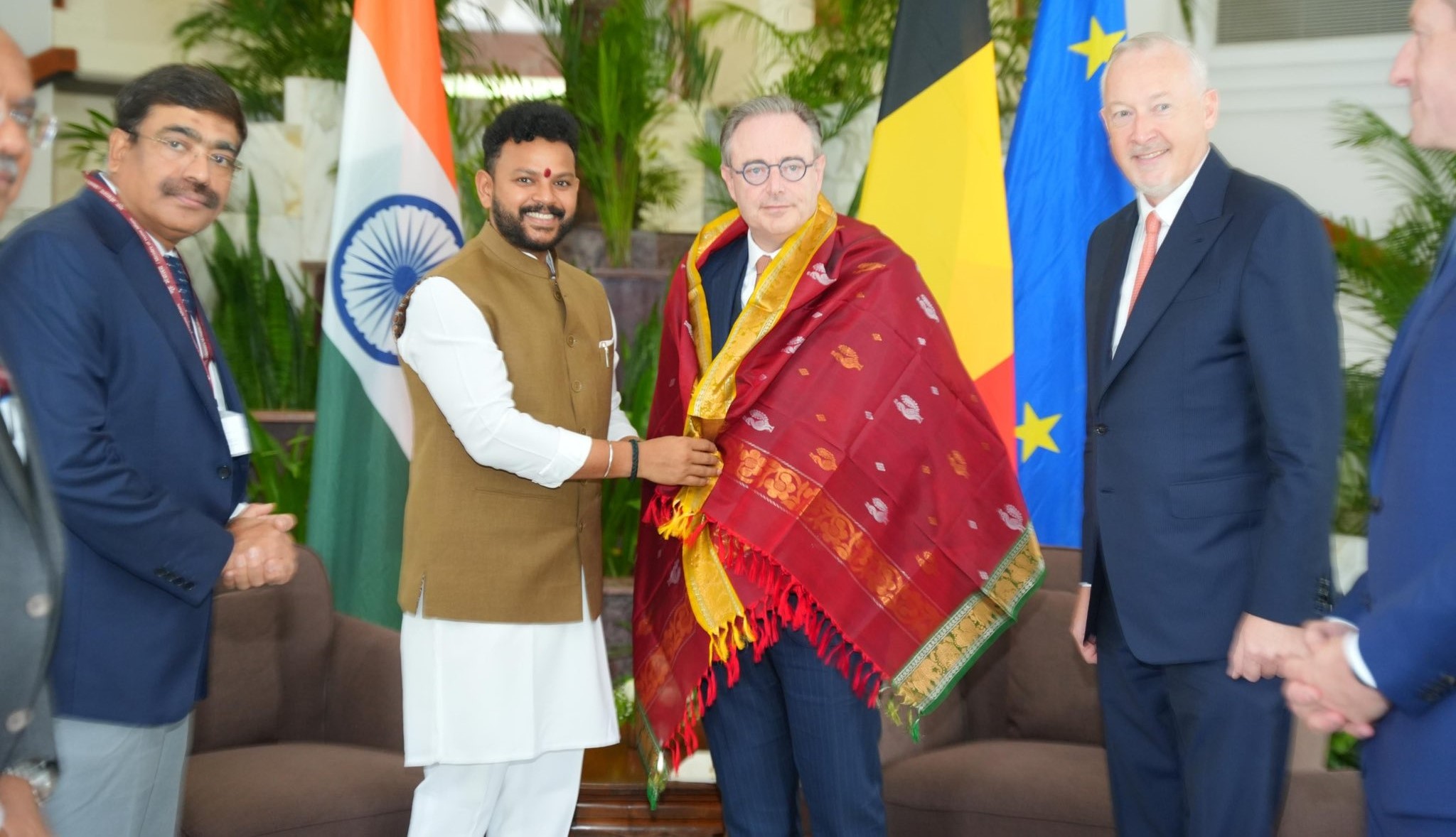
India and Belgium have agreed to further strengthen cooperation in civil aviation, including exploring direct air connectivity, improving air cargo links for the high-value pharmaceutical sector and advancing air mobility initiatives, Union Civil Aviation Minister Ram Mohan Naidu said on Friday.
Naidu held talks with Belgian Prime Minister Bart De Wever, who is on a three-day official visit to India from September 2 to 4. The discussions focused on deepening bilateral cooperation in civil aviation, an official statement said.
“Honored to meet Prime Minister of Belgium. Discussed further strengthening of India-Belgium cooperation in civil aviation, including direct air connectivity, air cargo for the high-value pharmaceutical sector and Advanced air mobility,” Naidu posted on X.
“With the India–EU FTA negotiations concluded under the leadership of Hon’ble Prime Minister @narendramodi, there is tremendous potential to further deepen India–Belgium trade and investment ties,” he added.
De Wever’s visit includes high-level bilateral talks with Prime Minister Narendra Modi aimed at deepening trade and investment ties and advancing the timely implementation of the India-EU Free Trade Agreement (FTA).
The India-EU trade pact, described by policymakers as the “mother of all deals”, was announced in January after nearly two decades of negotiations. It is currently undergoing legal scrutiny and other procedural formalities ahead of its formal signing and implementation.
Commerce and Industry Minister Piyush Goyal has said India and the European Union are expected to sign the long-awaited FTA by December, with the agreement likely to come into force between February and March next year.
The proposed pact is expected to provide Indian businesses access to almost the entire European market at near-zero duty levels. Around 93 per cent of Indian exports are expected to receive duty-free access under the agreement, which was concluded in principle earlier this year after prolonged negotiations between India and the 27-member bloc.
Labour-intensive sectors such as fisheries, textiles and footwear are expected to benefit significantly, while exports of chemicals and pharmaceutical products are also likely to increase.
Under the agreement, India will eliminate tariffs on 86 per cent of tariff lines, accounting for 93 per cent in terms of trade value.
The pact is being seen as a major milestone in India’s trade policy and is expected to further strengthen economic ties with the European Union, one of the country’s largest trading partners.
(IANS Inputs)


