







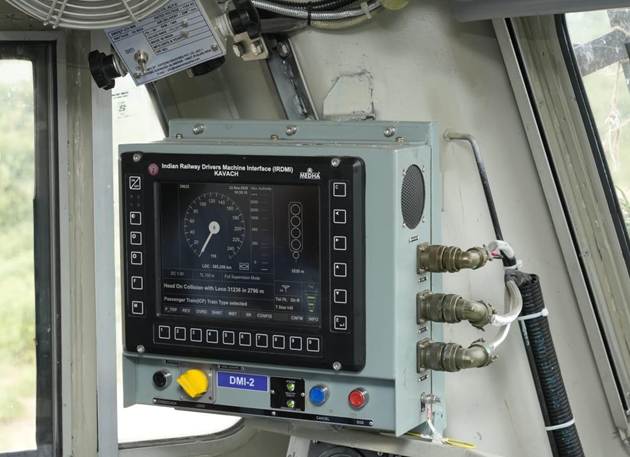
Indian Railways has commissioned the indigenously developed Automatic Train Protection system, KAVACH Version 4.0, for the first time on South Central Railway (SCR), upgrading the system from Version 3.2 to 4.0 across 108 route kilometres on the Malkajgiri-Kamareddi section of Hyderabad Division.
KAVACH is designed to enhance operational safety, and it assists loco pilots in maintaining prescribed speed limits and can automatically apply brakes when required if the Loco Pilot fails to do so. The system helps prevent Signal Passing at Danger (SPAD), control train speed in critical situations, and reduce the risk of collisions. It also supports safer train operations during adverse weather conditions, according to a press release by the Ministry of Railways.
The latest version incorporates technological improvements based on experience gained from the deployment of KAVACH Version 3.2 over 1,465 route kilometres on South Central Railway.
A new boost to rail safety!
KAVACH 4.0 now covers 108 Route Kilometres between Malkajgiri and Kamareddi rail section in Telangana enabling safer and seamless train operations across the region.#KAVACH4.0 #RailInfra4Telangana pic.twitter.com/C3JP6FLuid— Ministry of Railways (@RailMinIndia) September 23, 2026
Advanced Features for Safer Train Operations
KAVACH 4.0 has been developed, tested and deployed as an Automatic Train Protection system with improvements tailored to the diverse operational and technological requirements of the Indian Railways network.
The upgraded system offers increased location accuracy, enabling more precise train positioning, and provides improved information on signal aspects in larger yards, strengthening situational awareness during train operations, the press release stated.
It also features a station-to-station KAVACH interface through Optical Fibre Cable (OFC), facilitating enhanced communication and system integration. Direct interfacing with existing Electronic Interlocking Systems further improves integration with the railway’s signalling infrastructure.
-with PIB inputs


