







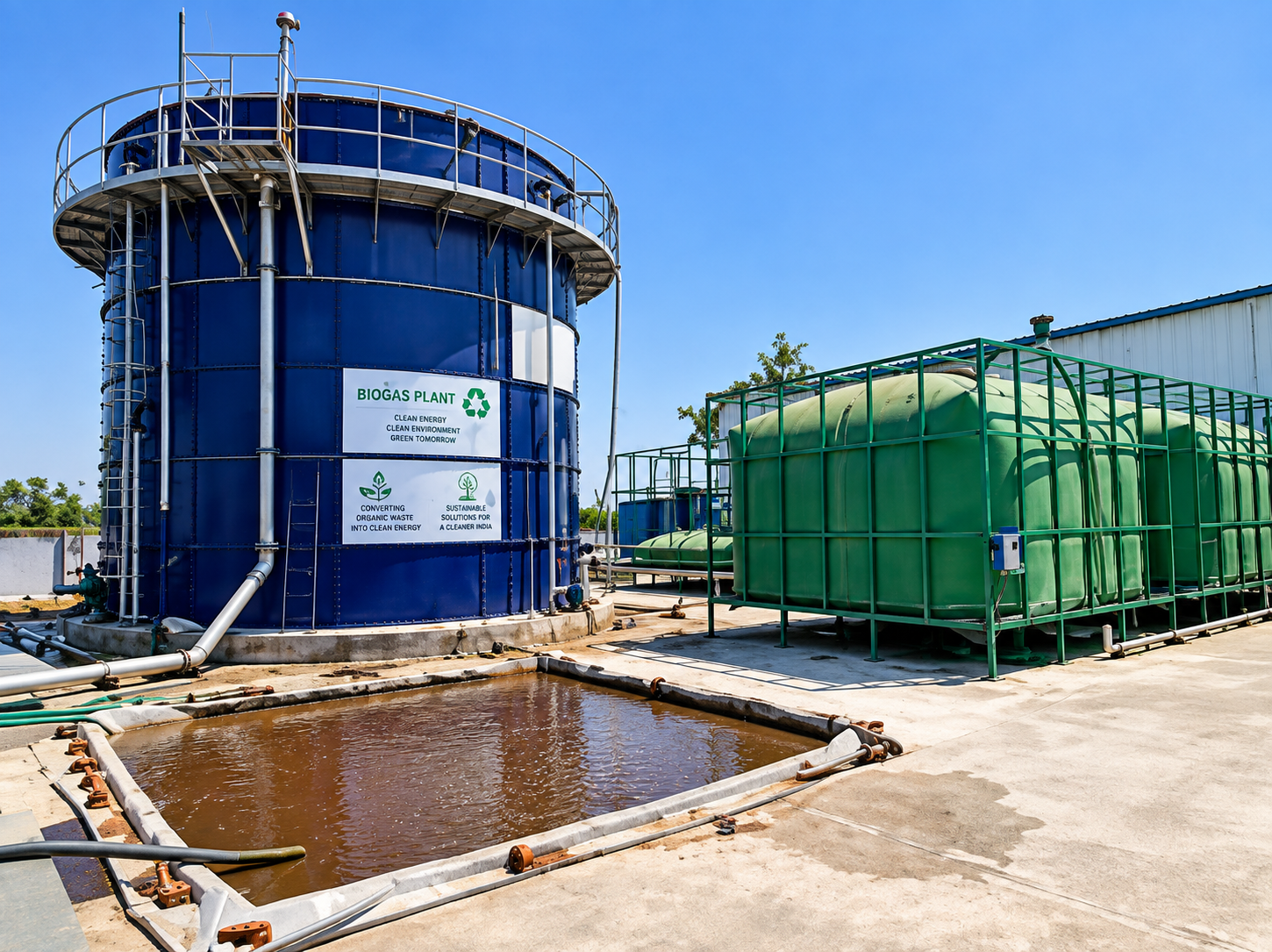
Organic waste across several parts of the country is being converted into clean fuel, electricity and organic manure as waste-to-energy initiatives gain momentum under the Swachh Bharat Mission.
Launched in October 2014, the Swachh Bharat Mission has focused on scientific management of municipal solid waste. With the evolution of the mission, organic waste is increasingly being treated as a resource for generating clean energy.
Under Swachh Bharat Mission-Urban 2.0, different cities and institutions are adopting waste-to-energy solutions based on locally available waste and community requirements. Initiatives in Gandhinagar, Prayagraj, Gwalior and Hyderabad demonstrate how organic waste can be processed into biogas, compressed biogas, electricity and bio-manure.
Gandhinagar: Biogas replaces LPG
At the Shrimati Manekba Vinay Vihar Educational Complex near Adalaj in Gandhinagar, Gujarat, a biogas-based cooking system is meeting the entire cooking-fuel requirement of a campus serving more than 500 people every day.
The campus, managed by the Vasumati Charitable Trust, operates two biogas plants with a combined capacity of 90 cubic metres per day. The plants use dung from 222 cows along with kitchen waste and agricultural residue.
The biogas generated is sufficient to meet the campus’s cooking-fuel requirements, eliminating the need for around 30 LPG cylinders every month. The initiative has received policy and financial support through the Gujarat government’s Institutional Biogas Plant Scheme and the Gujarat Energy Development Agency.
Prayagraj: Multi-feedstock bio-CNG plant
In Prayagraj, a bio-CNG facility is processing multiple forms of organic waste, including wet waste, paddy straw, cattle dung and poultry litter.
The plant has the capacity to process 343 tonnes of organic waste daily and produce around 21 tonnes of bio-CNG. Operating under a public-private partnership model, the facility receives organic waste from hotels, restaurants and apartment complexes.
Daily wet-waste collection has increased from around 7-8 tonnes initially to nearly 125 tonnes. The bio-CNG is sold under the Compressed Bio-Gas-City Gas Distribution Synchronisation Scheme and is currently being used for city transport.
The facility also produces around 28 tonnes of compost every day for local farmers. It is expected to eventually provide clean energy access to around 45,000 households through piped gas and reduce carbon emissions by approximately 57,000 tonnes annually.
Gwalior: Cow dung converted into compressed biogas
At Adarsh Gaushala in Laltipara, Gwalior, a 100-tonnes-per-day Compressed Bio-Gas plant is converting cattle dung into clean fuel and bio-manure.
The facility, inaugurated in October 2024, is spread over five acres and was developed in collaboration with Indian Oil Corporation at a cost of ₹31 crore. It processes around 100 tonnes of cattle dung daily to produce two tonnes of compressed biogas.
The plant can also process vegetable and fruit waste collected from markets and households. In addition to CBG, it produces around 10-15 tonnes of dry bio-manure every day, providing an agricultural input for farmers in nearby districts.
The initiative is also generating local employment while promoting green-energy skills and sustainable waste-management practices.
Hyderabad: Vegetable waste powers market
At Hyderabad’s Bowenpally Vegetable Market, around 10 tonnes of vegetable and fruit waste are collected every day. Instead of being sent to landfills, the waste is processed at an on-site biogas plant.
The facility generates around 400-500 units of electricity and 30 kilograms of biofuel daily. The electricity powers the market’s streetlights, stalls, administration building and water-supply network, while the biofuel is supplied to the commercial kitchen.
The plant also produces liquid bio-manure from the residual slurry, which is used by farmers as fertiliser. Its electricity generation has reduced the market’s monthly electricity bill by roughly half, from an earlier average of around ₹3 lakh.
Following the initiative, five additional biogas plants have been funded at other market yards in Hyderabad — Gudimalkapur, Gaddiannaram, Erragadda, Alwal and Saroornagar.
The Bowenpally plant has also created employment opportunities for women, who are involved in waste segregation, machinery operations and administrative work. The initiative provides workers with income, safety equipment and opportunities for skill development.
Waste management moves towards resource recovery
These initiatives reflect a broader shift in waste management from collection and disposal towards resource recovery, energy generation and productive use of by-products.
Cow dung, kitchen waste, crop residue and discarded vegetables are being converted into fuel, electricity and manure. Under the Swachh Bharat Mission, such projects highlight the potential of scientific waste management, community participation and policy support to promote cleaner and more self-reliant urban areas.


