






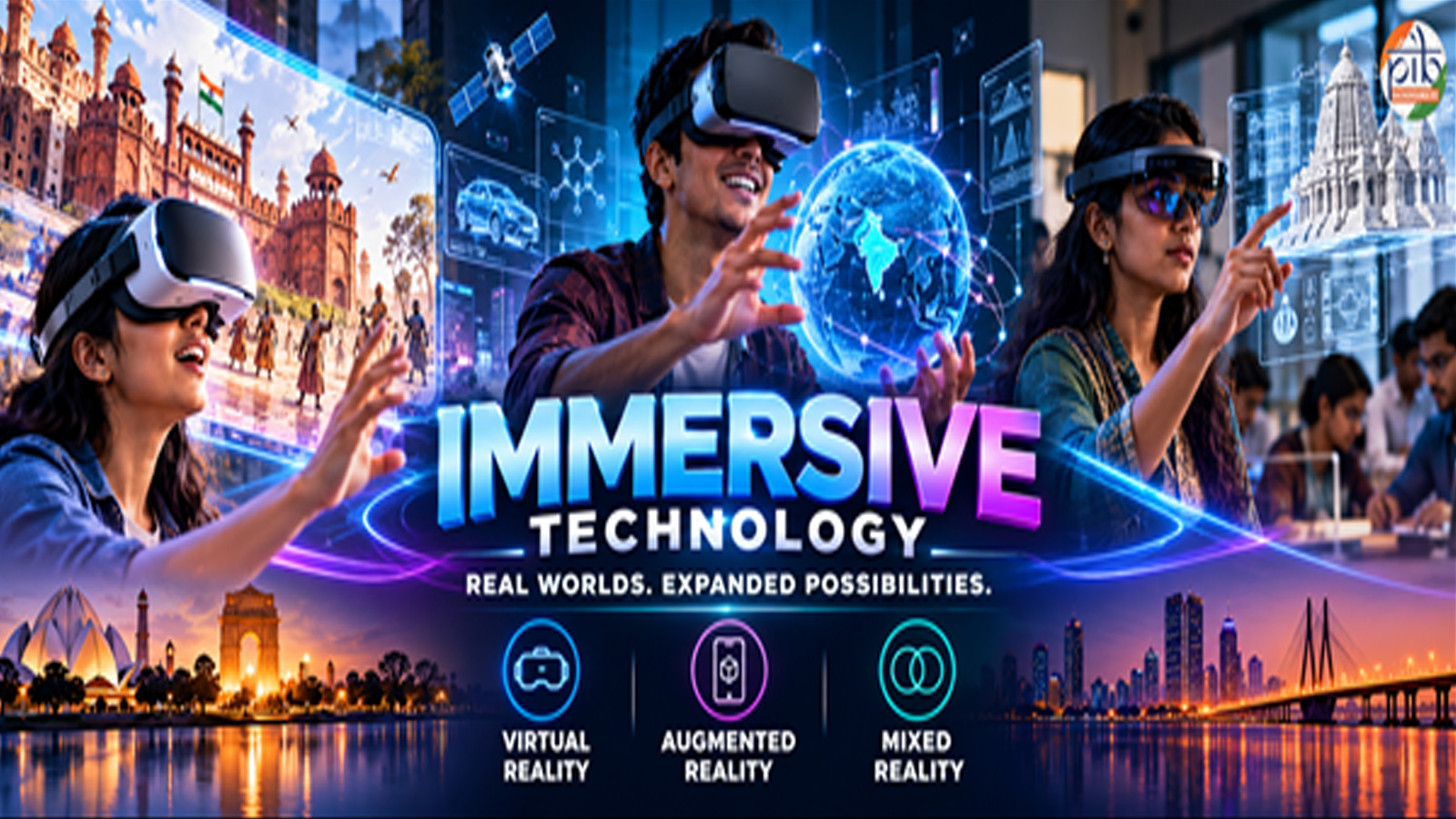
A student exploring the human body through a three-dimensional model, a museum visitor viewing artefacts through augmented reality, and a city planner testing transport options on a virtual replica of an urban neighbourhood are engaging with different applications of the same technological shift.
Immersive technologies are bringing digital content closer to how people experience the physical world. Across India, their applications are extending beyond gaming and entertainment into education, cultural heritage, infrastructure planning and professional training.
The opportunity is substantial. According to figures cited in a government backgrounder, India’s immersive technology market generated revenue of about $1.26 billion in 2023 and is projected to reach approximately $7.82 billion by 2030, growing at a compound annual rate of 29.8 per cent.
Behind this expansion is a combination of artificial intelligence, faster connectivity and computing capabilities that allow users to explore simulated environments and interact with digital objects.
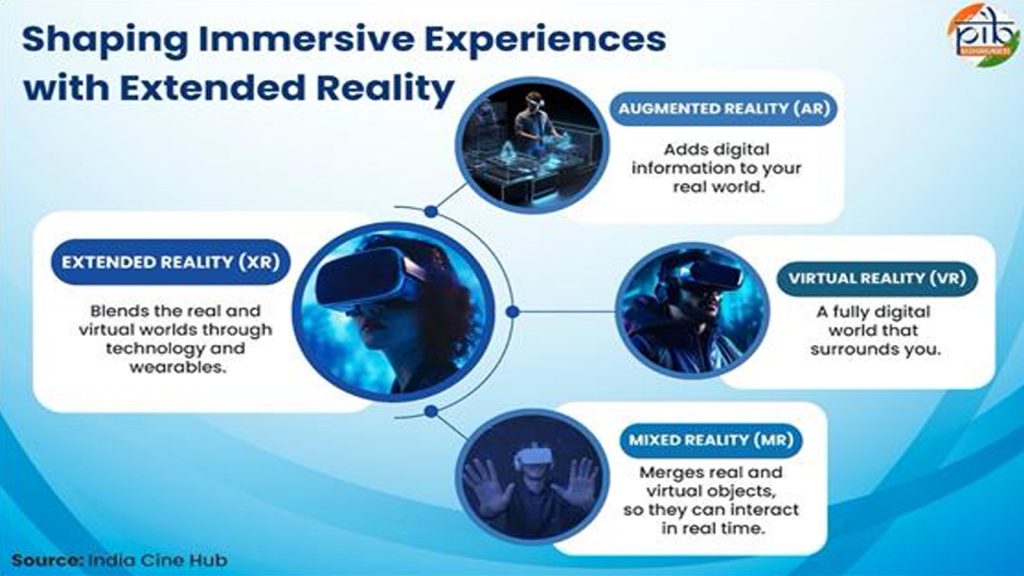
Virtual Reality, Augmented Reality and Mixed Reality – collectively known as Extended Reality, or XR – offer different ways of doing this. VR places users inside a fully digital environment. AR adds information or objects to their view of the physical world. MR allows digital objects to interact with physical surroundings.
Related tools broaden the experience. A 360-degree video lets viewers look around a recorded scene, while haptic technology uses vibrations, pressure and other sensations to provide touch-based feedback.
In education, these capabilities could make difficult concepts easier to understand. Researchers at IIT Madras are developing AR- and VR-enabled learning solutions for rural secondary schools, covering subjects such as history, social science, science and languages.
The possibilities include exploring the solar system through a simulation or studying anatomy through three-dimensional models. An AR-based application could combine animated photographs, maps and archival documents to make historical events more accessible.
Such experiences can supplement classroom teaching by allowing students to examine subjects that are difficult to recreate within a conventional school environment.
Museums and heritage institutions are also adopting digital tools to widen access to their collections.
Eight national-level museums and two Archaeological Survey of India museums have been digitised using JATAN software, with their collections available through the Museums of India digital repository. This provides a foundation on which more interactive visitor experiences can be developed.
The Indian Museum in Kolkata has introduced AI-based interactive features and AR tools, and has collaborated with Google Arts & Culture on a virtual exhibition. ASI museums at Hampi in Karnataka and Nalanda in Bihar offer mobile-based virtual tours, allowing people to explore collections beyond the museum premises.
For infrastructure planners, virtual environments offer a way to examine possible changes before implementing them.
The Department of Telecommunications’ “Sangam: Digital Twin” initiative combines digital models with 5G, the Internet of Things and AI to support infrastructure planning. A digital twin uses real-world data to represent an object, system or place, helping users monitor conditions and test alternatives.
Applications already include the Varanasi Urban 3D Spatial Planning project. India also aims to build a National Digital Twin for major urban centres by 2035.
A Mobility Digital Twin showcased at India Mobile Congress 2025 demonstrated how telecom-derived data could help authorities understand travel patterns. Work in Delhi’s Vasant Kunj and Central Vista examined commuting and metro station catchment areas. In Ayodhya, mobility data was used to study tourist flows, transport choices and stay patterns.
These insights can inform decisions on transport links and tourism infrastructure before projects are finalised.
The growing range of applications is creating demand for people who can combine technical knowledge with storytelling, design and production skills.
The Indian Institute of Creative Technologies in Mumbai, established in 2025 as a National Centre of Excellence, is intended to help build that talent base. It collaborates with global technology and media companies, including Google, Meta, Adobe and Netflix, to strengthen creative education and innovation.
As of March 2026, the institute had introduced 18 courses across Animation, Visual Effects, Gaming, Comics and Extended Reality – the AVGC-XR sector – with more than 135 students enrolled.
The Union Budget 2026-27 allocated ₹250 crore for AVGC Content Creator Labs in 15,000 secondary schools and 500 colleges. IICT will serve as the nodal agency for planning, coordination and implementation.
The labs are intended to give students practical experience in animation, visual effects, gaming and digital content creation, introducing industry-relevant tools earlier in their education.
Support for emerging businesses forms another part of the effort. The Ministry of Electronics and Information Technology’s GENESIS scheme, launched in 2022, aims to support around 1,600 technology startups over five years, with a focus on Tier-II and Tier-III cities.
Through the MeitY Startup Hub, the scheme currently supports 84 AR/VR startups and backs 106 incubators across the country.
The Information and Broadcasting Ministry’s WaveX accelerator and incubator also supports startups working in AVGC-XR and other media technologies, helping them develop market-ready solutions and explore international opportunities.
States are building their own frameworks around this emerging industry.
Karnataka’s AVGC-XR Policy 3.0 supports skills, infrastructure, production and investment, alongside a ₹20-crore KITVEN AVGC Fund. Maharashtra’s 2025 policy has a financial plan of ₹3,268 crore and a long-term vision extending to 2050.
Tamil Nadu’s 2026 policy targets more than 200 startups, around two lakh jobs and up to 20 per cent of India’s AVGC-XR market by 2030. Kerala’s policy focuses on a specialised talent pipeline and aims to create 50,000 new jobs by 2029.
Telangana’s ecosystem, developed under its IMAGE Policy, combines companies, training and production infrastructure. Uttar Pradesh is developing an AVGC-XR Park at Jewar, while Madhya Pradesh and Rajasthan have introduced policies supporting skills, investment and production. Gujarat is preparing a comprehensive policy, supported by an existing network of institutions offering animation, VFX and gaming courses.
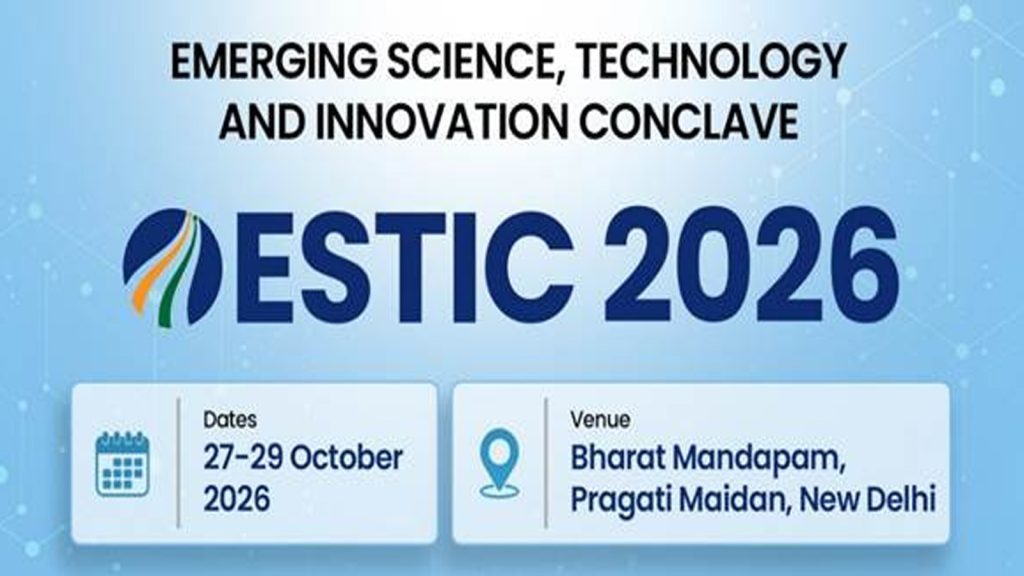
The sector will also feature at the Emerging Science, Technology and Innovation Conclave, ESTIC-2026, scheduled for October 27–29 at Bharat Mandapam in New Delhi.
Organised by the Council of Scientific and Industrial Research, the conclave will bring together researchers, industry, startups and global experts. “Immersive Tech: Generative XR and Spatial Computing” is among its 12 thematic areas.
As these initiatives develop, the practical value of immersive technology will depend on the experiences it enables: helping a student understand a complex subject, opening a museum collection to a distant visitor or allowing a planner to assess a project before construction begins.
Building the skills, content and indigenous technologies needed for those applications will be central to India’s ambition to become a global centre for immersive innovation.


