






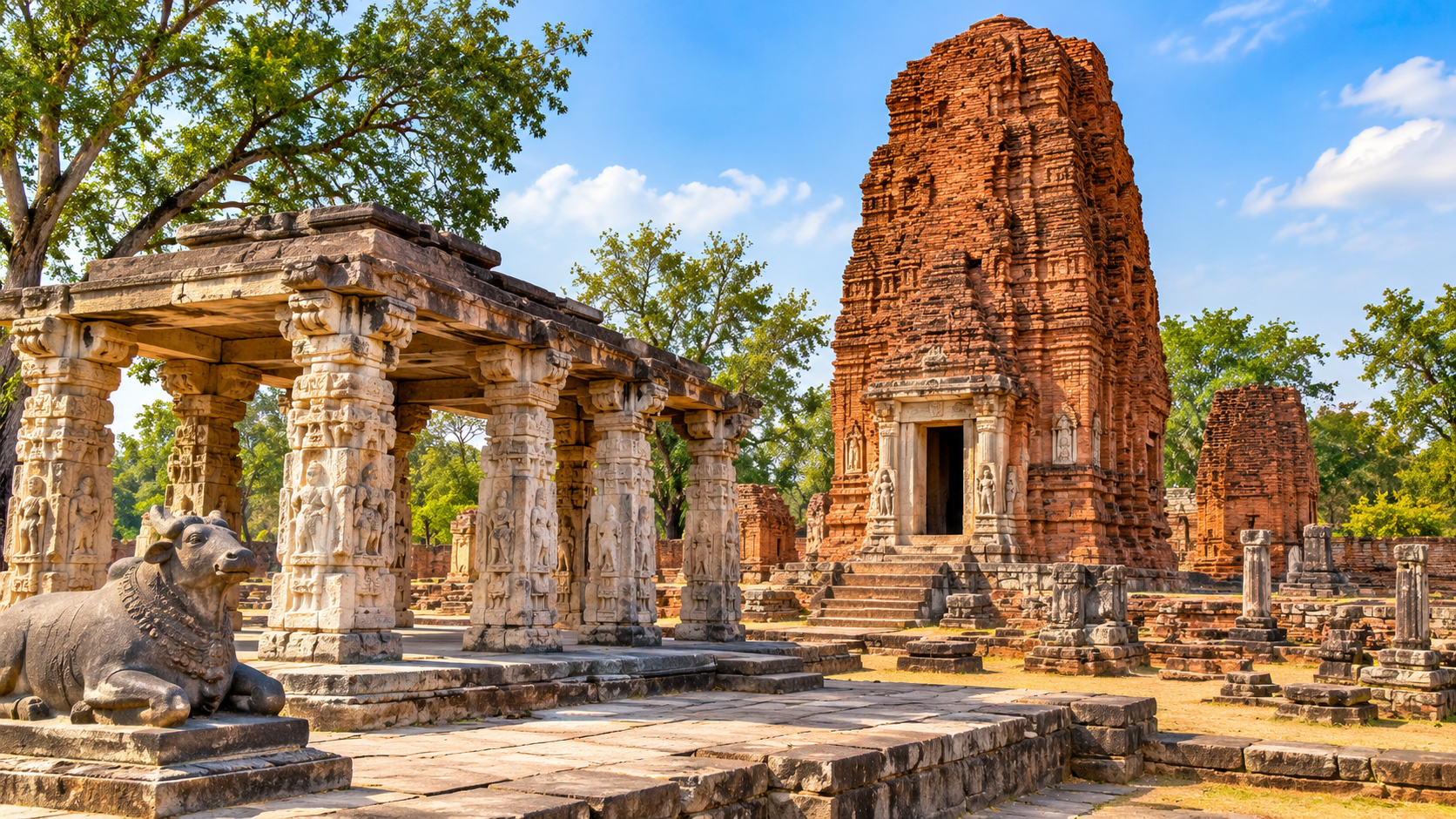
Sirpur, a prominent archaeological and tourism site in Chhattisgarh’s Mahasamund district, has been included in the UNESCO’s Tentative List of World Heritage Sites, officials said on Wednesday.
The ancient town, located on the banks of the Mahanadi river, has been recognised for its rich cultural and archaeological heritage, marking a significant step towards bringing Chhattisgarh’s historical legacy to the global stage, Dhammshil Ganvir, Chief Executive Officer of the Sirpur Special Area Development Authority (SSADA), said.
The “Sirpur Cultural and Archaeological Landscape” was inscribed on the UNESCO World Heritage Centre’s Tentative List following a proposal formally submitted by India’s Permanent Delegation to UNESCO on September 28 this year.
The nomination falls under the cultural category, he said.
Located about 75 km from Raipur, Sirpur, historically known as Shripur, served as the capital of South Kosala between the 5th and 12th centuries CE and developed into a major commercial and cultural centre, Ganvir said.
The ancient town is notable for the coexistence of Hindu, Buddhist and Jain religious traditions, represented by its temples, monasteries and stupas within a shared urban landscape, he said.
The proposal meets two key UNESCO criteria — Criterion II, relating to the exchange of human values over time in architecture, monumental arts, town planning and landscape design, and Criterion IV, concerning outstanding examples of architectural ensembles or landscapes illustrating significant stages in human history, he said.
The proposed core zone comprises nine prominent sites — the Lakshmana Temple, Rama Temple, Gandheshwar Temple, Anandaprabhu Kuti Vihara, Swastika Vihara, Market Complex, Royal Palace (Rajmahal), Harshagupta and Tivaradeva Buddhist Viharas, and the Baleshwar group of monuments, he said.
The Lakshmana Temple, built entirely of bricks and dating to around the 7th century, is considered one of India’s earliest and best-preserved brick temples. Ancient structures at Sirpur also feature the use of distinctive local stromatolite rocks, Ganvir said.
Inclusion in the Tentative List is an initial step towards securing the final World Heritage Site designation. A comprehensive nomination dossier will now be prepared and submitted to UNESCO in coordination with the Archaeological Survey of India (ASI) and SSADA, he said.
Ganvir said the recognition will help put Sirpur on the international tourism map and strengthen its potential as a destination for spiritual and heritage tourism, particularly among visitors from countries with strong Buddhist traditions.
An official statement said the Chhattisgarh government, under Chief Minister Vishnu Deo Sai, has been making efforts to preserve and promote the state’s historical and cultural heritage and establish important sites on national and international tourism maps.
Special emphasis is being laid on securing global recognition for important archaeological sites and expanding cultural tourism, it said.
Union Culture and Tourism Minister Gajendra Singh Shekhawat had visited Sirpur’s historical and archaeological sites on January 1, 2026, and appreciated its rich heritage, ancient monuments and architectural excellence. He had stressed the need for conservation and promotion measures and prioritising efforts to secure UNESCO World Heritage status for Sirpur, the release said.
Copper-plate inscriptions of Sharabhapuriya rulers Pravararaja and Mahasudevaraja provide important evidence of Sirpur’s antiquity. During the approximately 57-year reign of Panduvanshi ruler Mahashivagupta Balarjuna, the town witnessed significant cultural and architectural development, with the construction of temples, Buddhist monasteries, ponds and gardens, it said.
Famous Chinese traveller Xuanzang also visited the region in the 7th century, and his accounts refer to the flourishing Buddhist tradition there, the statement said.
Sirpur’s distinctive feature is the coexistence of Shaivite, Vaishnavite, Buddhist and Jain traditions. Despite being a follower of Shaivism, Mahashivagupta Balarjuna extended generous patronage to Buddhist monasteries, it said.
-PTI


