






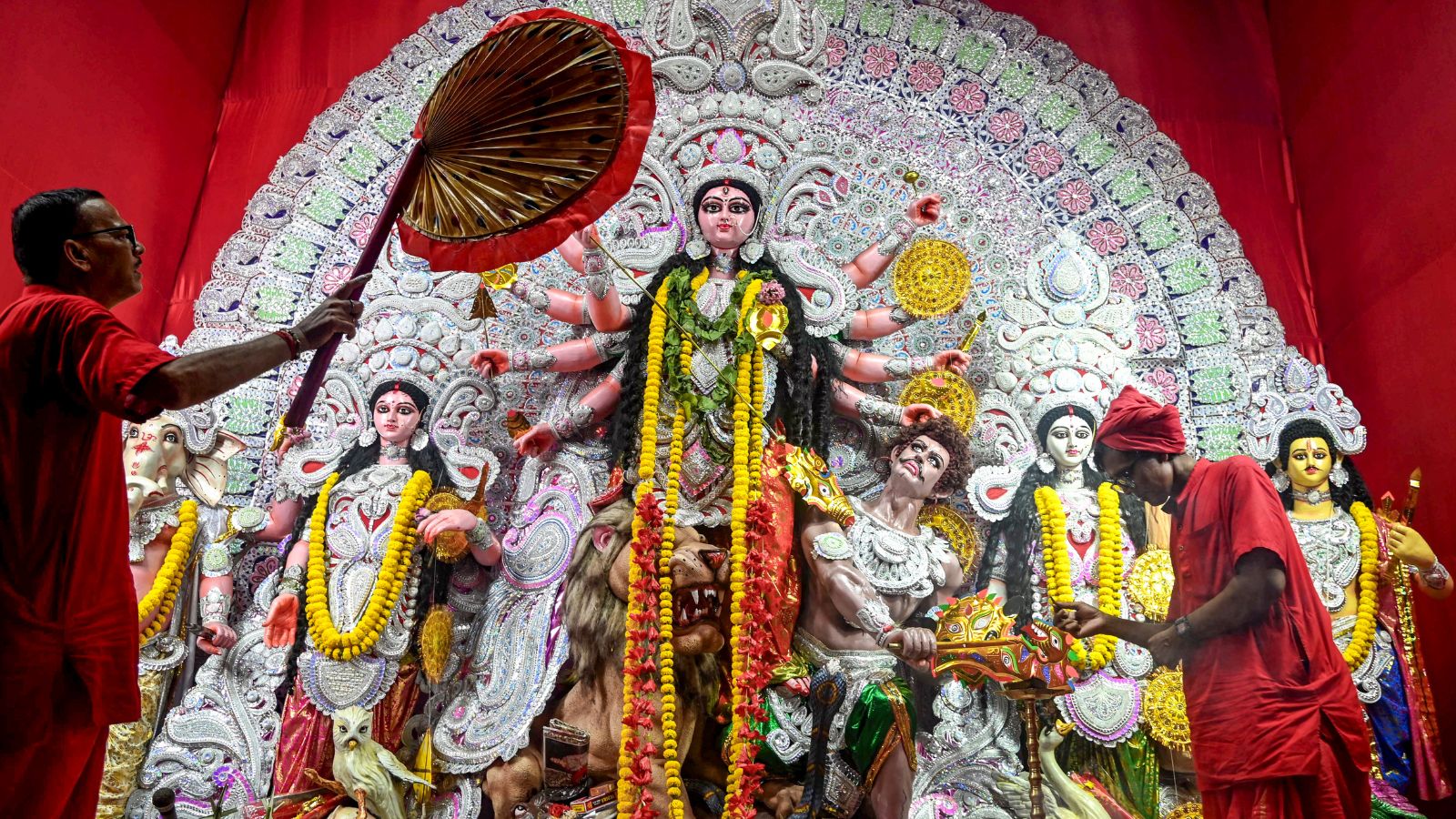
Elaborate pandals, clay idols, the rhythm of the dhaak and gatherings of families and neighbours define Durga Puja across West Bengal, where the worship of the Goddess is also a major celebration of art and cultural identity.
From neighbourhood community pujas to household observances, the festival combines religious rituals with performances, shared meals and visits to decorated pavilions. Preparations begin months in advance, bringing together idol-makers, designers and organisers.
At its spiritual centre is Goddess Durga’s victory over Mahishasura, symbolising the triumph of good over evil. In Bengal, the occasion is also understood as the Goddess’s homecoming with her children – Lakshmi, Saraswati, Ganesha and Kartik – giving the celebration the emotional character of a family reunion.
The principal observances unfold through Shashthi, Saptami, Ashtami and Navami before culminating on Dashami. Prayers, music and community gatherings accompany the ceremonies, while immersion marks the Goddess’s departure and the completion of the annual festival.
Kolkata’s theme-based pujas are particularly prominent examples of the festival’s creative expression. Temporary structures become carefully designed installations, with sculptors, artists and lighting specialists working around a central concept. Alongside these contemporary presentations, family and community traditions preserve the festival’s devotional foundations.
The artistry extends beyond the finished idol or pandal. UNESCO recognises families, priests, drummers, artists, craftspeople and puja committees as bearers of the tradition. Their combined work makes the festival a collaborative cultural undertaking, sustained through knowledge and skills passed between generations.
“Durga Puja in Kolkata” was inscribed on UNESCO’s Representative List of the Intangible Cultural Heritage of Humanity in 2021. The recognition highlights a living tradition in which religious practice and public artistic expression meet.
Beyond Kolkata’s internationally recognised celebrations, pujas across West Bengal provide local settings for worship and social participation. Cultural programmes, festive food and neighbourhood gatherings connect the religious occasion with the wider experience of Bengali community life.
Accessibility is also receiving greater attention this year. The West Bengal government has joined the United Nations in India and UNESCO in an initiative to make celebrations more accessible to persons with disabilities, older people and pregnant women.
Organisers have received training on guidelines covering physical infrastructure, accessible communication, inclusive programming, emergency preparedness, volunteer training and attitudes. IIT Kharagpur and partner organisations are providing technical support, with the state government encouraging committees across districts to adopt the measures.
The initiative underlines an important aspect of Durga Puja’s community character: participation depends not only on preserving rituals and artistic traditions, but also on enabling people to experience them with dignity and a sense of belonging.


