







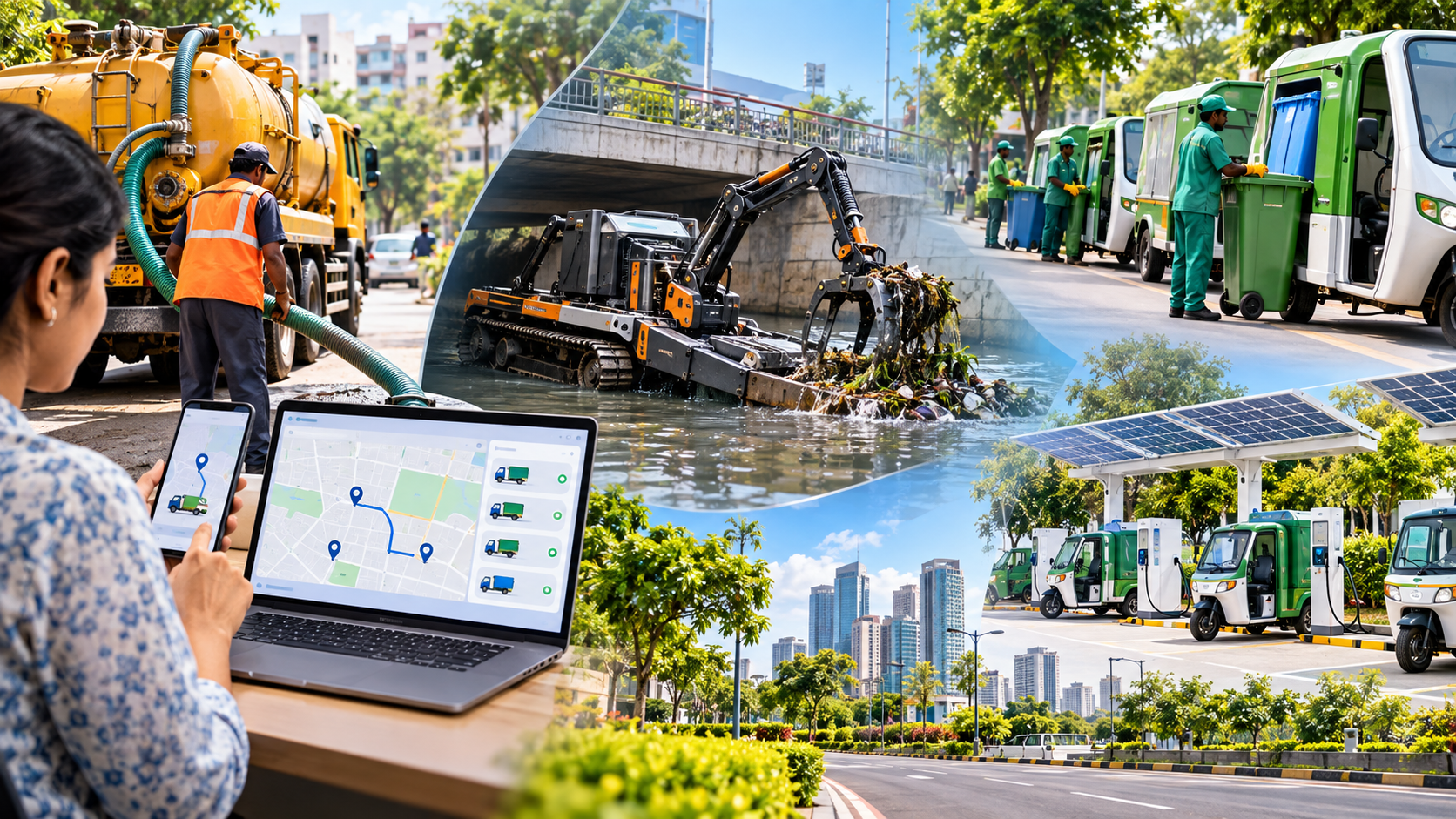
Technology is increasingly transforming urban sanitation in India, with digital dashboards, artificial intelligence-powered robots and electric vehicles being deployed to make waste management smarter, safer and more efficient.
As the Swachh Bharat Mission enters a new phase of technology-enabled sanitation, cities are adopting digital platforms to improve service delivery, robots to undertake hazardous cleaning and electric vehicles for cleaner door-to-door waste collection.
In Raipur, a digital Faecal Sludge Management (FSM) dashboard has enabled residents to book septic tank desludging services online, make payments and track requests without visiting municipal offices.
The Raipur Municipal Corporation has introduced the dashboard prototype through the UPYOG (Urban Platform for DeliverY of Online Governance) platform. The system is associated with the Ministry of Housing and Urban Affairs, the National Institute of Urban Affairs and the National Urban Digital Mission.
Residents can enter their mobile number or property ID to locate their address and book desludging services through a single-page form. Once a request is placed, the system enables real-time tracking of the service.
Drivers can upload photographs after completing the work, allowing digital verification. The dashboard also helps the municipal corporation monitor vehicles and plan resources more efficiently.
The technology-driven approach is also supporting the shift from manual sewer cleaning towards mechanised cleaning, helping reduce sanitation workers’ exposure to hazardous conditions.
In Thiruvananthapuram, technology is being used to address one of the city’s most challenging sanitation locations — the covered stretch of the Amayizhanchan Canal beneath the Thampanoor railway premises.
The city has deployed G-SPIDER, an AI-powered canal-cleaning system developed by Technopark-based Genrobotic Innovations. The system is designed to operate in confined spaces with restricted vertical clearance, continuous water flow and limited safe access for workers.
G-SPIDER uses machine vision and sensor intelligence to identify, assess and remove accumulated waste. Its five-degrees-of-freedom mechanism uses a biomimetic claw to pick up mixed and irregular debris, which is then transferred to designated collection vehicles.
The deployment is aimed at reducing workers’ direct exposure to toxic gases, contaminated water and hazardous waste. The system can also operate during high water levels and continuous-flow conditions, supporting scheduled canal cleaning.
Electric mobility is another area where technology is changing urban waste management.
In Guntur, more than 200 electric autos are being used for door-to-door waste collection. Equipped with GPS tracking, the vehicles allow real-time monitoring of collection operations.
The initiative is estimated to eliminate the use of more than 71,000 litres of diesel annually and reduce greenhouse gas emissions by around 21,000 tonnes over a decade.
In Chennai, the Greater Chennai Corporation has deployed 5,478 battery-operated e-rickshaws across all 15 zones for door-to-door waste collection.
The vehicles travel around 40 kilometres a day and help replace diesel-powered collection vehicles. The initiative is estimated to reduce carbon emissions by around 41 tonnes per day, or approximately 15,160 tonnes annually.
The e-rickshaws are also equipped with separate bins for wet, dry and hazardous waste, integrating waste segregation into the collection process. The fleet covers 24,621 streets and more than 2.1 million households, while audio systems on the vehicles disseminate messages on waste segregation.
The initiative also supports employment for more than 6,000 people.
Indore in Madhya Pradesh has combined electric waste collection with renewable energy infrastructure. The city has deployed 100 electric vehicles for door-to-door waste collection in core areas, with real-time GPS monitoring through its Integrated Command and Control Centre.
The initiative is expected to reduce annual carbon emissions by about 24,918 tonnes and save around Rs 5.97 crore annually in fuel and maintenance costs.
Indore has also established 20 solar charging stations, each equipped with 10-kW solar panels. Together, the stations can generate around 800 to 1,000 units of green energy daily and charge approximately 80 to 100 vehicles a day.
These initiatives reflect the growing use of technology across different aspects of urban sanitation — from booking and monitoring services to mechanised cleaning and electric waste collection.
The shift is aimed at making sanitation services more transparent and responsive while reducing environmental impact and improving safety for sanitation workers.
With digital platforms, AI-enabled systems and electric mobility becoming part of everyday sanitation operations, technology is emerging as an important tool in the next phase of urban Swachhata.


