






A piece of Phulkari from Punjab, a Pashmina from Jammu and Kashmir, or a serving of Litti Chokha from Bihar carries more than a regional identity at the National SARAS Mela in Vijayawada. Behind each is a woman entrepreneur seeking customers, building business connections and finding ways to turn her skills into a sustainable livelihood.
At Punnami Ghat, around 1,500 women from Self-Help Groups (SHGs), including Lakhpati Didis, have brought their products from 34 states and Union Territories to a marketplace spread across more than 650 stalls. Running from October 13 to 31, the event marks the first National SARAS Mela outside Delhi-NCR.
For the participating women, the opportunity extends beyond sales made during the fair. It offers direct feedback from consumers, exposure to different markets and access to buyers and institutions that could help their enterprises grow.
Organised under the Deendayal Antyodaya Yojana–National Rural Livelihoods Mission (DAY-NRLM), SARAS Melas address a persistent challenge for rural businesses: making a product does not necessarily mean finding a market for it. Artisans and food producers may possess considerable skill, but expanding beyond local customers requires visibility, business knowledge and reliable sales channels.
The Vijayawada edition brings these needs together, combining retail stalls with workshops, live demonstrations, institutional support and buyer–seller interactions.
The platform has grown considerably since the first National SARAS Mela was held in Delhi in 1999 with around 65 beneficiaries. 117 National SARAS Melas have been organised so far, while annual sales have exceeded ₹200 crore. State, regional and district-level editions have further widened opportunities for rural producers to reach customers.
This expansion is closely linked to DAY-NRLM’s work with women’s SHGs and their federations. The mission supports access to finance, skills, technology and livelihood opportunities, while helping women improve product visibility, branding and market connections.
At Vijayawada, the range of products demonstrates the breadth of these enterprises. Alongside Phulkari and Pashmina are Ikat and Telia textiles from Telangana and Paunchei from Mizoram. Meenakari, Dokra, brasswork, woodcraft and traditional paintings share space with natural and processed foods.
Live demonstrations allow visitors to see the work behind the finished goods. Pottery, needlework and mirror-work embroidery bring production techniques into the marketplace, giving artisans an opportunity to explain their craft and helping customers understand the time and skill involved.
A 16-foot installation, “SHAKTI — The Spirit of Lakhpati Didi”, represents the women at the centre of this effort: producers who preserve traditional skills while building businesses and household incomes.
The Lakhpati Didi initiative provides an important backdrop to the event. Under DAY-NRLM, a Lakhpati Didi is an SHG member whose household earns at least ₹1 lakh annually on a sustainable basis, assessed over at least four agricultural seasons and/or business cycles.
The government initially announced a target of two crore Lakhpati Didis in August 2023 and raised it to three crore in the Interim Budget 2024–25. The three-crore milestone was achieved by December 2025. An enhanced target of six crore was announced in February 2026.
Achieving sustained income growth requires enterprises to retain customers, improve products and secure repeat orders. The Mela’s dedicated pavilions seek to help women take these steps.
At the Lakhpati Didi Pavilion, entrepreneurs earning more than ₹10 lakh annually, including some earning over ₹1 crore, share their business journeys and market strategies. Their enterprises span agriculture, food processing, handicrafts, handlooms, services and other non-farm activities.
For fellow SHG members, these exchanges offer practical examples of how businesses can develop. They provide an opportunity to examine approaches that may suit their own resources, skills and local conditions.
The Learning and Knowledge Pavilion focuses on the everyday demands of running an enterprise. Workshops, expert talks and masterclasses cover packaging, branding, business proposals, e-commerce and social media marketing.
Engagement with institutions and businesses, including NABARD, FICCI, CII, ITC, Hindustan Unilever, Amazon and Flipkart, is encouraged to help entrepreneurs understand market requirements and explore ways to reach customers.
A separate Convergence Pavilion addresses needs that sales alone cannot resolve. It connects participants with departments, financial institutions, development agencies and technical organisations offering support in credit, skills, technology and quality certification.
Organisations and platforms associated with this space include the Ministry of Tribal Affairs, the Ministry of Micro, Small and Medium Enterprises, the Ministry of Textiles, the Open Network for Digital Commerce, Government eMarketplace and TRIFED.
Food enterprises form another substantial part of the Mela. The India Food Court brings together more than 200 first-generation women food-service entrepreneurs from over 28 states and Union Territories across 50 stalls.
The menu ranges from Gol Gappe, Chaat and Kebabs to Hyderabadi Dum Biryani, Mushroom Pitha from Assam, Makke Di Roti with Saag from Punjab, Vana Sundari from Kerala’s Attappadi and Chausela from Chhattisgarh.
For these entrepreneurs, the food court offers a national platform to present regional culinary traditions while gaining experience in customer service and food-business operations. Cultural programmes featuring music, dance, textiles and crafts add to the regional exchanges taking place across the venue.
Digital tools are also becoming part of the SARAS marketplace. UPI enables convenient payments, and the food court operates primarily through cashless transactions. Coupon-based cash payment facilities remain available for visitors who prefer them.
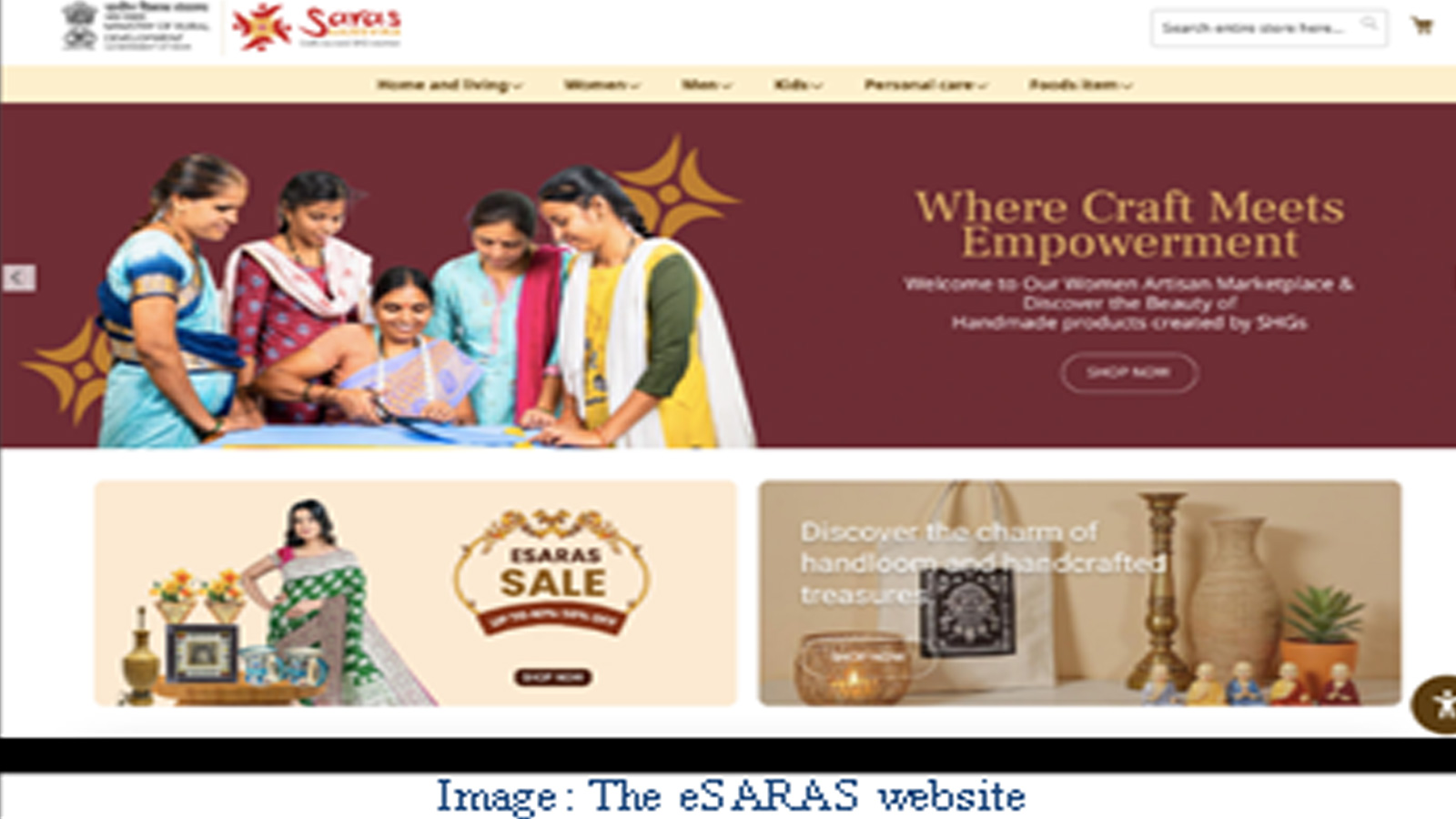
The effort to connect enterprises with customers continues beyond the physical event. The eSARAS platform allows consumers to discover and purchase SHG products online, while the wider SARAS ecosystem includes the SARAS Gallery and other e-commerce channels.
A dedicated SARAS Mela Digital App, introduced in 2025, supports SHG nominations, attendance management and event information.
Together, these channels can help address a central limitation of exhibition-based selling: the market opportunity need not end when the stalls close.
By bringing the National SARAS Mela to Vijayawada, the organisers have placed a national platform closer to a new regional audience of consumers, buyers and institutional partners. For participating women, its lasting value will lie in the connections that continue after October 31—repeat customers, bulk orders, stronger business practices and more dependable incomes.


