






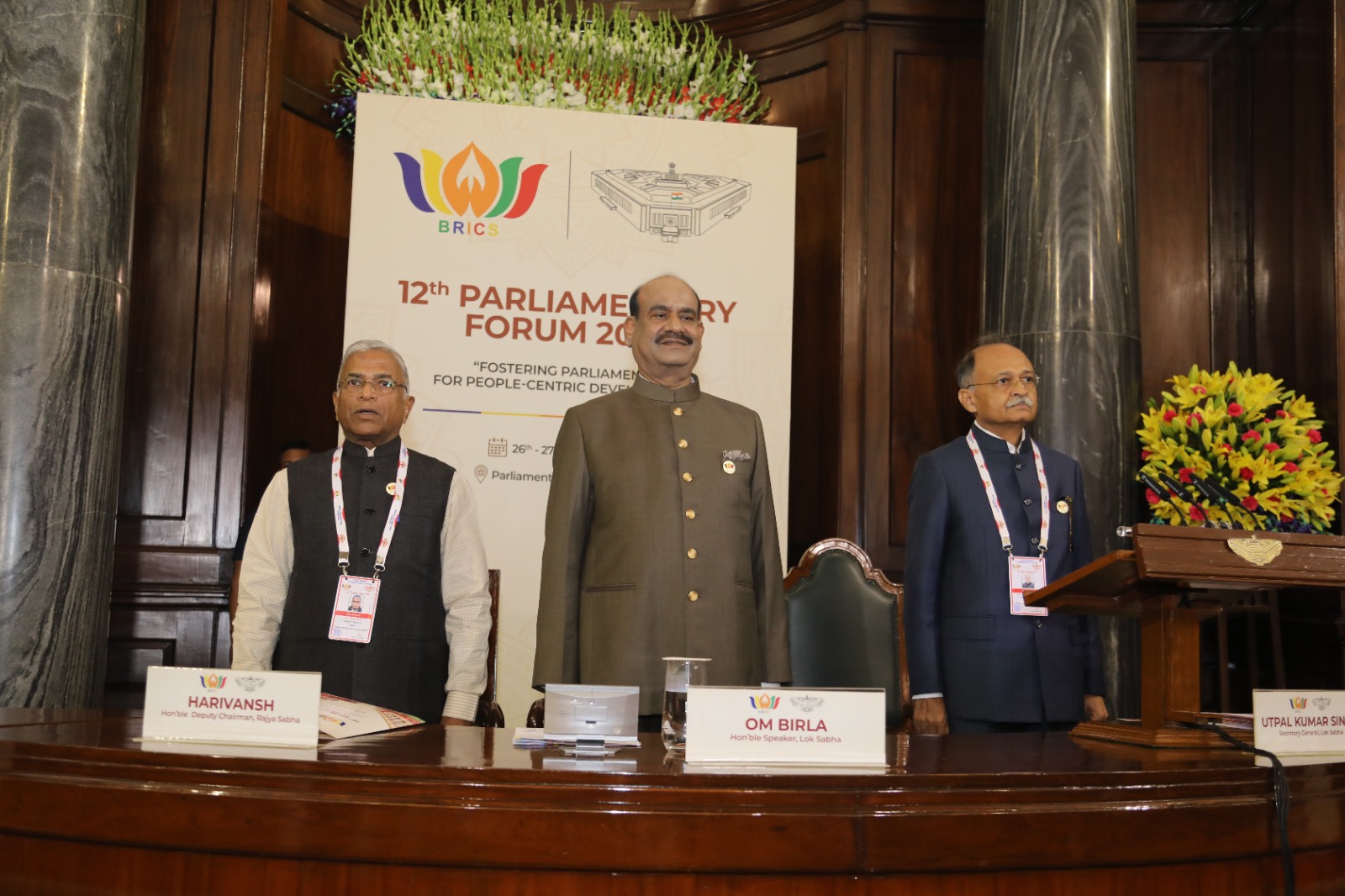
Deputy Chairman, Rajya Sabha, Harivansh, on Monday said that BRICS, representing around 49.5% of the global population, has emerged as an effective multilateral platform for consultation and cooperation on issues of global and regional significance. He made the remarks while delivering the welcome address at the inaugural session of the 12th BRICS Parliamentary Forum in the historic Central Hall of Parliament of India, New Delhi.
India’s BRICS Presidency and Global South
Welcoming Speaker of Lok Sabha and Chairperson of the 12th BRICS Parliamentary Forum, Om Birla, Presiding Officers, Heads of Delegations from BRICS Member and Partner Countries, Excellencies, and Distinguished Delegates, Harivansh stated that it is an honour to have all dignitaries and delegates present in the Central Hall.
He highlighted that this historic hall has remained a silent yet living witness to India’s evolution as one of the world’s largest, most vibrant, and successful democracies. He described India as a timeless repository of knowledge, wisdom, and civilisational heritage, with its rich diversity of cultures, languages, landscapes, customs, and traditions, expressing confidence that delegates will carry back warm and lasting impressions of the country.
Harivansh recalled that during the 2026 BRICS Presidency, India, under the leadership of Prime Minister Narendra Modi, introduced a transformative vision of a “People-Centric” and “Humanity First” approach. Guided by this vision, the BRICS process has adopted the theme “Building for Resilience, Innovation, Cooperation and Sustainability.”
He added that Prime Minister Modi championed the expansion of the bloc, strengthening the voice and trust of the Global South. Furthermore, India’s presidency of the 18th BRICS Summit culminated in the adoption of the New Delhi Declaration, which advanced global governance reforms and fostered a more balanced, multipolar world order.
Emphasis on People-Centric Parliamentary Development
Reflecting on the theme of the Inaugural Session, “Fostering Parliaments for People-Centric Development,” Harivansh noted that it is both timely and relevant.
He observed that citizens across the world expect Parliaments to respond effectively to emerging challenges, whether arising from economic uncertainties, technological transformation, climate change, public health emergencies, or social inequalities.
Consequently, Parliaments must remain vigilant, responsive, dynamic, and future-ready in these fast-changing times. He stated that discussions in the Forum will provide an opportunity to exchange experiences, learn from one another, and identify parliamentary approaches that contribute meaningfully to improving the lives of people.
-PIB Inputs


