






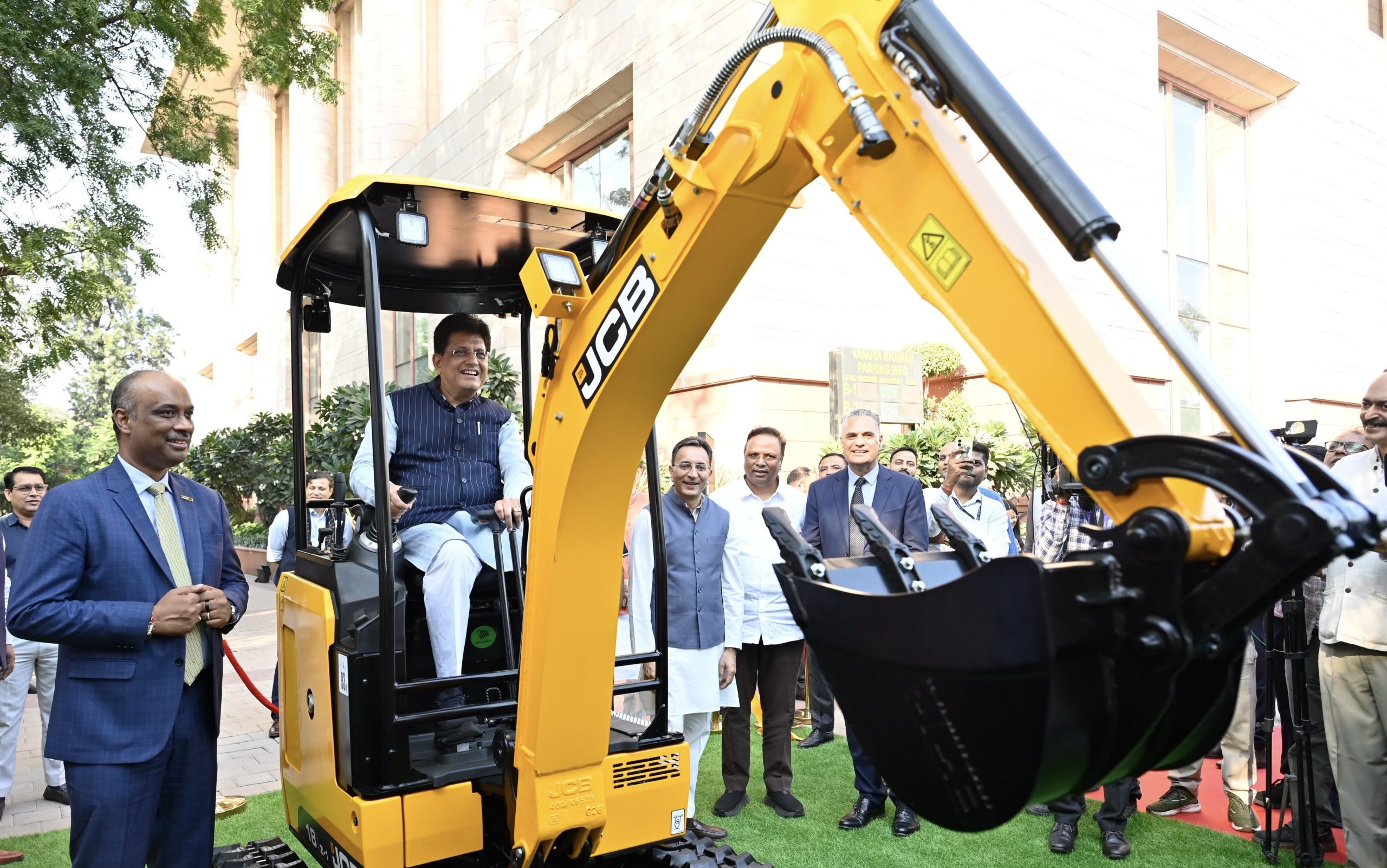
Union Minister of Commerce and Industry Piyush Goyal and New Zealand’s Minister for Trade and Investment, Todd McClay, on Monday jointly announced that the India–New Zealand Free Trade Agreement (FTA) will enter into force on October 20, coinciding with Vijay Dashmi. The agreement will provide Indian exporters with 100% duty-free access to the New Zealand market, opening new opportunities for businesses, particularly micro, small and medium enterprises (MSMEs), artisans, farmers and women entrepreneurs.
Goyal Highlights Export Opportunities and Farmer Welfare
Speaking at the announcement made virtually, Piyush Goyal said the agreement would create new opportunities for exporters and strengthen economic ties between the two countries. He said the benefits would extend particularly to MSMEs, artisans, farmers and women entrepreneurs, while safeguards would protect the interests of Indian farmers.
Goyal said the Agricultural Productivity Partnership, with dedicated action plans for apples, kiwifruit and honey, would promote better orchard management, reduce post-harvest losses and improve agricultural productivity through Centres of Excellence. He added that the agreement aligns with Prime Minister Narendra Modi’s vision of Viksit Bharat 2047, built on competitiveness, innovation, productive capacity and inclusive prosperity.
New Zealand Sees Access to India’s Growing Market
New Zealand’s Minister for Trade and Investment, Todd McClay, described the agreement as a watershed moment in bilateral relations, saying it would open access to 1.4 billion consumers for New Zealand exporters.
He said New Zealand’s exports to India would benefit from the elimination or substantial reduction of tariffs, while all Indian goods would enter New Zealand duty-free. This would create fresh opportunities for Indian exporters and place them on a level playing field with New Zealand’s other FTA partners, he added.
McClay said the agreement’s success would ultimately depend on the opportunities it creates and the extent to which businesses utilise its provisions.
FTA to Deepen Trade and Investment Ties
Secretary, Department of Commerce, Rajesh Agrawal, said free trade agreements help build deeper economic partnerships and expressed confidence that the India–New Zealand agreement would encourage investment and expand bilateral trade.
He said the next step was to translate the agreement into tangible benefits for people across the country. The Department of Commerce is working with industry and trade associations to take information about the agreement to every district, he added.
The Ministry of Commerce and Industry said the agreement reflects India’s commitment to partnerships with developed economies that expand market access, generate employment and empower youth, women and MSMEs in line with the vision of Viksit Bharat 2047.
Representatives from industries in both countries also participated in the announcement and highlighted opportunities in sectors such as services, footwear, engineering and agriculture.
Indian Machinery and Other Products to Mark Entry into Force
On the occasion, Goyal flagged off the first-ever export of a JCB machine from India to New Zealand. Additional product flag-offs across agriculture, gems and jewellery, engineering, sporting goods, footwear and leather are planned for the agreement’s entry-into-force day.
These initiatives highlight the opportunities the FTA is expected to create for Indian manufacturers and exporters across a range of sectors.
Zero-Duty Access for Indian Goods
New Zealand has eliminated customs duties across all tariff lines covering Indian exports, removing peak tariffs of up to 10%. The move is expected to benefit textiles, apparel, leather, footwear, gems and jewellery, engineering goods, automobiles and auto components, chemicals, pharmaceuticals, agricultural products and processed foods.
Duty-free access for wooden logs, coking coal and metal waste and scrap is also expected to strengthen manufacturing and MSME supply chains. Pharmaceutical and medical device industries will benefit from streamlined regulatory processes.
Expanded Market Access for Services
New Zealand has offered its most extensive services commitments in any of its trade agreements to date, providing market access in around 118 sectors and Most-Favoured-Nation commitments in about 139 sub-sectors.
For the first time, it has also provided dedicated access in health and traditional medicine services, covering Ayurveda, Yoga and other AYUSH systems.
New Opportunities for Indian Students and Professionals
The agreement provides Indian youth and professionals with an annual quota of 5,000 Temporary Employment Entry visas and 1,000 Working Holiday visas.
There will be no numerical cap on Indian students, with post-study work rights of up to three years for STEM bachelor’s and master’s graduates and up to four years for doctoral scholars.
Agricultural Partnership to Support Farmers
The Agricultural Productivity Partnership is a key component of the agreement, extending cooperation beyond tariff concessions to bring technology, training and global best practices to Indian farmers. It includes dedicated action plans for apples, kiwifruit and honey, with cooperation also covering horticulture, forestry, livestock and fisheries.
New Zealand will provide technical assistance for establishing Centres of Excellence for kiwifruit, apples and honey. Under the kiwifruit action plan, Phase I sites have been identified at Pfutsero in Nagaland and Magra in Uttarakhand. Two additional apple Centres of Excellence are proposed in Himachal Pradesh and Uttarakhand, while the honey action plan envisages centres in Uttar Pradesh and West Bengal.
The initiatives aim to promote technology transfer, improve cultivation practices and enhance agricultural productivity. Representatives from Himachal Pradesh, Nagaland, Uttarakhand, Uttar Pradesh and Arunachal Pradesh, along with collaborating organisations from New Zealand, attended the entry-into-force announcement.
Tariff Rate Quotas for apples, kiwifruit and Mānuka honey are formally linked to the delivery of the action plans, under the oversight of a Joint Agriculture Productivity Council, linking market access with farmer welfare.
New Zealand to Facilitate USD 20 Billion Investment
New Zealand has committed to facilitate USD 20 billion in investment into India. The proposed investment is expected to benefit agriculture, manufacturing, infrastructure and startups, while supporting innovation, entrepreneurship and employment generation under the Make in India initiative.
Safeguards for Sensitive Agricultural Sectors
To protect farmers, dairy producers, fisherfolk and rural communities, sensitive products such as dairy, sugar, edible oils and key agricultural commodities have been excluded from tariff concessions.
The agreement also incorporates Rules of Origin, a bilateral safeguard mechanism and anti-circumvention provisions to ensure that its benefits reach eligible exporters and prevent misuse of preferential market access.
MSMEs, Women Entrepreneurs and Artisans to Benefit
The agreement is expected to expand opportunities for MSMEs, women-led enterprises, startups, artisans and first-generation entrepreneurs by providing duty-free access and faster customs processes, helping reduce export costs and widen customer bases.
Structured cooperation will improve access to trade-related information and link Indian enterprises with New Zealand’s small and medium enterprise ecosystem, with particular attention to businesses owned by women and young entrepreneurs.
New Zealand has also committed to facilitating the registration of Indian Geographical Indications, creating opportunities to protect and promote products associated with traditional industries and rural artisans.
FTA Builds on Strategic Partnership
The India–New Zealand FTA forms part of the two countries’ broader strategic partnership and aims to promote inclusive economic growth by empowering farmers, MSMEs, women-led enterprises, entrepreneurs, artisans, youth and professionals.
Negotiations were launched on March 16, 2025, and concluded on December 22, 2025, within nine months. The agreement was signed on April 27, 2026.
It supports the India–New Zealand Strategic Partnership: Roadmap to 2030, which sets an aspirational target of doubling bilateral trade in goods and services to NZ$7 billion (₹35,000 crore) by 2030.
-PIB Inputs


